Punjab Rice Millers Confront Financial Crisis Due to Unsold Broken Rice
Chandigarh: Rice millers across Punjab are facing a severe financial challenge as unsold stocks of 100% broken rice accumulate, driven by the ethanol industry's shift toward more economical maize-based feedstock. This transition is exacerbating economic pressures on millers, who are struggling to dispose of their existing inventory.
Price Disparity and Market Dynamics
Although the Central government has set a disposal price of Rs 2,370 per quintal for 100% broken rice produced during the milling of improved quality common milled rice (CMR), ethanol units are currently procuring maize at approximately Rs 1,700 per quintal. This significant price difference renders rice economically unviable for ethanol production. Compounding the issue, 100% broken rice is selling in the open market at around Rs 1,900-2,000 per quintal, further undermining its competitiveness.
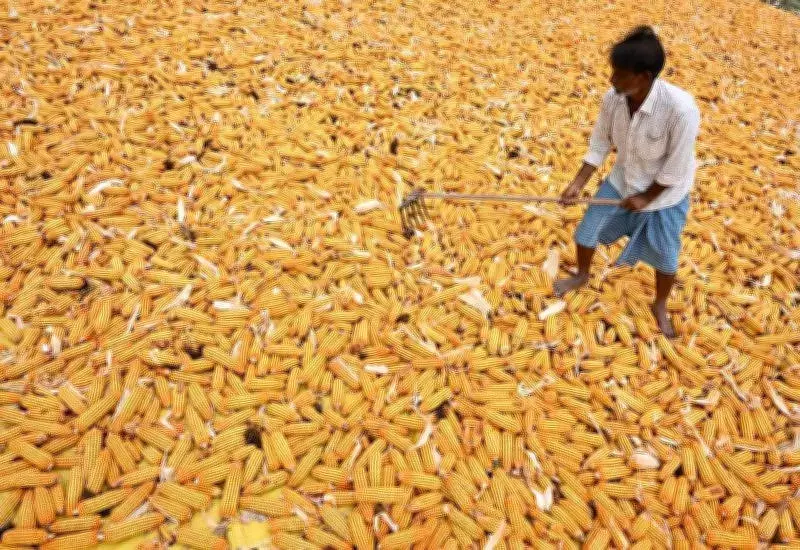
The ethanol industry, traditionally the largest consumer of 100% broken rice, is increasingly favoring maize due to a bumper crop and lower costs. This shift is creating a substantial challenge for the rice sector, as millers find themselves with mounting unsold stocks that hinder their ability to process new grains.

Industry Demands and Proposed Solutions
Ranjit Singh Jossan, vice-president of the Punjab Rice Industry Association, has urged the Centre to revise the price of 100% broken rice to Rs 1,900 per quintal. He also advocates for allowing millers to purchase existing stocks on their premises through a simplified release order mechanism at this revised controlled rate. This approach would grant millers the first option to clear their inventory without procedural delays, thereby eliminating unnecessary handling and transportation expenses.
Alternatively, Jossan suggests directly mapping ethanol and cattle feed industries to specific mills. He proposes that any ethanol plant or feed unit willing to procure broken rice under the Open Market Sale Scheme should be allotted mill-wise and centre-wise quantities to ensure structured distribution. Such a system would enable industries to lift 100% broken rice directly through open sales in cases of delay or default, ensuring smooth operations while alleviating the financial burden on millers.
Storage Costs and Liquidation Issues
Millers have highlighted that the bottleneck of unsold stock is impeding their capacity to process new grains. Despite the Centre announcing Rs 1.23 per quintal per month as a storage price for broken rice stocks on mill premises, actual storage expenses are reportedly much higher. Bharat Bhushan Binta, president of the Punjab Rice Industry Association, emphasized that for the past two years, a key issue in delivering 10% improved rice has been the liquidation of the remaining 15% broken rice, which has become a serious concern.
Binta noted that even during the previous season, millers encountered significant difficulties in disposing of the 15% broken component. The situation persists this year, with improved rice deliveries ongoing for the past two months while broken stock continues to accumulate in mills. Despite repeated requests submitted by millers on an online portal, there has been no response in terms of bidding, primarily due to the currently low open market rates for broken rice. The demand for 100% broken rice has nearly collapsed, exacerbating the financial strain on the industry.
Background on the 10% Improved Quality CMR Scheme
The '10% improved quality CMR' (custom milled rice) Scheme was launched as a pilot project by the Union Ministry of Consumer Affairs, Food and Public Distribution in February 2025. Under traditional regulations, the government accepted rice with up to 25% broken grains. This new scheme requires that rice be split into two separate lots: a high-quality lot comprising 85% of the delivery as "improved quality" rice containing only 10% broken grains, and a broken rice lot consisting of the remaining 15% that must be separated as 100% broken rice.

This structural change, while aimed at enhancing rice quality, has inadvertently contributed to the accumulation of broken rice stocks, particularly as market dynamics shift toward alternative feedstocks like maize. The ongoing challenges underscore the need for adaptive policies to support millers and ensure the sustainability of Punjab's rice industry.