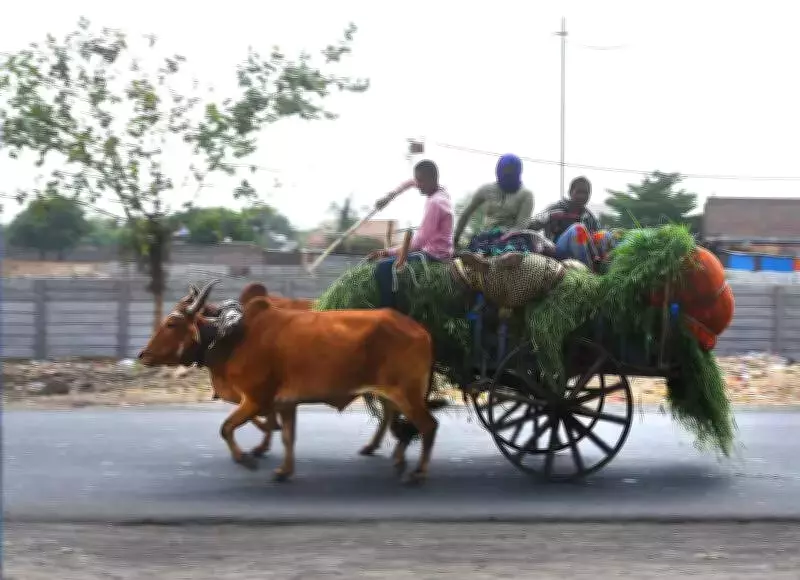
Punjab Emerges as Green Fodder Powerhouse Amid Widespread National Deficits
While a majority of Indian states continue to struggle with persistent shortages of green fodder, Punjab has remarkably bucked this troubling national trend by reporting the second-highest surplus in fodder availability across the country. This significant achievement was highlighted in data shared by the Union Ministry of Fisheries, Animal Husbandry and Dairying in the Lok Sabha on Tuesday, in response to a question posed by Congress leader Priyanka Gandhi Vadra.
Northwestern States Build Impressive Fodder Buffers
Neighbouring states Haryana and Himachal Pradesh have also demonstrated substantial surpluses in green fodder production, creating a notable regional contrast to the deficits plaguing other major dairy-producing regions. This robust availability provides farmers in these northwestern states with crucial cost stability and protection against supply disruptions that could otherwise lead to significant income losses.
Punjab's exceptional performance stands out with total green fodder availability reaching 672.34 lakh metric tonnes against a requirement of 248.73 LMT. This translates to an impressive 270.3% availability rate, resulting in a surplus of 170.3%. Only Mizoram surpasses Punjab with a slightly higher surplus of 180.3%.

Haryana follows closely with equally robust numbers, reporting 468.41 LMT of green fodder available against a requirement of 240.75 LMT. This represents 194.6% availability and a substantial surplus of 94.6%.
Perhaps most surprisingly, Himachal Pradesh—despite its challenging hilly terrain and limited arable land—has managed to exceed its green fodder requirements. The state reports 120.61 LMT of availability against a requirement of 83.83 LMT, achieving 143.9% availability and a surplus of 36.77 LMT (43.9%).
Stark Contrast with Deficit States
At the opposite end of the spectrum, several states continue to face acute green fodder shortages that threaten their dairy and livestock sectors. Andhra Pradesh records only 37.1% availability, translating to a severe deficit of 62.9%, while Jharkhand shows even more concerning numbers with just 32.3% availability and a deficit of 67.7%.
Among large agrarian states, Rajasthan registers a significant deficit of 32.7%, Uttar Pradesh faces a 23.6% shortfall, and West Bengal contends with a 38.2% deficiency. These figures underscore the dramatic regional disparities in fodder production across India.
Government Initiatives to Boost Fodder Production
The Ministry of Fisheries, Animal Husbandry and Dairying has outlined multiple interventions through the restructured National Livestock Mission to supplement state government efforts in increasing fodder availability nationwide. These strategic initiatives include:
- Enhancing quality seed production through establishment of effective seed production chains
- Promoting fodder entrepreneurship to develop the sector at local levels
- Utilizing non-arable land through innovative cultivation approaches
- Building capacity among state functionaries and livestock owners in forage production, conservation, and utilization
In March 2024, the Centre introduced two crucial components under the National Livestock Mission specifically targeting land utilization challenges:
- Fodder production from non-forest wasteland, rangeland, and non-arable land
- Fodder production from degraded forest lands
Additionally, 100 dedicated fodder-plus-farmer producer organizations are being supported through the National Dairy Development Board under the Central Sector Scheme "Formation and Promotion of 10,000 Farmer Producer Organizations." This initiative aims to boost local production and supply chains for quality fodder at affordable prices.
The Indian Council of Agricultural Research, through the Indian Grassland and Fodder Research Institute in Jhansi, has developed state-specific fodder plans for 28 states and one union territory. These comprehensive plans outline area-specific strategies to address deficiencies in both green and dry fodder availability across diverse geographical regions.
Comparative Fodder Availability Data
The following table illustrates the contrasting situations across key states:

- Punjab: Availability 672.3 LMT | Requirement 248.7 LMT | Availability 270.3% | Surplus 170.3%
- Haryana: Availability 468.4 LMT | Requirement 240.7 LMT | Availability 194.6% | Surplus 94.6%
- Himachal Pradesh: Availability 120.6 LMT | Requirement 83.8 LMT | Availability 143.9% | Surplus 43.9%
This regional success story in fodder production demonstrates how targeted agricultural practices and supportive policies can create sustainable buffers even as other regions continue to struggle with fundamental supply challenges.