Renault's Dual Strategy for Indian Market Revival
French automotive giant Renault SA is implementing a focused two-pronged approach to rejuvenate its presence in the competitive Indian automobile sector. The company has strategically appointed a French chief executive officer while simultaneously reintroducing its previously successful Duster mid-size SUV model. This calculated move aims to address declining market performance and establish a stronger foothold in one of the world's most dynamic automotive landscapes.
Leadership Shift with Global Expertise
Renault India welcomed Stephane Deblaise as its new chief executive in September, marking a significant leadership transition. At 52 years old, Deblaise now stands as the sole expatriate heading operations for a major European car manufacturer within India. This appointment represents a deliberate departure from industry norms where companies like BMW, Mercedes-Benz, Volvo Cars, and Volkswagen Group typically appoint Indian executives to lead domestic operations.
According to Renault Group's chief growth officer Fabrice Cambolive, this strategic decision forms part of a broader initiative to empower the Indian team within global corporate decision-making frameworks. "We must delegate authority to the country level. Stephane possesses the unique capability to advocate for India's interests within the corporate structure, given his comprehensive understanding of both local and global perspectives," Cambolive explained during an exclusive interview.

The global growth officer emphasized that Renault maintains flexible appointment policies tailored to specific market conditions. "Our priority was cultivating exceptional diversity within the Indian leadership team. While our engineering head and operational teams remain predominantly Indian professionals serving Indian consumers, Stephane brings the crucial ability to enhance local empowerment," Cambolive further elaborated.
Historical Context and Japanese Parallels
For over a decade, Renault's Indian operations were steered by Indian executives including Sumit Sawhney and Venkatram Mamillapalle. Although Mamillapalle continues as managing director of Renault India, all national entities now report to Deblaise, who maintains direct reporting lines to Francois Provost, CEO of Renault Group.
This organizational structure mirrors approaches adopted by Japanese automotive manufacturers operating in India. Companies such as Maruti Suzuki, Toyota Kirloskar, and Honda Cars have consistently deployed Japanese executives to oversee Indian operations. Similarly, Korean automaker Hyundai Motor India maintained this pattern for more than twenty years before appointing Indian executive Tarun Garg as chief executive in January.
Deblaise brings extensive international experience from previous assignments across Asian and Latin American markets including China, Brazil, and South Korea. "My exposure to these value-conscious consumer markets proves particularly relevant in India, where customers demonstrate sophisticated understanding of automotive value propositions," Deblaise noted.
Duster's Strategic Return and Market Challenges
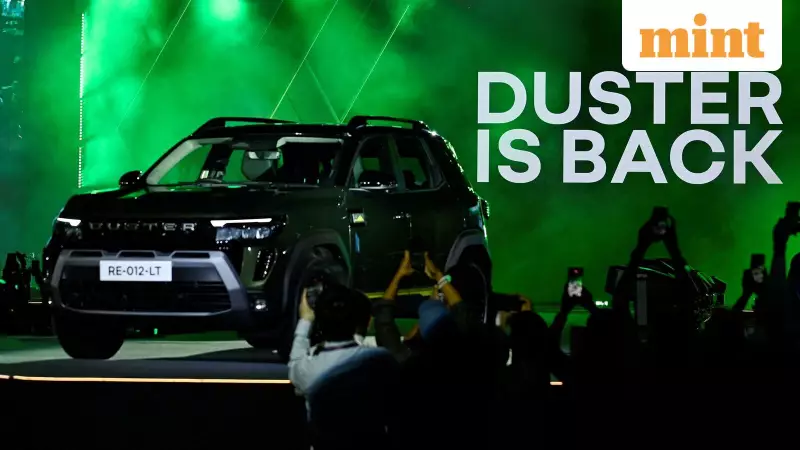
One of Deblaise's paramount responsibilities involves ensuring the successful relaunch of the Duster SUV, which Renault recently reintroduced after halting production in 2022. Originally launched in 2012, the Duster now re-enters an intensely competitive mid-size SUV segment dominated by established models including:
- Tata Sierra
- Hyundai Creta
- Maruti Suzuki Victoris
- Kia Seltos
Cambolive highlighted two transformative developments since the Duster's initial market presence: "First, our vehicle development timeline has dramatically reduced from over five years to under two years. Second, we now utilize flexible dedicated platforms that accommodate multiple vehicle sizes, enabling more responsive market adaptation."
Both executives emphasized that incorporating hybrid technology into the new Duster could significantly enhance consumer appeal. Additionally, Renault's complete acquisition of the Chennai manufacturing plant previously operated jointly with Nissan provides enhanced production flexibility and decision-making autonomy.

Addressing Market Relevance Concerns
Renault's revival strategy responds to concerning market performance indicators, with market share dipping below 1% in 2025 as retail sales declined 10% to 36,420 units. Industry analysts identify sustaining product momentum as Deblaise's critical challenge.
Gaurav Vangaal, associate director for light vehicle production forecasting at S&P Global, observed: "Renault's historical pattern shows initial success followed by declining sales as competition intensifies. The company must address this cyclical trend through aggressive sales strategies and superior after-sales experiences to achieve sustainable market share growth."
Renault's comprehensive approach combines experienced international leadership with a revitalized product strategy, positioning the company for what could become one of the automotive industry's most closely watched market comebacks in recent years.