

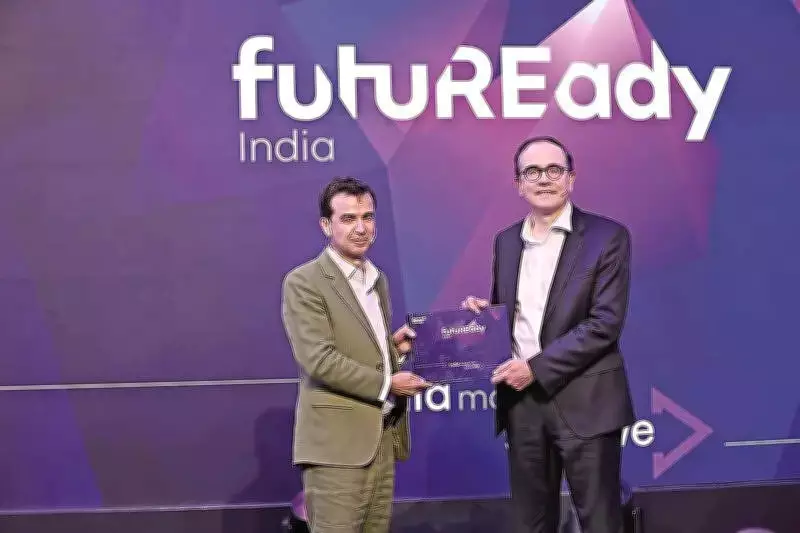
Renault Group Charts Ambitious 'futuREady India' Path with Major Investments and Export Goals
In a significant move to bolster its global footprint, Renault Group CEO François Provost has unveiled the India chapter of the company's 'futuREady 2030' growth blueprint, originally announced in Paris a month ago. During a week-long visit to India, Provost outlined a comprehensive four-pillar strategy that redefines India's role from a mere sales market to a critical hub for scale, engineering innovation, and exports.
Strategic Vision and Market Ambitions
Provost emphasized that Renault's aim in India is not about chasing market leadership at any cost but ensuring long-term durability and sustainable growth. He projected that by the end of this decade, India could emerge as one of Renault's top three largest markets worldwide. Currently holding a modest 0.9% market share, the company is targeting a substantial increase to 5% by 2030. This ambition is underpinned by India's expected contribution of approximately 40% to the growth in total industry volume across Renault's operating markets, excluding America, Europe, and China.
The strategy was detailed at Renault's technical centre near Chennai, which stands as the company's largest outside France, employing around 6,000 professionals. Just 15 kilometers away, the Oragadam plant boasts an annual production capacity of 500,000 vehicles, providing a robust foundation for this expansion.

Product Portfolio and Platform Innovations
On the product front, Renault plans to introduce its most competitive India line-up to date, consisting of seven new models. This portfolio will span a range from sub-four meters to 4.7 meters, catering to diverse consumer preferences with internal-combustion engines, CNG options, and advanced E-Tech solutions such as strong hybrids and electric vehicles.
Stéphane Deblaise, CEO of Renault Group in India, highlighted that the company is building this seven-car portfolio to address various segments. The strategy leverages two key architectures: the Renault Group Entry Platform (RGEP) and the Renault Group Modular Platform (RGMP). RGEP will focus on models priced below Rs 10 lakh, targeting the value-conscious mass market. In contrast, RGMP aims for higher-value segments, supporting multiple body styles, advanced digital interfaces, and diverse powertrains.
By 2030, four Indian models will be based on RGMP, including the next-generation Duster and the upcoming sub-four-meter SUV, Bridger, derived from a multi-energy concept. This platform is central to Renault's electrification push, accommodating strong hybrids and full electric vehicles, with more advanced configurations under exploration. The rollout of these models will be phased, starting from this year.
Export Targets and Global Hub Aspirations
A cornerstone of the 'futuREady India' strategy is the ambitious export target of €2 billion annually by 2030. This goal encompasses both vehicle and component exports, positioning India as a key global hub for Renault's product development and manufacturing. The plan aims to elevate Renault's Indian engineering centre into a pivotal node for global innovation, driving technology and component exports to non-European markets.
Provost addressed the proposed India–EU Free Trade Agreement, noting that Renault's strategy will remain domestically anchored with a strong emphasis on localization. He cited geopolitical and regulatory uncertainties as reasons to avoid heavy reliance on Europe-bound exports or imports. While limited imports may support brand positioning, they will not be central to the approach. Instead, the €2 billion export target will be primarily driven by shipments to markets outside Europe, reinforcing India's role as an export powerhouse.
Conclusion: A Future-Ready Roadmap
Renault's 'futuREady India' strategy represents a bold step towards integrating India into its global operations as a strategic partner for growth and innovation. With plans for new models, increased market share, and significant export revenues, the company is poised to leverage India's potential to drive its long-term success on the world stage.






