Prayagraj Women Transform Waste Polythene into Steady Income Through SRLM Initiative
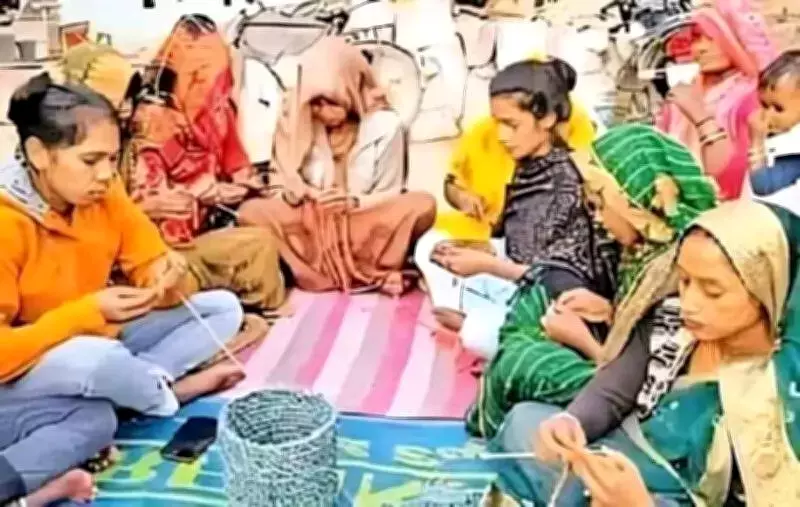
In a remarkable shift from domestic confinement to economic empowerment, rural women in Prayagraj, historically limited to household chores, are now generating a consistent monthly income by creatively repurposing discarded polythene into practical products. This transformative change is being driven by the State Rural Livelihood Mission (SRLM), which has enabled these women to craft items such as laptop bags, mobile wallets, baskets, and tabletops, thereby fostering financial self-reliance.
From Struggle to Success: Seema Devi's Journey
Seema Devi, a resident of Nooruddinpur village in Prayagraj, exemplifies this inspiring transition. For nearly ten years, she grappled with the daily challenge of providing just two meals for her family. Today, her circumstances have dramatically improved as she earns between Rs 8,000 and Rs 10,000 each month by skillfully converting waste polythene into baskets, purses, and various other goods. She dedicates her spare time after completing household duties to this craft, and her newfound income now supports her children's education and covers essential household expenses, marking a significant uplift in her family's quality of life.
Collective Empowerment: Over 40 Women Join the Movement
Seema is not alone in this endeavor. Approximately 40 other women in Nooruddinpur village have embraced the SRLM initiative, engaging in similar polythene recycling work. According to Gulab Chandra, the deputy commissioner of the National Rural Livelihood Mission (NRLM), more than 40 women in Nooruddin village, located in the Bahadur block, have partnered with the mission to produce recycled-polythene products. This collective effort has sparked the emergence of cottage industries across the settlement, with each household operating a small-scale unit that contributes to greater economic independence among rural women.

How the Initiative Works: From Raw Material to Finished Products
The process begins with a city-based firm supplying the raw material—discarded polythene—to the women. Using basic tools, cloth, and twine in their homes, they meticulously transform this waste into a range of useful items, including laptop bags, mobile wallets, baskets, and tabletops. This home-based production model not only minimizes overhead costs but also allows the women to balance their domestic responsibilities with income-generating activities, effectively lighting the path toward self-sufficiency and reducing environmental waste simultaneously.
Impact and Future Prospects
The SRLM initiative has proven to be a game-changer for these rural women, offering them a sustainable livelihood option that leverages local resources and skills. By turning polythene waste into marketable products, they are not only enhancing their financial stability but also contributing to environmental conservation. This model of empowerment through recycling holds promise for replication in other rural areas, potentially scaling up to benefit more women and communities across the region.