Ryanair CEO Sparks Feud with Elon Musk Over Starlink Internet
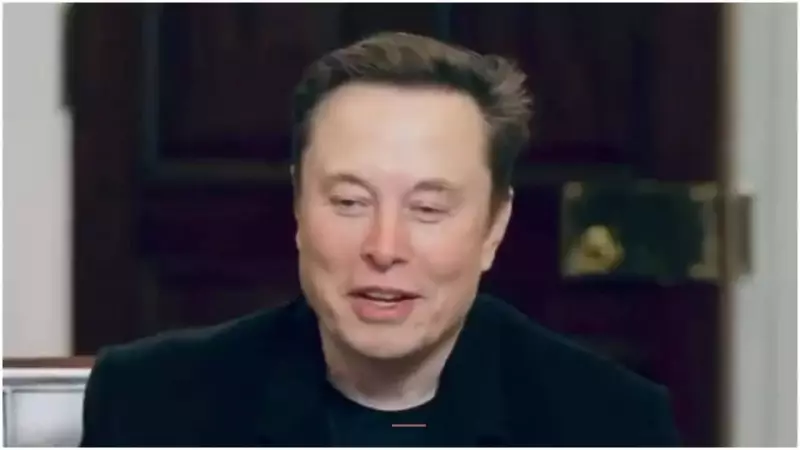
Ryanair CEO Michael O'Leary has openly labeled Tesla and SpaceX CEO Elon Musk an 'idiot'. This strong statement came after Europe's largest airline service denied rumors about installing Musk's Starlink satellite internet on its aircraft.
Radio Remarks Ignite Social Media Firestorm
During an interview on the Newstalk radio show, O'Leary did not hold back. He declared, "I would pay no attention whatsoever to Elon Musk. He's an idiot, very wealthy, but he's still an idiot." Musk quickly responded on the microblogging platform X, formerly known as Twitter. He fired back, "Ryanair CEO is an utter idiot. Fire him."
The conflict centers on Ryanair's decision to reject Starlink internet service for its flights. O'Leary explained the reasoning in a statement to Reuters. He highlighted the practical challenges. "You need to put an antenna on the fuselage; it comes with a 2% fuel penalty because of the weight and drag," he said. "We don't think our passengers are willing to pay for WiFi for an average 1-hour flight."

Cost Concerns and Business Model Clash
O'Leary elaborated on the financial implications. He estimated the annual cost at $200 to $250 million. That translates to about an extra dollar per passenger. "The reality for us is we can't afford those costs," O'Leary stated. "Passengers won't pay for internet or internet usage. If it's free, they'll use it. But they won't pay one euro each to use the internet. So, we're not putting it on board."
He further dismissed Musk's expertise on the matter. "What Elon Musk knows about flights and drag would be zero," O'Leary asserted. He also criticized Musk's social media platform, calling X a "cesspit." O'Leary revealed he avoids social media entirely, saying, "Thankfully, I am too old to get involved in the cesspit that is social media."
Musk countered O'Leary's claims on X. He argued, "They [Ryanair] will lose customers to airlines that do have internet." This debate highlights a fundamental clash between Ryanair's low-cost model and the trend toward in-flight connectivity.
Starlink's Growing Popularity and Technical Claims
Despite Ryanair's rejection, Starlink is gaining traction with other airlines. Lufthansa, Europe's second-largest airline group, announced it would introduce the service. Scandinavian Airlines also operated its first Starlink-enabled flight recently.
Michael Nicolls, Vice President of Starlink engineering, challenged Ryanair's cost assessment. He posted on X that Starlink terminals have a more fuel-efficient profile than other providers. SpaceX analysis indicated a Starlink terminal increases fuel costs by only 0.3% on a Boeing 737-800, the primary model in Ryanair's fleet.
Musk replied to Nicolls, suggesting, "Hmm, must be a way to get that down under 0.1%." This contrasts sharply with O'Leary's cited 2% penalty.
Ryanair's Successful Low-Cost Strategy
Ryanair operates a fleet of 643 airplanes. It carried 206 million passengers last year. Statistics for 4 show it as the world's third-largest airline group, trailing only American Airlines and Delta Air Lines.
The Irish airline's business model focuses on extreme cost efficiency. It offers tickets as low as 15 euros. The strategy relies on quick turnarounds between flights and charging for extras. These include seat selection and on-board sales like scratchcards and duty-free cigarettes.
Every airline that has announced Starlink deals so far provides free in-flight internet. This presents a problem for Ryanair. Even if O'Leary reconsidered, Musk's company would likely not permit Ryanair to charge passengers for Starlink use. Adding a free amenity conflicts directly with Ryanair's no-frills, pay-for-extras approach.
In the United States, budget airlines face intense financial pressure. Many have started offering more premium options. However, in Europe, Ryanair has found remarkable success by sticking to its basic model. It balances minimal services with strong financial performance, even after the COVID-19 pandemic.

The public spat between O'Leary and Musk underscores a larger industry debate. It pits the drive for modern connectivity against the rigid economics of budget air travel. For now, Ryanair passengers will have to wait for their internet fix elsewhere.