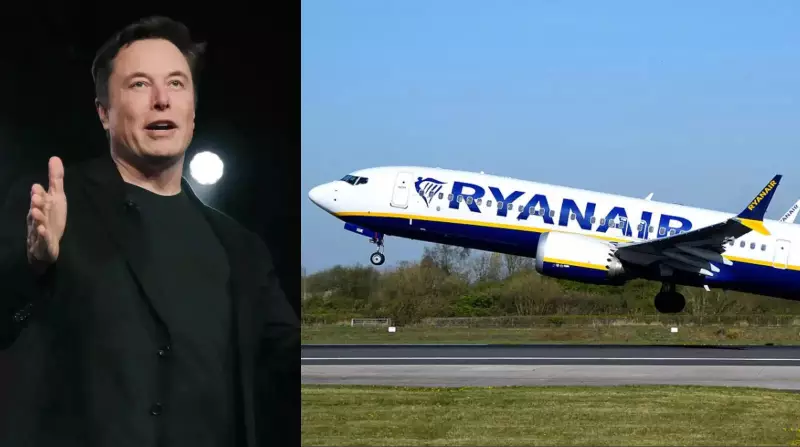
Ryanair CEO and Elon Musk Engage in Heated Exchange Over In-Flight Internet
The public spat between Ryanair's chief executive Michael O'Leary and tech mogul Elon Musk intensified dramatically over the weekend. Both business leaders resorted to name-calling, with each labeling the other an "idiot" in a fiery online confrontation. The core of their disagreement centers on Ryanair's firm decision not to install Starlink satellite internet on its aircraft, unlike competitor Lufthansa.
The Fuel Cost Argument Against Satellite Internet
Michael O'Leary presented a clear economic case for rejecting Starlink. He explained that mounting the necessary antenna on an airplane's fuselage creates additional aerodynamic drag. This drag results in a two percent fuel penalty for each flight. For a budget airline focused on short-haul routes, this added cost is unacceptable.
"We don't think our passengers are willing to pay for WiFi for an average one-hour flight," O'Leary stated firmly in an interview with Reuters. He estimates the total annual cost for equipping Ryanair's fleet of over 640 planes would fall between $200 million and $250 million. This translates to roughly an extra dollar per passenger.

Musk's Warning and the Swift Rebuttal
The debate ignited when Tesla investor Sawyer Merritt shared O'Leary's comments on social media platform X. Elon Musk quickly responded with a stark prediction. "They [Ryanair] will lose customers to airlines that do have Internet," Musk wrote.
O'Leary did not take this criticism lightly. He fired back, calling Musk an idiot and dismissing his expertise on aviation matters. "What Elon Musk knows about flights and drag would be zero," O'Leary asserted. He further criticized Musk's platform, X, calling it a "cesspit" and referenced Musk's past political statements.
The Passenger Perspective and Budget Airline Reality
Ryanair's business model prioritizes ultra-low fares, often starting from just 15 pounds. O'Leary argues that his customers, primarily budget-conscious travelers on short flights, are not interested in paying for internet access. "If it's free, they'll use it. But they won't pay one euro each to use the internet," he said, explaining the commercial reality behind his decision.
The CEO emphasized that passing the multi-million dollar installation and operational cost onto customers is not feasible. For an airline that carried 206 million passengers last year, the financial burden is simply too great to justify the service.
Escalation and Calls for Termination
The war of words reached a new peak when Musk posted his own retort on X. He labeled O'Leary an "utter idiot" and went a step further by suggesting the Ryanair CEO should be fired from his position. This exchange highlights the deep divide between a tech visionary pushing for connectivity everywhere and a pragmatic airline executive focused on bottom-line costs and customer price sensitivity.
The clash underscores a significant industry dilemma: the balance between adopting new technology and maintaining affordable travel. While some airlines race to offer in-flight Wi-Fi as a premium service, Ryanair's leadership remains steadfast, prioritizing cost efficiency over connectivity for now.