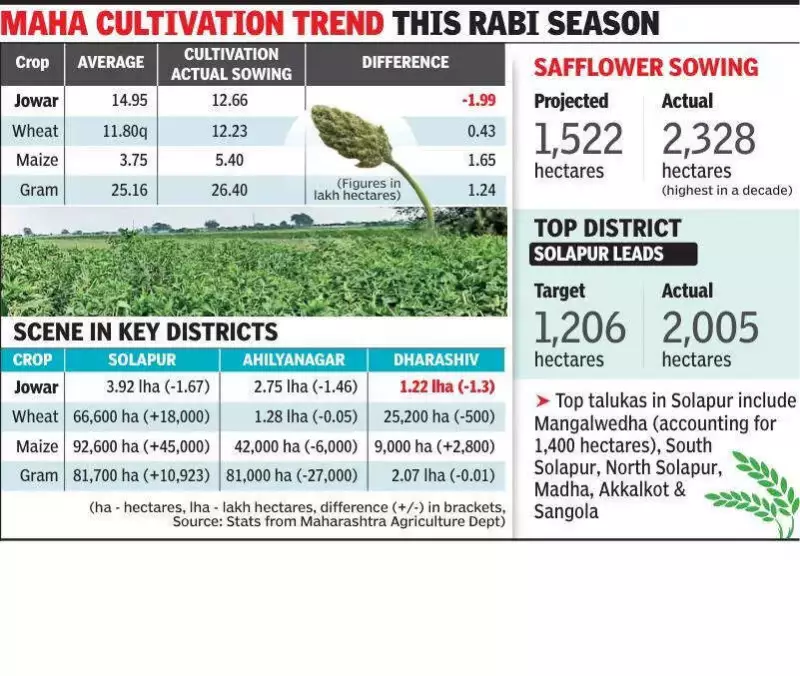
In a significant agricultural turnaround, the cultivation of safflower, locally known as kardai, has witnessed a dramatic surge across the Pune division during the current rabi season. Farmers in the districts of Pune, Solapur, and Ahilyanagar have collectively sown the traditional oilseed crop on more than 150% of the official target area, signaling a robust revival of interest.
District-Wide Performance and Soaring Numbers
The overall sowing area for safflower in the division has reached 2,328 hectares, comfortably exceeding the projected target of 1,522 hectares. This marks the highest acreage dedicated to the crop in the past decade. The revival is attributed to a combination of favourable weather conditions and a growing recognition among the farming community of the crop's economic and agronomic benefits.
Solapur district has emerged as the clear leader in this resurgence. Against a target of 1,206 hectares, farmers have sown safflower on approximately 2,005 hectares, achieving about 166% of the goal. Key contributing talukas include Mangalwedha, which alone accounts for 1,400 hectares, followed by South Solapur, North Solapur, Madha, Akkalkot, and Sangola.

In Pune district, the actual sowing touched roughly 256 hectares, far surpassing the season's target of 119 hectares. However, the story in Ahilyanagar district is more muted. Against a target of 197 hectares, sowing was reported on only about 28 hectares, though this still represents an increase of about 14% from previous levels. Officials noted that uneven soil moisture conditions in parts of Ahilyanagar discouraged wider adoption this season.
Why Farmers Are Returning to Safflower
Agricultural authorities point to several compelling reasons for this shift. Sanjay Kachole, the district agriculture officer, described the trend as encouraging, noting that safflower sowing had declined over the last two decades. "Its resurgence indicates that farmers are experimenting with their crop choices, which brings diversity to local markets," he said.
The primary drivers for safflower's renewed popularity include:
- Lower Input Costs: The crop requires relatively fewer inputs compared to other rabi options, a critical factor amid rising costs of fertilizers and pesticides.
- Moisture Resilience: Safflower is renowned for its ability to withstand moisture stress and thrive on residual soil moisture left after the monsoon, making it ideal for rain-fed areas.
- Market Stability: A steady and reliable demand for safflower oil provides farmers with a sense of price security, unlike the volatility seen in some other crops.
- Short Duration: With a growth cycle of about four months, it fits neatly into rabi crop rotation schedules.
An official explained, "The increase reflects farmers' efforts to diversify cropping patterns amid rising input costs and price volatility in other rabi crops." This year's cold weather has also been favourable for the crop's vegetative growth, potentially supporting improved yields if conditions remain stable.
Cautions and Future Outlook
Despite the optimistic picture, agriculture department officials have issued a note of caution. They warned farmers about the potential risk of pest infestations, particularly aphids, which tend to multiply under fluctuating temperatures. "Regular monitoring and timely integrated pest management are crucial. If pest infestations are not addressed early, they could affect productivity despite the higher acreage," a senior official advised.
Looking ahead, if weather conditions remain supportive, the expanded safflower acreage is expected to make a positive contribution to both oilseed production and farm incomes in western Maharashtra this season. The dramatic spike in sowing area represents not just a statistical achievement but a meaningful shift in farmer behaviour towards resilient and economically viable traditional crops.