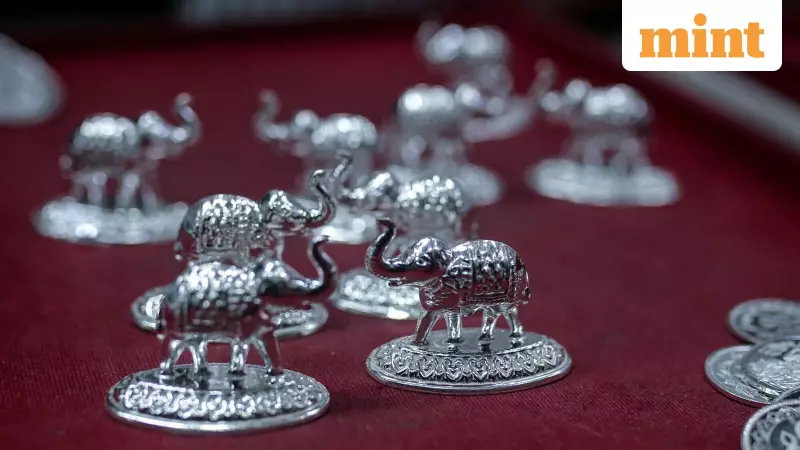
The Indian government's push for digital traceability in precious metals has gained significant momentum, with over 1.6 million silver articles receiving the mandatory Hallmark Unique Identification (HUID) in just the first three months of its implementation. The Consumer Affairs Ministry announced this strong uptake on Thursday, highlighting growing acceptance among jewellers and consumers alike.
Digital Traceability Becomes Mandatory
While hallmarking silver itself is still a voluntary practice, the government has made the HUID compulsory for any silver item that does carry a hallmark. This move, effective from 1 September 2025, is a major step to eliminate fake hallmarking and strengthen guarantees of purity for buyers. The HUID is a unique six-digit alphanumeric code that is laser-marked on each hallmarked gold or silver piece, enabling complete digital traceability and easy verification.
The early response indicates robust acceptance of this nationwide rollout. Regional trends show the southern part of India leading in the volume of silver hallmarking, followed by the western and eastern regions. In terms of purity, grades 925 and 800 account for nearly 90% of all hallmarked silver pieces.

App-Based Verification and Popular Items
Consumers can now instantly verify the authenticity of their hallmarked silver jewellery by using the BIS CARE mobile application. Launched by the Bureau of Indian Standards (BIS), the app displays crucial details including the item's purity, type, jeweller information, and the assaying centre involved.
An analysis of early hallmarking data reveals interesting trends in popular silver items:
- Payals and anklets dominate the list, mostly hallmarked at 800 purity.
- These are followed by silver diyas, plates, idols, and coins.
- Almost all idols are hallmarked at 925 purity (sterling silver).
- About 99% of coins are hallmarked at 990 purity.
The BIS has expanded the recognised silver purity grades to seven: 800, 835, 925, 958, 970, 990, and 999. The agency is conducting nationwide awareness campaigns and meetings with jewellers to ensure the new system is implemented smoothly.
Building on Gold's Success and Boosting Confidence
This initiative builds on the proven success of HUID-based gold hallmarking, which is now mandatory across 373 districts in India. The infrastructure includes 1,610 assaying centres and over 2.08 lakh registered jewellers, with more than 56 crore gold items hallmarked to date.
As the country enters the peak festive and wedding season, jewellers believe the new hallmarking rules will significantly restore consumer confidence. "Making HUID mandatory for hallmarked silver will help build trust in the market," said Brijesh Kumar, owner of Brijesh Fancy Jewellers in Delhi. He added that the traceable code reassures customers worried about purity and protects genuine businesses.
This regulatory push coincides with other government measures to support the domestic silver jewellery sector. Recently, the Directorate General of Foreign Trade (DGFT) placed plain silver jewellery in a restricted import category, requiring specific authorisation. This aims to protect domestic manufacturers and safeguard jobs during a period of high demand.
The jewellery sector is a cornerstone of the Indian economy, employing over 4.3 million people. It contributes about 7% to India's GDP and roughly 15% of the country's merchandise exports. According to consulting firm IMARC, the market was valued at $90.4 billion in 2024 and is projected to reach $150.1 billion by 2033.