Domestic steel companies have raised prices for the second time this January. This move comes shortly after India imposed new safeguard duties on steel imports. The price increases reflect stronger construction demand, low inventory levels and improving market sentiment.
Price Increases Across Steel Products
Steel mills increased prices of hot-rolled coil (HRC) and cold-rolled coil (CRC) by 4% to Rs.51,700 per tonne during the second week of January. This follows an earlier 2-4% hike implemented in early January 2026.
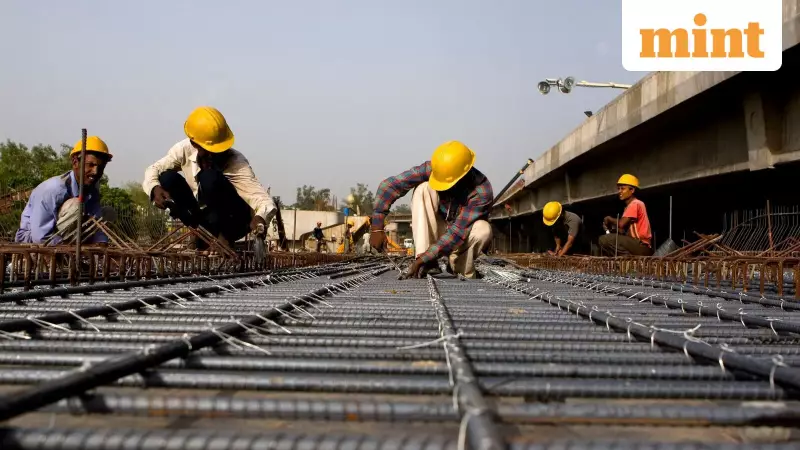
Rebar prices saw an even sharper increase of nearly 7% to Rs.52,500 per tonne in the second week of January. This comes after a 3-4% hike earlier in the month.

Government Policy Support
The government imposed a 12% staggered safeguard duty on steel imports for three years. According to a gazette notification dated 30 December, this duty will decrease by half a percent each in the second and third year.
This policy change has provided additional support to domestic steelmakers as they navigate market conditions.
Market Factors Driving Price Hikes
Several factors have converged to create conditions favorable for price increases. Construction activity has resumed after the monsoon season, boosting demand for steel products. Mills entered January with relatively low inventory levels and healthy bookings from late December.
"A price hike was expected as steel prices bottomed out during October–November," said Aditya Welekar from Axis Securities. "Construction activity resumed after the monsoon, and the three-year safeguard duty provided additional support."
Rebar Leads the Rally
The sharper increase in rebar prices reflects specific market dynamics. "The sharper hike has been seen in rebars, largely driven by demand from the project segment," explained Dhruv Goel, chief executive officer of Big Mint. "This accounts for nearly 70% of rebar sales for large mills."
With the financial year-end approaching, project execution typically accelerates, further lifting demand for construction materials.
Impact on Steel Companies
The quick succession of price hikes could improve margins for large steel producers. It may also influence infrastructure project costs and shape investor sentiment toward steel stocks in coming months.
Among listed steelmakers, Tata Steel has been the top performer so far this year with a 3.47% rise. JSW Steel followed with a gain of 1.34%, while Steel Authority of India (Sail) was marginally higher at 0.62%. Jindal Steel, however, fell 2.38% during the same period.
Room for Further Increases
From a longer-term perspective, current prices still leave room for increases according to industry experts. "Compared with the highs of FY22, prices are still substantially lower," said Niladri N. Bhattacharjee, partner and metals and mining industry leader at Grant Thornton Bharat.
"There is enough headroom for increases, and mills are also looking to recover some of the pressure absorbed over the past few years due to very low domestic prices," he added.
Demand Drivers Remain Strong
Demand from the infrastructure and construction sector continues to show strength. Activity in highways, rail corridors, urban transit, airports, renewable energy projects and digital infrastructure supports this demand.
"Yes, demand has remained robust, particularly from stockists and the project segment," confirmed Goel. "This is providing near-term support to prices."
Limits to Further Price Hikes
Despite recent increases, industry experts caution that further price hikes could face resistance. "The price gap between large mills and mid-to-small players has already widened," noted Goel. "If prices continue to rise, contractors are likely to shift sourcing to mid-sized mills."
This dynamic could limit the upside for further price increases in the near term, particularly for certain products and market segments.
Industry Outlook
The steel industry appears positioned for improved performance in the coming months. Strong order books, improved visibility on near-term demand and lean inventory positions have given mills confidence to implement price adjustments.

However, the ability to raise prices remains largely limited to large players with strong brands and market reach. Market dynamics will continue to evolve as companies navigate changing demand patterns and competitive pressures.