

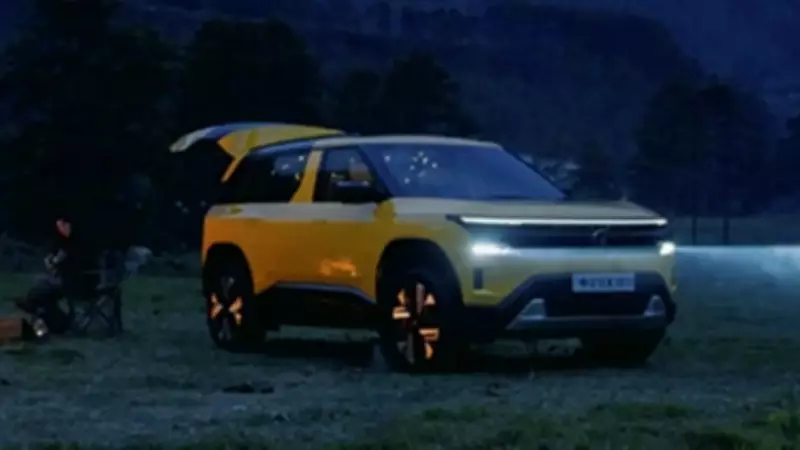
Tata Motors Gears Up for Sierra EV Launch in May 2026, Expanding Electric Portfolio
Tata Motors is strategically expanding its electric vehicle lineup with the highly anticipated Sierra.ev, which is officially scheduled to go on sale in May 2026. This launch will follow a few months after the debut of its internal combustion engine (ICE) counterpart, which has already achieved a remarkable sales milestone of over 20,000 units within approximately four months, demonstrating strong market demand.
Positioning and Market Rivals
The Sierra.ev will be positioned as a mid-size electric SUV within Tata's portfolio, strategically slotting below the Tata Harrier EV and likely above the Curvv.ev. In the competitive Indian automotive market, it is expected to directly rival models such as the Maruti Suzuki e Vitara and the Mahindra BE 6, intensifying the battle for dominance in the electric SUV segment.
Design and Interior Features
In terms of design, the Sierra.ev will closely mirror the ICE version, retaining its distinctive silhouette, large panoramic rear glass area, and overall robust stance. However, Tata Motors will introduce specific EV-centric elements to differentiate it, including a unique front fascia designed for electric vehicles, different alloy wheels, and other aesthetic enhancements.

Inside the cabin, the layout is likely to be shared with the petrol and diesel variants, ensuring familiarity for existing customers. The feature list is projected to be extensive and luxurious:
- Lower variants are expected to feature dual displays, while higher trims could boast a triple-screen setup for an immersive experience.
- Key amenities include a panoramic sunroof, dual-zone climate control, ventilated front seats, and wireless charging.
- Advanced technology offerings will likely encompass a 360-degree camera, a powered tailgate, and a premium 12-speaker JBL audio system with Dolby Atmos support.
- Connectivity features such as wireless Apple CarPlay, Android Auto, and integrated connected car technology are also anticipated to be standard across most variants.
Expected Powertrain and Performance
Under the hood, the Sierra.ev is expected to be offered with two battery pack options, likely around 55 kWh and 65 kWh capacities. There is also speculation about a larger battery pack, potentially similar to the 75 kWh unit found on the Harrier.ev, especially as competitors like the Mahindra BE 6 offer bigger battery capacities to enhance range and performance.
Performance-wise, Tata Motors is expected to provide both rear-wheel drive and all-wheel drive configurations. Higher-end variants could feature a dual-motor setup, akin to the QWD system on the Harrier.ev, which would give the Sierra.ev a significant advantage over many rivals that currently lack AWD options, appealing to enthusiasts and those seeking enhanced driving dynamics.
Innovative Battery-as-a-Service Model
Additionally, Tata may introduce a Battery-as-a-Service (BaaS) model with the Sierra.ev. This innovative approach would allow buyers to lower the upfront cost by opting for a battery subscription plan instead of purchasing it outright, making electric vehicles more accessible and affordable for a broader range of consumers in India.
This move aligns with Tata Motors' commitment to sustainability and innovation, as the Sierra.ev aims to set new benchmarks in the electric SUV segment with its blend of design, technology, and performance.






