Alarming Rise in Tenant Farming Projected for Telangana by 2047
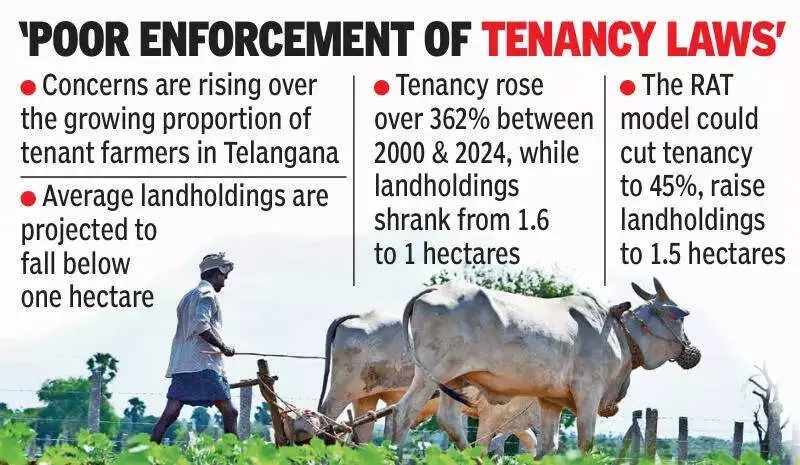
Growing concerns have emerged in Hyderabad regarding the escalating proportion of tenant farmers across Telangana, with projections indicating this demographic could swell to a staggering 65% by the year 2047. Concurrently, the average size of operational landholdings is expected to plummet below the critical threshold of one hectare, raising serious questions about agricultural sustainability and farmer livelihoods.
Sharp Decline in Landholding Size and Rapid Tenancy Growth
According to a comprehensive analysis titled "Telangana Agriculture: Livelihood Scenarios – The strategic choice scenarios across three horizons 2024 to 2034 and 2047", the tenancy rate is accelerating at a pace that outstrips population growth. The report reveals a compound annual growth rate (CAGR) of 6.6% for tenancy. By 2047, the average operational landholding is forecasted to contract to a mere 0.9 hectares, a figure starkly contrasted against the viable average of two hectares considered necessary for sustainable farming.
This analysis was formally presented during the Telangana Agriculture Futures workshops, a collaborative initiative organized by the Telangana Rythu Welfare Commission, the Centre for Sustainable Agriculture, the Deccan Development Society, and the University of Hyderabad. The data underscores a troubling trend observed between 2000 and 2024, during which tenancy increased sharply while the average operational landholding diminished from 1.62 hectares to 1.05 hectares.

Expert Warnings and the Call for Urgent Legal Reforms
GV Ramanjaneyulu, Director of the Centre for Sustainable Agriculture and a member of the Rythu Commission, issued a stark warning. "If left unchecked, the tenancy rate will rise by 43% by 2034. Currently, tenant farmers' access to credit stands at a dismal 5%, and without appropriate legal reforms, it will remain frozen at that level through 2047," he cautioned.
Ramanjaneyulu further highlighted the root cause of land fragmentation, stating, "A farmer would need to spend nearly 20 years of earnings to purchase just one acre of land, and even that would be inadequate due to inflation." The analysis attributes these distressing trends largely to the poor enforcement of existing tenancy laws, with approximately 22% of tenant farmers receiving no institutional support whatsoever.
Workshop Outcomes and Proposed Policy Interventions
The workshop saw participation from several experts, including Rythu Commission chairman Kodanda Reddy and other members. Reddy confirmed that all suggestions and opinions gathered during the intensive discussions would be compiled into a formal report for submission to the state government, signaling a potential pathway for policy intervention.
However, the report clarifies that these grim projections are based on a continuation of the current business-as-usual model. It outlines a more hopeful scenario contingent on the implementation of robust legal reforms. Key proposed measures include:
- The introduction of a model land-leasing policy designed to protect automatic ownership rights, thereby encouraging landowners to lease land without fear of losing ownership.
- Mandatory digitisation of lease agreements to significantly improve transparency and reduce disputes.
- The establishment of specialized tribunals for dispute resolution to provide tenant farmers with accessible legal recourse.
- Dramatically expanded access to institutional credit for tenant farmers, with a target of achieving 50% coverage by 2034.
These interventions are viewed as critical to reversing the current trajectory. If enacted, they could empower tenant farmers, leading to significant gains in productivity and income, and ultimately contributing to a meaningful reduction in tenancy rates over the long term. The future of Telangana's agricultural sector now hinges on strategic policy choices and their effective implementation.