

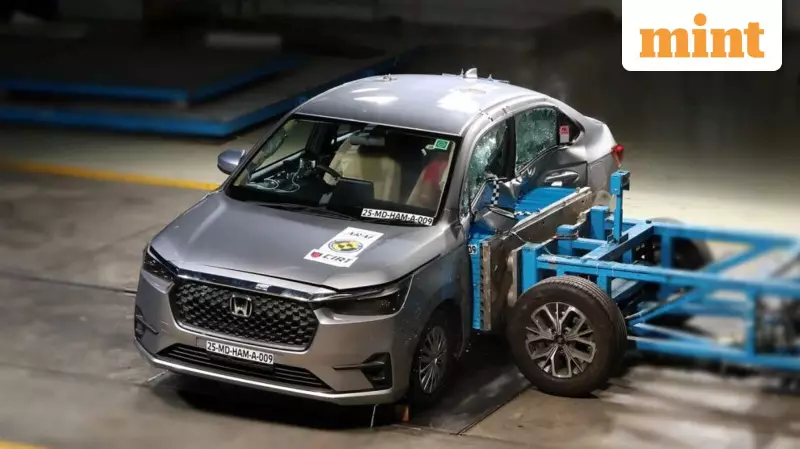
Indian car buyers are undergoing a significant transformation. Today, the modern consumer places passenger vehicle safety at the forefront of their purchasing decision. This shift isn't limited to new car showrooms; even the pre-owned vehicle market is seeing buyers meticulously inspecting safety ratings and features before signing on the dotted line.
Why Safety is Now Non-Negotiable for Indian Car Buyers
This heightened focus on safety is both legitimate and urgent. Indian roads are more congested than ever, with vehicle counts soaring. Average speeds have increased, and alongside them, a growing public awareness about personal safety and consumer rights has taken root. Government initiatives and the persistent work of global safety assessment programs have educated buyers on the critical importance of a car's build quality and its suite of safety features.
India's troubling record in road safety, marked by a high number of fatalities from accidents, makes choosing a robust vehicle a matter of life and death. It's no longer just about fuel efficiency or infotainment; it's about arriving alive.

Active vs. Passive Safety: The Two Shields of Protection
Understanding car safety begins with knowing the two primary categories: active and passive safety features.
Active Safety Features: These are your car's first line of defence. They work continuously to monitor the vehicle and its surroundings, helping to prevent an accident from occurring in the first place. Think of them as proactive guardians.
Passive Safety Features: These are the crucial systems that spring into action the moment a collision is unavoidable. Their sole purpose is to minimise injury to the occupants by managing the crash's destructive forces.
The Essential Checklist: Top 10 Safety Features Your Car Must Have
Whether you're investing in a brand-new model or a trustworthy used car, here are the ten non-negotiable safety features to prioritise.
1. Airbags: Once a luxury, airbags are now a fundamental necessity. They cushion occupants by rapidly inflating upon impact, absorbing crash energy. While older cars may have only a driver's airbag, modern vehicles offer multiple airbags for front, side, and curtain protection.
2. Seatbelts with Pre-tensioners & Load Limiters: The most basic yet vital feature. Advanced seatbelts tighten instantly at the start of a crash (pre-tensioners) and then ease slightly (load limiters) to reduce chest injury, offering superior protection over standard belts.
3. ABS with EBD (Anti-lock Braking System with Electronic Brakeforce Distribution): This system prevents wheels from locking during panic braking, allowing the driver to maintain steering control. EBD optimally distributes braking force between all four wheels for more stable stops.
4. ISOFIX Mounts: These standardised anchors provide a rigid, secure, and error-proof connection for child safety seats, offering the best possible protection for young passengers.
5. ESC (Electronic Stability Control) / ESP: A lifesaver on slippery roads, ESC detects loss of steering control or skidding. It automatically applies brakes to individual wheels to help the driver steer the vehicle back on its intended path.
6. TPMS (Tyre Pressure Monitoring System): This system alerts the driver when tyre pressure is too high or low. Correct tyre pressure is critical for vehicle stability, braking efficiency, and even fuel economy.
7. AEB (Automatic Emergency Braking): Using sensors or cameras, AEB detects an imminent collision with a vehicle or pedestrian. If the driver fails to react, the system automatically applies the brakes to avoid or mitigate the impact.
8. BSM (Blind Spot Monitor): This feature uses sensors to detect vehicles in the driver's blind spots, areas not visible in mirrors. It provides visual or audible warnings when changing lanes could result in a collision.
9. Parking Camera and Sensors: Essential for navigating tight Indian parking spots, these aids prevent low-speed collisions. Rear cameras and sensors are common, with front systems becoming increasingly popular.

10. Reinforced Structure with Crumple Zones: The foundation of safety lies in the car's skeleton. A robust passenger cell made of high-strength steel, combined with engineered crumple zones at the front and rear, absorbs crash energy to protect the occupant cabin.
In conclusion, the evolution of the Indian car buyer is a welcome change towards a safer automotive future. By demanding and prioritising these ten key features, consumers are not just making a smart purchase—they are making a responsible choice for themselves and their families on the world's most challenging roads.





