

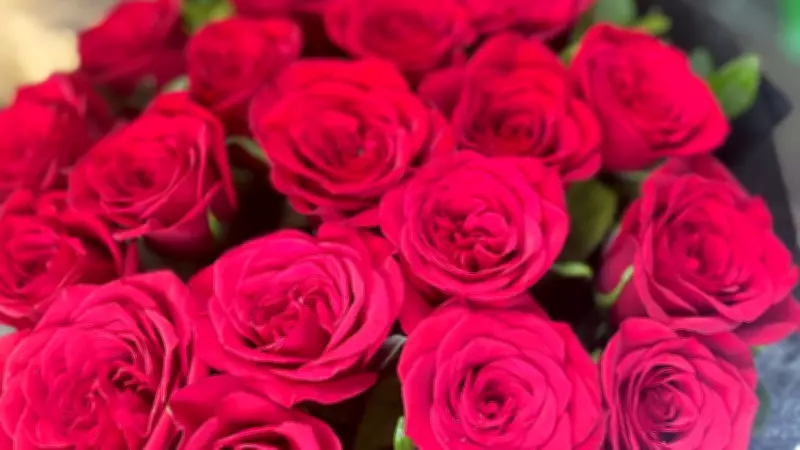
Valentine's Day Rose Prices Skyrocket, Leaving Pune Florists in the Red
As Valentine's Day week approaches, the demand for flowers traditionally brings a wave of prosperity to florists. However, this year, the scenario in Pune has taken a dramatic turn. Florists across the city are grappling with soaring wholesale prices and shifting market dynamics that have pushed their businesses into losses instead of profits, creating one of the toughest seasons in recent memory.
Unprecedented Price Hikes Shock the Industry
Rajesh Gaikwad, a florist with over three decades of experience selling flowers on J.M. Road, expressed his dismay at the current market conditions. "I have never seen such a terrible market," he stated. The price of a bunch of 20 red roses, which previously ranged between Rs 150 and Rs 200, has now skyrocketed to Rs 600–Rs 650 since February 1. Colored roses are even more expensive, costing nearly Rs 800 per bunch. "At these rates, it is impossible to make any margin. My business is running at a loss," Gaikwad lamented.
Shubham from Sayali Florist on FC Road echoed these concerns, noting that the price of a single red rose has climbed from Rs 20–Rs 30 to anywhere between Rs 40 and Rs 100 per piece. "There is a huge demand, but the supply is limited. The quality of roses available is very good, and so is the price, but the quantity is simply not enough," he explained.

Key Factors Driving the Price Surge
Several factors have contributed to this sharp price rise:
- Increased Exports: Gaikwad attributed the shortage to heightened exports of flowers to cities like Hyderabad and Ahmedabad, as well as markets in Gujarat, which has depleted local supplies.
- Weather Conditions: Shubham pointed to unpredictable weather as a major factor affecting production, noting that not only roses but also lilies have seen reduced supply this season.
- Market Competition: The rise of online flower sales and promotional offers by malls—some providing free roses on purchases—has further squeezed traditional florists.
Comparing the situation to last year, Shubham observed a nearly 20% increase in both supply and pricing. However, the cost of a single bunch of roses this year ranges from Rs 600 to as high as Rs 1,200, levels that were completely unexpected. "Whether it's the Pune market, Mumbai market, or even Nashik and Nagpur, prices touching Rs 1,000 were never anticipated," he said.
Impact on Sales and Customer Response
The price surge has had a direct impact on sales, particularly during Rose Day on Saturday. Customers expecting red roses to be priced between Rs 20 and Rs 30 per piece were shocked when florists quoted Rs 40 to Rs 50. "When we quoted Rs 40 to Rs 50, many customers refused to buy. Yesterday's stock is still lying unsold," Gaikwad reported, adding that florists across Pune are facing similar losses.
Ashish, a retailer at Mahatma Phule Mandai, sells red roses at Rs 25 per piece at retail but noted that florists must first separate damaged flowers from each bunch, further reducing their saleable stock and compounding their financial struggles.
Adapting to Market Challenges
Despite the steep prices, Shubham mentioned that the festive season has ensured steady footfall. "People who understand market dynamics are still purchasing," he said, adding that online flower prices are on par with offline rates. To attract customers amid rising costs, Sayali Florist has diversified its offerings, including chocolate bouquets and single tulips, while maintaining high-quality roses.
However, the broader picture remains bleak for small vendors. Gaikwad highlighted the disparity in the industry: "Big players who have entered this industry are not affected by the costs, but small vendors like us are struggling." With costs rising and competition intensifying, Pune's small florists say this Valentine season has been one of their toughest yet, turning a time of celebration into a period of financial strain.






