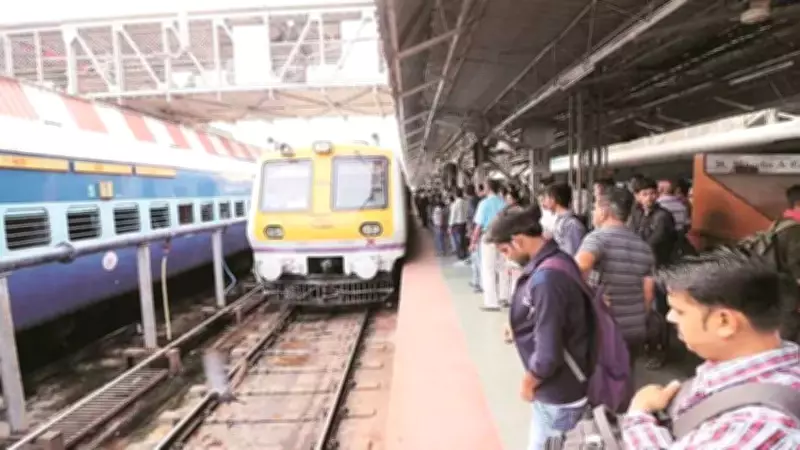
Virar-Dahanu Rail Quadrupling Project Set to Transform Mumbai Suburban Services
The ambitious Virar-Dahanu Road railway line quadrupling project, a critical component of Mumbai's urban transport infrastructure, is poised to dramatically enhance suburban train services beyond Virar. Sanctioned under the Mumbai Urban Transport Project Phase-3 at a substantial investment of Rs 3,578 crore, this initiative is being executed by the Mumbai Railway Vikas Corporation (MRVC). Currently, the project has achieved 47 per cent completion and is on track to be finalized by March 2028, marking a significant milestone in addressing the growing commuter demands in the region.
Understanding the Quadrupling Project
The core of this project involves constructing two additional railway lines parallel to the existing up and down main lines between Virar and Dahanu Road. This expansion will transform the section from a double-track corridor to a four-track system. According to MRVC data, the project encompasses approximately 63 kilometers of new track, along with 16 major bridges, 64 minor bridges, 29 foot overbridges, and comprehensive upgrades to signalling, electrical, and traction infrastructure. This infrastructural overhaul is designed to segregate suburban and long-distance traffic, thereby alleviating current operational constraints.
Current Suburban Service Challenges
Presently, the CST-Virar corridor benefits from segregated suburban fast and slow lines, allowing for peak-hour headways of three to four minutes. In stark contrast, the Virar-Dahanu Road section operates on a double line shared by suburban, long-distance mail/express, and freight trains. This mixed-traffic arrangement has severely limited the expansion of suburban services, despite a steady rise in commuter volumes across Palghar district. Western Railway currently operates around 42 suburban services daily between Virar and Dahanu Road, translating to roughly one train per hour in each direction. This pales in comparison to the several hundred suburban services running daily on the Churchgate-Virar section.

The section faces significant capacity bottlenecks due to the high volume of long-distance traffic. Over 40 long-distance mail and express trains, along with scheduled freight movements, use the Virar-Dahanu stretch every day. With no dedicated suburban tracks, delays to express trains often cascade into local services, disrupting punctuality and increasing waiting times for commuters. Despite these limitations, commuter numbers remain substantial, with Palghar handling over 23,000 daily suburban commuters, Boisar about 22,000, Saphale more than 20,000, and Dahanu Road nearly 18,000. Collectively, stations along this belt account for well over one lakh suburban journeys daily, highlighting the urgent need for enhanced infrastructure.
Expected Transformations Post-Quadrupling
Once the quadrupling is completed, the operational segregation will allow two lines to be dedicated exclusively to suburban services, while the other two will cater to long-distance and freight trains. This separation is expected to enable planners to significantly increase suburban frequencies without disrupting express operations. Western Railway planning documents suggest that the section could eventually support more than 200 additional suburban services, contingent upon rolling stock and signalling upgrades.
In the initial phase, peak-hour headways are projected to reduce from 20–30 minutes to around 10–12 minutes. Vineet Abhishek, Chief Public Relations Officer of Western Railway, stated, "Approximately 80 additional trains can be introduced once the Virar–Dahanu quadrupling is completed. With the existing 42 services, the total could rise to about 122 suburban services, with scope for further increases based on demand." Furthermore, the infrastructure is being designed to accommodate 15-car suburban trains, which can carry roughly 25 per cent more passengers than the current 12-car rakes, thereby boosting capacity without a proportional increase in train movements.

Benefits for Commuters and Future Prospects
For commuters from Palghar, Boisar, Saphale, and Dahanu Road, the project promises substantial improvements, including reduced waiting times, enhanced punctuality, and eased overcrowding through dedicated suburban tracks. The completion of this project is expected to not only meet current demand but also accommodate future growth, with potential expansion up to around 200 services depending on commuter trends. This transformative initiative underscores a strategic response to rapid population growth in Palghar district, where suburban rail remains the primary mode of transport for Mumbai-bound commuters, ensuring a more efficient and reliable travel experience.