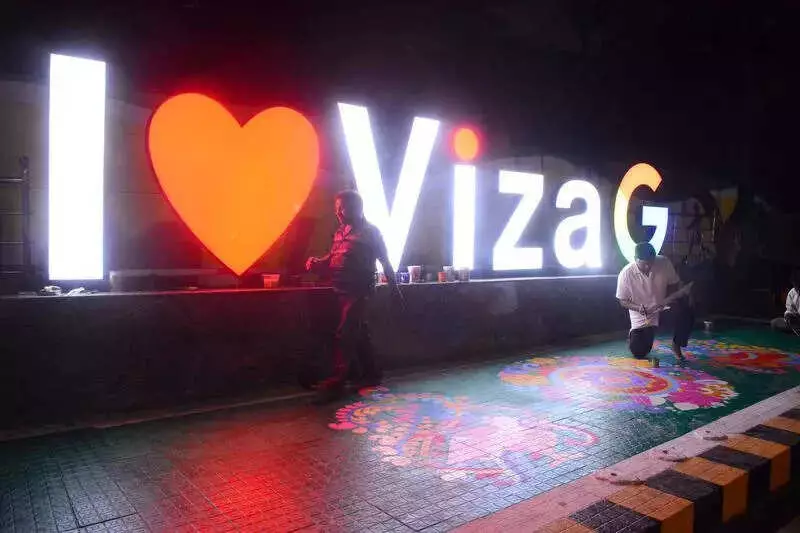
A team of Andhra Pradesh officials recently traveled to Mumbai to study urban development models that could transform Visakhapatnam into a global economic hub. The visit focused on learning how Mumbai's development authorities generate revenue through land monetization and other innovative methods.
Learning from Mumbai's Success
Led by municipal administration principal secretary S Suresh Kumar, the delegation from Visakhapatnam Metropolitan Region Development Authority spent two days in Mumbai on January 12 and 13. They examined how the City and Industrial Development Corporation of Maharashtra Ltd and the Mumbai Metropolitan Region Development Authority operate as financially independent institutions.
The team specifically studied CIDCO's Navi Mumbai and NAINA models. These projects serve as benchmarks for Andhra Pradesh's planned Bhogapuram aerocity and Vizag 2.0 developments. Maharashtra's approach of allocating large land parcels to development authorities has proven successful in generating steady revenue streams.

Financial Models for Sustainable Growth
CIDCO currently manages an annual budget of approximately Rs 14,000 crore. This substantial funding comes primarily from land and real estate revenues. Meanwhile, MMRDA finances major infrastructure projects through various innovative methods.
MMRDA utilizes several revenue generation tools:
- FSI premiums and additional FSI charges
- Land monetization strategies
- Impact fees for development projects
- Stamp-duty-linked surcharges
- Property taxes on incremental built-up areas
- Development charges on land and buildings
- Premiums for properties near metro stations
Vizag's Ambitious Development Plans
NITI Aayog recently released a comprehensive report titled 'Developing Visakhapatnam Economic Region as a Global Economic Hub.' This document covers nine districts from Srikakulam to Konaseema. The Visakhapatnam Economic Region has been selected under NITI Aayog's national growth hub initiative.
Based on lessons learned from Mumbai, Andhra Pradesh is now finalizing two major policy reforms. The first involves land value capture and monetization policies, including specific guidelines for planned industrial and service city development. The second focuses on slum rehabilitation and cluster redevelopment.
Transforming Coastal Visakhapatnam
The Vizag 2.0 project envisions creating a modern, mixed-use, services-led metropolis stretching approximately 40-50 kilometers from Visakhapatnam port in the south to Bhogapuram airport in the north. This development corridor will span 4-5 kilometers in width, covering about 200-250 square kilometers.
Simultaneously, the proposed Vizag Bay City will transform a 25-kilometer coastal stretch between Kailasagiri and Bheemili into a vibrant waterfront city. This 40-square-kilometer integrated coastal hub will feature mixed-use development along the picturesque coastline.
Integrated Development Approach
Vizag 2.0 will incorporate multiple job-creating service hubs throughout its expanse. These include IT and data center facilities at Madhurawada, Kapuluppada and Anandapuram. The Bhogapuram Aerocity will serve as a major aviation-linked development, while an education, skilling and innovation hub is planned near IIM Visakhapatnam.
The development timeline varies between projects. Vizag Bay City targets completion within the next 5 to 7 years, aiming for readiness by FY32. In contrast, Vizag 2.0 represents a multi-decade metropolitan project extending up to FY47.
Official Perspectives on Development
Principal Secretary S Suresh Kumar emphasized how Maharashtra's successful approaches will directly guide Andhra Pradesh's efforts. He noted that empowering development authorities, monetizing government land, utilizing FSI creatively, and developing transit-oriented corridors have proven effective in Mumbai.
VMRDA Metropolitan Commissioner Tej Bharath explained the broader vision. "The Mumbai model demonstrates how regional authorities can transform land into long-term economic engines," he stated. "We're designing the Visakhapatnam Economic Region on similar principles—master-planned growth centers, TOD-linked densification, brownfield redevelopment and land-based financing."

Bharath further clarified the ultimate goal: "We want Vizag to become a self-sustaining metropolitan economy rather than a grant-dependent city. This requires innovative financing and strategic planning that we've observed in Mumbai's development authorities."
The delegation gained valuable insights into Mumbai's advanced urban revenue framework during their visit. This comprehensive system includes multiple revenue streams that could be adapted for Visakhapatnam's development needs. Andhra Pradesh officials now plan to implement similar financial mechanisms to support their ambitious urban transformation projects.