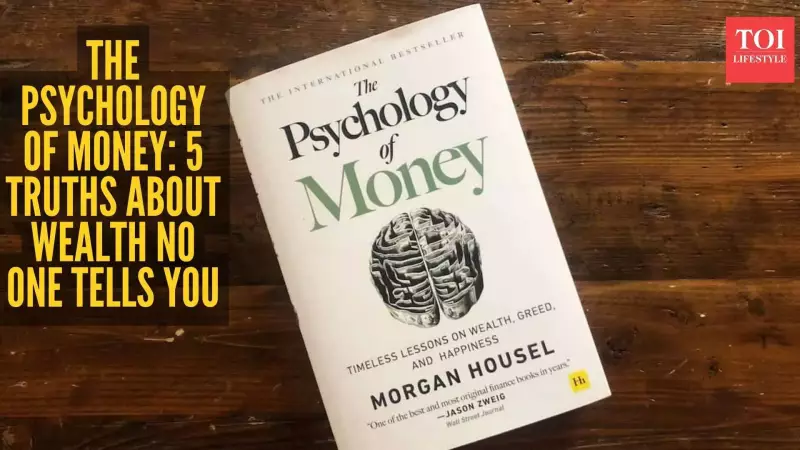
In a world obsessed with stock tips and get-rich-quick schemes, Morgan Housel's bestselling book, 'The Psychology of Money', offers a refreshingly different perspective. Published on January 6, 2026, the book argues that financial success is less about complex calculations and more about understanding human behaviour. It explores why smart people make poor money decisions and how emotions like fear and ego dictate our financial lives.
The Core Philosophy: Behaviour Over Brains
Housel's central thesis is powerful yet simple: doing well with money has less to do with intelligence and more to do with behaviour. This idea challenges the conventional focus on IQ and market knowledge, shifting the spotlight onto our personal histories, biases, and emotional triggers. The book provides crucial insights that many discover only after costly mistakes.
1. Your Money Decisions Are Emotional, Not Logical
We pride ourselves on being rational, but our financial habits are deeply rooted in childhood experiences. If you witnessed financial stress at home, you might become an obsessive saver. Conversely, a comfortable upbringing might lead to a relaxed or reckless attitude towards spending. Housel emphasises that we often judge others' financial choices without understanding their emotional baggage. What seems irresponsible to one person may feel like security to another.

The real takeaway: Your financial plan must be personal. It should align with your unique fears, responsibilities, and life goals. If a strategy allows you to sleep peacefully at night, it is successful, regardless of how it appears to outsiders.
2. True Wealth Is What You Don't See
Society equates wealth with visible symbols—luxury cars, designer clothes, and exotic vacations. Housel turns this notion on its head. Real wealth is often invisible; it's the emergency fund in your bank account, the investments you didn't cash out, and the freedom gained from not having crushing debt. The person driving a fancy car might be burdened by massive EMIs and have no savings for a crisis.
The real takeaway: There is a vast difference between appearing rich and being rich. Genuine financial strength is the freedom and options that come from having control over your money, not from displaying it.
3. The Magic of Compounding Requires Uninterrupted Time
We are captivated by stories of overnight success, but sustainable wealth is almost always a slow, boring process. Housel uses the example of Warren Buffett not to highlight genius but to underscore a critical factor: his extraordinary patience and time in the market. Compounding doesn't demand brilliance; it demands that you stay invested and avoid self-sabotage through panic selling, chasing trends, or giving up too soon.
The real takeaway: Patience is a severely underrated financial skill. You don't need perfect timing; you need to remain in the game long enough for compounding to work its magic.
4. The Uncomfortable Roles of Luck and Risk
This lesson serves as a crucial humbler. While skill and hard work are important, Housel insists that luck and risk play far larger roles in financial outcomes than we are comfortable admitting. Being born in the right era, avoiding a single catastrophic event, or meeting a key mentor can dramatically alter one's financial trajectory. Similarly, risk never fully disappears, even during periods of apparent stability.
The real takeaway: Avoid blindly idolising the successful or harshly condemning those who fail. Learn from others' stories but understand you cannot replicate their exact results. Always build financial safety nets for life's unpredictable nature.
5. The Ultimate Superpower: Knowing What Is 'Enough'
Perhaps the most profound lesson in the book is about defining 'enough'. Many financial downfalls occur not from a lack of income but from an insatiable chase for more—more status, more possessions, more external validation. Greed often disguises itself as ambition. Clearly defining what 'enough' means for you protects against poor decisions, burnout, and perpetual dissatisfaction.

The real takeaway: Decide what constitutes 'enough' in your financial and personal life. Once you achieve it, focus on protecting that contentment. Sustainable growth is rooted in knowing when to stop.
Redefining Your Relationship with Money
Ultimately, 'The Psychology of Money' is not a guide to beating the market. It is a mirror held up to our financial psyche. It convincingly argues that your habits, fears, ego, and patience are more significant determinants of financial well-being than your income or IQ. Money, in this view, is a tool that reflects how we handle uncertainty, temptation, and the passage of time. Internalising these five lessons can quietly but fundamentally transform your relationship with money for the better.