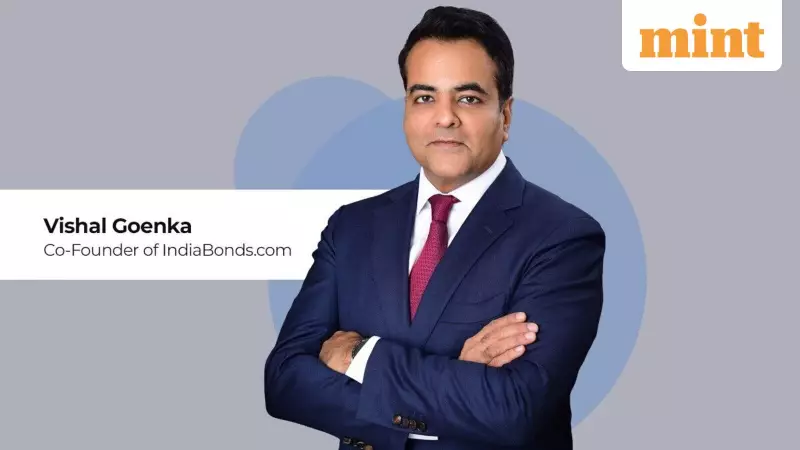
The narrative surrounding bonds in India is undergoing a significant transformation, moving from a niche instrument for large institutions to a viable and active component of retail investment portfolios. According to Vishal Goenka, co-founder of IndiaBonds.com, the year 2025 marked a pivotal shift in this perception, fundamentally changing how bonds are discussed and traded in the country's capital markets.
The Retail Revolution in Bond Investing
Goenka highlights that 2025 was instrumental in rebranding bonds from an 'institution-only' product to a more accessible 'retail-friendly' option for portfolio allocation. This change is not just theoretical; it is clearly reflected in the surging activity within the secondary market. Data reveals that the fiscal year 2025 witnessed close to 11.9 lakh corporate bond trades. This momentum continued to build, and by November 2025, the trade count had already soared to a new high of approximately 16.2 lakh.
"In effect, bonds started being discussed less as a static yield instrument and more as an active, tradable part of India’s capital markets," Goenka stated in an interview. This shift was further supported by monetary policy, as a 125 basis points repo rate cut by the RBI provided healthy gains for short-term bonds, attracting more investor attention.

Fuelling Growth and Navigating Risks
Corporate bonds are increasingly stepping up as a crucial financing engine for India's capital expenditure (capex) cycle. They provide the long-tenor capital required to match project cash flows, offering issuers greater flexibility on structure and maturity. An expanding domestic investor base also enhances funding reliability for companies. As secondary market liquidity improves, it strengthens price discovery and refinancing confidence, ultimately supporting large-scale investments.
However, the journey ahead is not without potential hurdles. Goenka identifies several key risks that could weigh on the Indian bond market in 2026. While the interest rate environment is expected to remain benign with no further cuts anticipated, external shocks pose a threat. These include global geopolitical tensions, increased tariffs, volatility in oil and other commodity prices, and any potential stress in the Non-Banking Financial Company (NBFC) sector stemming from slower economic growth.
Policy Prescriptions for a Deeper Market
To build a more active and liquid corporate bond trading market, Goenka advocates for specific policy interventions. He suggests that the next leg of growth needs to be engineered through strategic changes. Key recommendations include:
- Establishing a regulatory uniform distribution code for bonds, similar to those for equities and mutual funds.
- Creating the right framework for market making in corporate bonds to enhance liquidity.
- Rolling back Tax Deducted at Source (TDS) on listed bonds, as it creates operational challenges and distorts calculated returns.
- Implementing tax equalisation or simplification with other asset classes like equities to create a level playing field.
Advice for the Retail Bond Investor
For retail investors looking to navigate this evolving landscape, Goenka offers clear, prudent advice. He emphasizes treating a bond for what it fundamentally is: a loan to a company. Investors should avoid chasing headline yields blindly. Instead, they should focus on regulated, listed, and rated bonds, carefully read the key covenants, and diversify across issuers.
High-yield bonds should be treated as the "spicy" portion of a portfolio—not the main course—as liquidity and risk become starkly apparent during market stress. A balanced, portfolio approach to fixed income is encouraged, potentially combining high-yield corporate bonds of 2-3 year maturity with long-maturity government or Public Sector Undertaking (PSU) bonds for stability and growth.

The transformation of India's bond market represents a significant opportunity for retail investors to diversify their holdings. By understanding the new dynamics, associated risks, and required policy landscape, individuals can make more informed decisions as they participate in this growing segment of the nation's financial ecosystem.