One of the most uncomfortable experiences for an investor is to lose money. The moment it happens, the human need to recover the loss kicks in. If a stock fell and wiped out a portion of your portfolio, the instinct is to double down, wait for the rebound, and claw back every rupee through the same position.
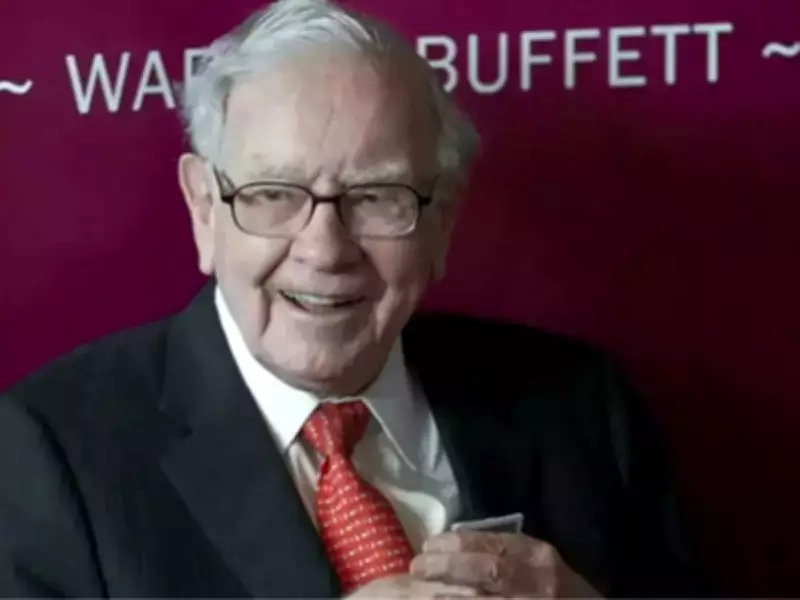
Warren Buffett, the world's richest investor and the man who turned Berkshire Hathaway into a global financial institution, has often warned about this instinct. He emphasizes patience, discipline, and the importance of not repeating mistakes.
Quote of the Day by Warren Buffett
A very important principle in investing is that you don't have to make it back the way you lost it. In fact, it's usually a mistake to try to make it back the way you lost it.

What the Quote Actually Means
This quote by Buffett is a reminder not to panic. Instead, carefully and precisely pay attention to the structural insights about how good investing actually works. Along with this, he also asks you to keep a check on emotional investing, which leads to wealth destruction over time. The quote revolves around a single idea: the path back is not the same as the path forward. Whenever an investor loses money in a stock or sector, they often stay anchored to it. They tell themselves that they completely understand this investment and that they have also conducted thorough research on it. Now, the only thing they have to do is to wait for it to come back. This practice is termed the sunk cost fallacy by behavioral economists: the belief that what has already been spent or lost should determine future decisions.
Buffett is cutting through that entirely. He is saying that the money you lost has no memory of where it came from. It does not know which stock it was sitting in. And crucially, neither does the opportunity that will help you recover it. The capital that remains in your portfolio is completely indifferent to its own history. It can go anywhere. It can be deployed in a completely different business, a different sector, or a completely different kind of investment, and if that new opportunity is stronger, it will grow faster.
The second part of the quote stresses the recovery of losses. Buffett feels that trying to recover the losses the same way is a mistake. Because not only is it unnecessary to go back to the same investment, it is actively harmful to do so in most cases. Whenever a stock witnesses a considerable fall, it is because something has changed—be it the business fundamentals, the competitive landscape, or the market conditions. Doubling down in the face of those changes, driven by the emotional need to be made whole by the same vehicle that hurt you, compounds the original error rather than correcting it.
Why This Principle Is So Hard to Follow
Understanding Buffett's principle is easy, but following it is quite difficult, and the reason lies in human psychology. The first hurdle in completely applying this principle is ego. Admitting that it was a wrong investment means that you are admitting your mistake. Moving capital elsewhere feels like closing the chapter on a failure. Staying in the position, by contrast, keeps the loss on paper rather than realized and maintains the fiction that recovery is still possible through the original bet.
The second hurdle is anchoring. It is often seen that investors become intensely attached to the price at which they bought a stock. For instance, if you purchased a stock for Rs 500 and the stock is now at Rs 300, then Rs 500 becomes a psychological target. Now, all you want is to get back to that number. You make decisions based on that number. However, the market has no knowledge of and no interest in your purchase price. The stock does not owe you a return to Rs 500.
Finally, the third hurdle is loss aversion, which behavioral research has consistently shown to be one of the most powerful forces in human decision-making. The pain of a loss is felt roughly twice as intensely as the pleasure of an equivalent gain. This asymmetry pushes investors toward irrational persistence. Buffett has built his entire career on overcoming exactly these tendencies. His willingness to acknowledge a mistake, exit a position, and redeploy capital into a better opportunity is one of the least celebrated but most important habits behind his success.

Why This Message Matters to Every Investor Today
Markets move fast. Information travels faster. Also, social media and financial news cycles create an environment where sitting still feels like falling behind, and where holding a loss without action feels like weakness. In this kind of chaotic environment, the quote by Buffett functions as a stabilizing force. It is not saying that losses do not matter, or that you should be careless with capital. It is saying something far more actionable: that the best response to a loss is almost never the most emotionally obvious one.
The question every investor should ask after a loss is not "how do I get this back?" It is: "where is the best place for this remaining capital to go?" Those are different questions. They lead to different decisions. And over time, they lead to very different outcomes.
A Simple Takeaway
Warren Buffett did not become the world's most successful investor by being the most aggressive, the most confident, or the most loyal to his past decisions. He became what he is by being relentlessly rational—by letting logic govern capital rather than emotion. With this quote, he tries to explain that losses happen. They happen to everyone, including him. What separates great investors from ordinary ones is not the avoidance of losses but the response to them. And the right response, more often than not, is to look forward and not back.