Chhattisgarh Midday Meal Cooks Stage Indefinite Strike for Better Wages
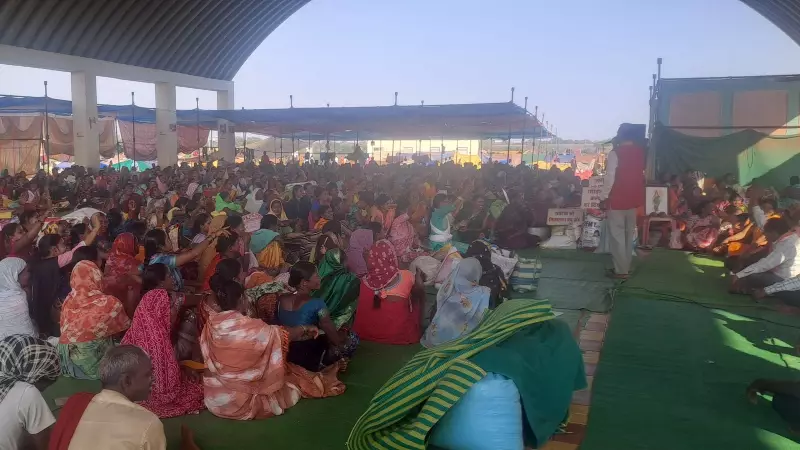
For twenty-one consecutive days, midday meal cooks from government schools across Chhattisgarh have maintained an indefinite strike. They gather at the Naya Dharana Stal protest ground in Tuta, New Raipur. Their central demand is straightforward. They want their daily wages increased from the current Rs 66 to Rs 340 per day.
A Rotating Protest with Deep-Rooted Grievances
The protest site buzzes with activity. Cooks arrive in organized batches, staying for approximately three days before others replace them. Tents line the ground, providing shelter for the protesters. Local vendors have also set up shop, catering to the gathered crowds.
The cooks protest under the banner of the Chhattisgarh School Madhyanbhojan Rasoiya Sanyukta Sangh. Meghraj Baghel, the association's 45-year-old secretary from Kondagaon district, voices the collective frustration. "I have worked as a midday meal cook for three decades," he states. "Survival has become incredibly difficult."

Baghel reveals he took loans worth Rs 90,000 to fund his children's education. He started in 1995 earning just Rs 15 per day. After years of protest, wages slowly climbed to Rs 33, then to the current Rs 66. "This is an injustice," he asserts. He highlights another fear: cooks face termination if student numbers drop in a school.
Working Through Personal Tragedy
The protestors describe immense pressure to work every single day, without exception. Baghel shares a painful memory. He had to work on the very day his father passed away.
Sukrita Chavan, a 40-year-old cook from Rajnandgaon, echoes this heartbreaking reality. "I worked on the day my daughter died in 2024," she says. Her voice carries the weight of unaddressed pleas. "We have many problems, but the government is unable to listen."
Chavan has worked since 2003. She has not received her wages since October. Her husband works as a laborer. She supports two more daughters and has taken loans for their studies. She details the long hours, starting at 10 AM with cleaning rice and ending by 3 or 4 PM after cooking, serving, and cleaning.
Financial Desperation and Feeling Like Bonded Labor
Another protester, Pankaj Pramanik from Kanker, uses strong words. "We are like bonded labourers," he claims. He explains that during elections, they are compelled to cook without any payment. Post-Covid, payment for the last 15 days of June was stopped, with authorities citing adjustments for school holidays.
The financial strain is severe. "We avoid buying good clothes. We avoid eating tomatoes. We see, but we do not buy. Everything is becoming costly for us," Pramanik admits.
Shakuntala Sen from Dhamtari faces similar hardships. Her family struggles to run the household. Her two children, aged 19 and 20, dropped out of college due to a lack of funds. Her husband is a farmer.
Shipra Tarafdar from Kanker adds a dimension of dignity. She feels midday meal cooks are not treated with the same respect as anganwadi workers or Mitanins, who receive honor for their contributions.
Government Response and an Uncertain Future
Senior officials from the Revenue and Education departments did not respond to requests for comment. However, a government source indicated a potential proposal. The source mentioned a plan to increase wages by Rs 1,000 per month, bringing the total to Rs 3,000 monthly. The source clarified that no final decision has been made on this matter.
The cooks continue their protest. Their demand for Rs 340 per day, or Rs 11,400 monthly, remains unmet. Their stories of working through profound personal loss underscore the urgency of their struggle for economic justice and basic dignity.