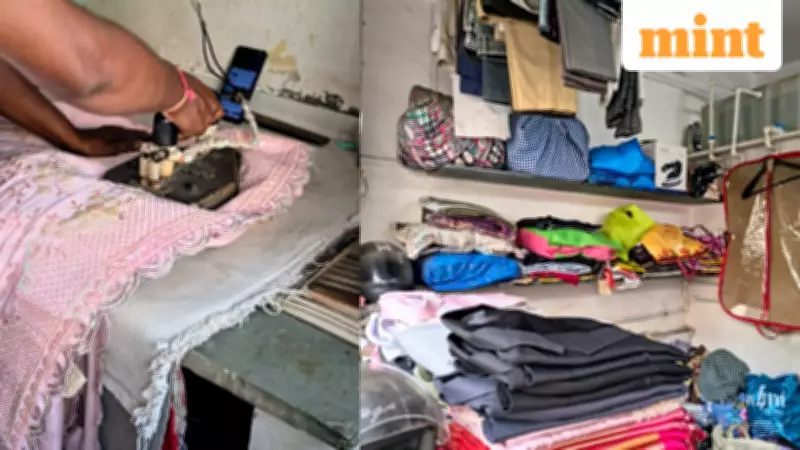
Viral Social Media Post Claims Dry Cleaner Earns Over ₹2 Lakh Monthly
A social media post that has rapidly gained viral attention claims a neighborhood dry cleaning business generates a monthly income exceeding ₹2 lakh. Shared by content creator Nalini Unagar on platform X, the post details a conversation with the owner of a dry cleaning shop located near her residence, sparking widespread surprise and fueling intense debate about income levels and career paths in contemporary India.
Shop Operations and Staggering Income Revelation
In her detailed post, Unagar explained that the business is a family-run operation managed jointly by the shop owner and his wife. They employ two helpers on a salaried basis. The content creator expressed profound shock at the financial figures disclosed during her discussion with the proprietors.
"Yesterday, I was talking with the dry cleaning shop owner near my house, where I regularly go. He and his wife both work together, and they have two helpers on salary. I was shocked when they said they earn around ₹2,00,000 per month, which is equal to a 10+ years experienced software engineer in India," Unagar wrote in her viral post.

Detailed Breakdown of Daily and Monthly Earnings
Unagar provided a comprehensive financial breakdown based on information from the shop owner. According to her post, the establishment irons approximately 350 garments daily at a rate of ₹10 per piece, generating roughly ₹3,500 in revenue each day. Additionally, the shop handles nearly 20 heavier items—including suits, cholis, and premium sarees—which are dry-cleaned and ironed at ₹350 each, contributing another ₹7,000 per day.
This results in total daily earnings estimated at about ₹10,500. With the shop reportedly operating almost continuously, taking only three days off in a month, the projected monthly revenue calculates to an impressive ₹2,83,500.
Expenses and Estimated Net Profit Analysis
The post further elaborated on the business's financial structure. A significant advantage is that the owners do not incur rental costs, as they own the premises outright. Reported operational expenses include an electricity bill of approximately ₹6,000 and combined salaries totaling ₹40,000 paid to the two helpers.
After deducting these costs, Unagar stated the couple is left with an estimated monthly profit of around ₹2,37,500. "They told me these figures are from last month, but on average, they earn ₹2 lakh+ every month," Unagar noted, emphasizing the consistency of this high income.
Social Media Erupts with Humour, Critique, and Broader Perspectives
The viral post triggered a massive wave of reactions across social media platforms, ranging from humorous comparisons to serious economic critiques.

- One user drew a witty parallel to the IT sector, commenting, "Meanwhile, engineers are debugging code at 2 AM for ₹2L a month…, and bhaiya is debugging wrinkles in 2 minutes for the same salary. Moral of the story: Should’ve learned ‘steam engineering’ instead of software engineering."
- Another user raised pointed concerns about taxation, stating, "Most importantly, they don’t pay tax on that profit/income! 80% of India is like this (at a different scale of profit, of course!). Even if half of them pay ‘nominal’ tax, that would reduce the burden on others who are lifting the entire society today!!"
- Others offered more philosophical reflections on careers and value. "The real lesson isn’t ‘quit IT and open a shop.’ It’s this: Income is not proportional to education. It’s proportional to value captured," a third user insightfully wrote.
- Another comment highlighted shifting perceptions: "We’re conditioned to run after white-collar jobs and fixed paychecks, but stories like this remind us that owning a business—small or big—can be equally fulfilling, and sometimes far more rewarding, when done with genuine passion. Appreciate you sharing this perspective."
- A humorous yet cautionary note added, "Now IT will raid him & laundry owners will curse you."
Important Note: This report is based entirely on user-generated content from social media. The claims presented have not been independently verified, and no endorsement of the figures or statements is implied.