Electric Two-Wheelers: The Unseen Engine of India's Clean Mobility Revolution
When discussing India's transition to clean mobility, conversations typically center around electric cars, expansive charging networks, and massive battery manufacturing facilities. However, this perspective overlooks the fundamental reality of how millions of Indians actually travel every single day.
The true workhorse of Indian roads isn't the four-wheeled vehicle but the humble two-wheeler. This segment represents more than 70% of all registered vehicles in the country and accounts for over 50% of petrol transactions. If reducing emissions is truly the objective, the logical starting point isn't premium electric cars but the vehicle category that reaches the most people across the nation.
The Market Shift Is Already Underway
The numbers speak for themselves. In 2025, India recorded over 2.02 million electric vehicle registrations, surpassing the 1.95 million registered in 2024. Electric two-wheelers played the dominant role in this growth, contributing nearly 1.2 million vehicles and exceeding their previous year's total of 1.15 million.

This transformation isn't driven by ideology or marketing slogans but by practical economics and the everyday realities of navigating Indian streets. The shift toward electric two-wheelers represents a fundamental change in how India approaches sustainable transportation.
Urban Realities Favor Two-Wheelers
Indian urban environments are perfectly suited for vehicles that are compact, easy to maneuver, and economical to operate. This explains why two-wheelers have dominated daily transportation for decades. They navigate through congested traffic with ease, fit into tight parking spaces, and are ideal for the short-distance trips that characterize most urban commutes.
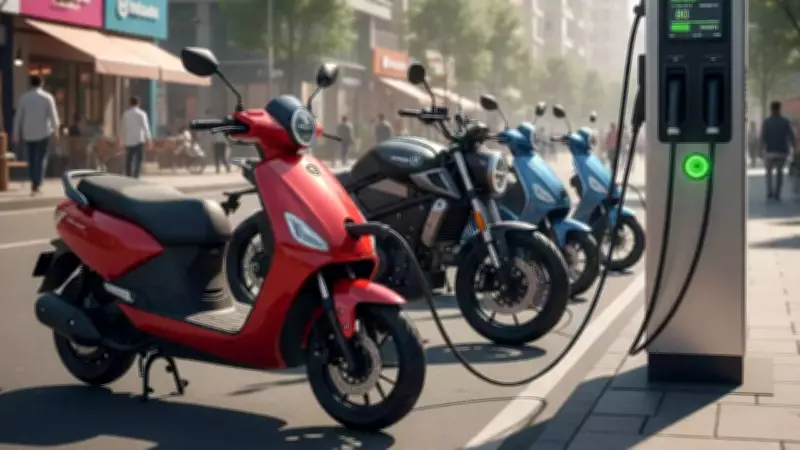
Most city journeys fall well within the range capabilities of modern electric models, and the convenience of charging at home or workplace eliminates the need for lengthy waits at public charging stations. Beyond convenience, electrification addresses pressing urban challenges including noise pollution and deteriorating air quality.
The misconception that electric mobility will primarily arrive through large cars ignores how Indian streets actually function. Two-wheelers already serve multiple roles as personal transportation, shared mobility solutions, and first-and-last-mile connectors. Electrifying this foundational layer of mobility delivers faster and more widespread results than waiting for car electrification to achieve scale.
The Compelling Economics of Electric Two-Wheelers
Affordability determines market winners in India, and this is where electric two-wheelers quietly outperform their petrol counterparts. Petrol prices have increased by approximately 60% over the past five years, significantly raising the total cost of ownership for internal combustion two-wheelers.
Electricity remains substantially cheaper per kilometer than petrol or diesel. For daily riders, these savings accumulate rapidly. Research indicates that the total cost of ownership for an electric two-wheeler can be 20% to 70% lower than equivalent petrol models, depending on usage patterns.
This economic advantage matters profoundly in markets where two-wheelers serve as essential household assets rather than luxury items. Electric models have evolved from premium novelties to sensible financial choices for students, gig economy workers, and families managing tight budgets.
Transforming the Delivery Economy
The explosive growth of doorstep delivery services has fundamentally reshaped transportation needs across Indian cities and towns. Food, groceries, and parcels now predominantly move on two-wheeler fleets rather than larger vehicles.
The pandemic accelerated this transition, and the trend shows no signs of reversing. For fleet operators, electric two-wheelers offer predictable operating costs, reduced maintenance requirements, and insulation from fuel price volatility. Logistics companies are increasingly adopting them for financial practicality rather than environmental branding.

Two-wheelers also demonstrate superior performance in dense urban neighborhoods where larger vehicles struggle with access and parking limitations. Pilot programs with bike taxis and shared trip models further illustrate how electric two-wheelers can enhance public transportation through flexible first-and-last-mile connectivity.
India's clean mobility infrastructure won't be built solely on individual vehicle ownership. It will be constructed upon millions of commercial kilometers traveled daily by electric two-wheelers.
Market Validation and Manufacturing Shift
Previous skepticism regarding electric two-wheelers focused on durability and quality concerns, but that era is rapidly concluding. Sales penetration is projected to exceed 80% by 2030, with current market momentum strongly supporting this trajectory.
Traditional manufacturers that once dominated the petrol two-wheeler market are now aggressively entering the electric segment. This development carries significant implications, as these established firms bring robust supply chains, extensive service networks, and sophisticated financing options to the ecosystem.
When legacy brands commit capital and reputation to electric two-wheelers, the transition becomes less experimental and more inevitable. The 2025 registration numbers confirm this reality. Electric two-wheelers didn't merely experience growth; they shattered previous records and established themselves as the backbone of India's overall EV adoption.
Policy Support Accelerating Adoption
India's clean mobility initiatives align closely with its broader climate change commitments. At the COP26 summit, the government pledged to reduce projected carbon emissions by one billion tonnes by 2030—a target impossible to achieve without electrifying mass mobility segments.
Electric two-wheelers play a disproportionately important role in this effort, given their dominance in vehicle numbers and petrol consumption. Consequently, policy frameworks have specifically targeted this segment. Programs including FAME II, EMPS, and the PM E DRIVE initiative have all provided support benefiting electric two-wheelers, while the Union Budget 2026 reinforced this momentum through measures supporting battery manufacturing, energy storage, and rare earth processing.
The Everyday Revolution
What truly distinguishes electric two-wheelers is how seamlessly they integrate into daily Indian life. They reduce emissions where traffic congestion is most severe, generate savings where household budgets are most constrained, and achieve scale where their impact matters most.
Their growing acceptance in Tier 2 and Tier 3 cities demonstrates that this transition is no longer confined to major metropolitan areas but is spreading to smaller towns where mobility needs are equally pressing and economic considerations carry even greater weight.
India's clean mobility future won't be characterized by parades of luxury electric cars. Instead, it will be powered quietly and efficiently through the everyday choices of millions navigating city streets and smaller town roads, moving decisively forward on two electric wheels.
Disclaimer: Views and opinions expressed in this article are solely those of the original author and do not represent any of The Times Group or its employees.