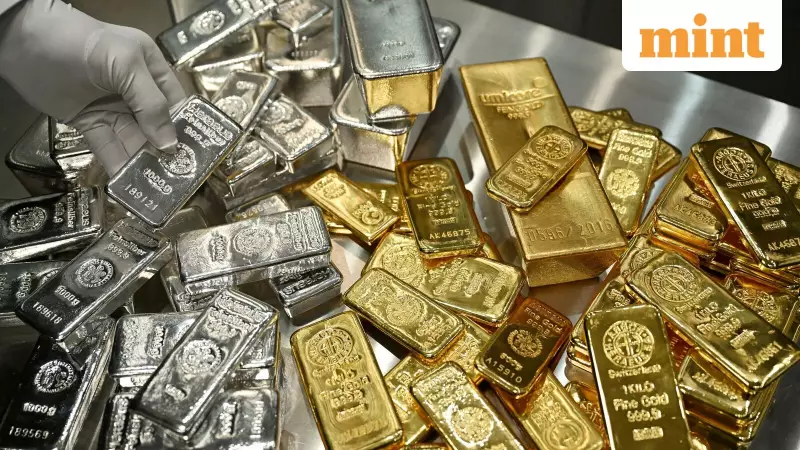
Silver's Meteoric Rise Reshapes Precious Metals Landscape
The precious metals market is witnessing a dramatic shift as silver prices have skyrocketed by an astonishing 200% over the past twelve months, significantly outpacing gold's respectable 80% return during the same period. This remarkable divergence has compressed the traditional gold-silver ratio, prompting leading domestic brokerage firm Motilal Oswal Financial Services (MOSFL) to suggest that gold is now better positioned for the next upward movement in the sector.
Record Highs and Ratio Compression Signal Change
Gold and silver prices soared to unprecedented levels in the domestic futures market on January 23. MCX gold rates surged by 1.8% to breach the significant psychological barrier of ₹159,000 per 10 grams. Meanwhile, MCX silver futures demonstrated even more explosive momentum, rallying nearly 4% to reach ₹339,927 per kilogram.
The gold-silver ratio, a crucial metric traders use to gauge market trends and determine relative value between the two metals, has compressed dramatically from pandemic-era highs of approximately 127 to around 50 at the beginning of 2026. This compression indicates that a substantial portion of silver's catch-up trade has already materialized.

Historical Context and Analyst Insights
Navneet Damani, an analyst at Motilal Oswal, emphasized that this gold-silver divergence signals the need for investors to rebalance weightage in their portfolios. Historically, the gold-silver ratio maintains a long-term average near 70, making the current level of 50 exceptionally low. Damani noted that such extreme levels have proven historically unsustainable, with the ratio typically reverting to higher values over time.
"A move back toward 65–70 would imply relative outperformance of gold, supporting a higher allocation to gold as a risk-managed positioning, not a negative view on silver," Damani explained, highlighting that this strategic shift represents a defensive approach rather than bearish sentiment toward silver.
Volatility Dynamics Favor Gold Allocation
Another critical factor influencing this recommendation is the expanding volatility in silver markets. Silver has exhibited significantly wider daily price ranges and faster swings compared to its more stable counterpart. Gold, in contrast, continues to demonstrate trend stability with controlled pullbacks, making it a more predictable asset in turbulent market conditions.
Damani argues that increasing gold allocation would help smooth overall portfolio volatility while maintaining exposure to precious metals. After capturing a monumental move from ₹60,000 to ₹3,20,000, silver may enter a phase of consolidation or rebalancing at these elevated levels, further supporting the case for gold.
ETF Flows Reveal Investor Sentiment Shift
Supporting this analytical perspective, MOSL pointed out revealing data about investor behavior. Despite silver's strong price performance, global silver exchange-traded funds (ETFs) have experienced outflows exceeding 3 million ounces since the start of 2026. Conversely, gold ETFs have witnessed comparatively steadier inflows, reflecting a growing investor preference for more defensive positioning amid market uncertainty.
Strategic Portfolio Recommendations
In response to these market dynamics, MOSL suggests a revised allocation strategy for precious metals exposure. The brokerage recommends a 75% allocation to gold with only 25% to silver, indicating a clear preference for gold as a relatively steadier hedge in the current environment.
"Going forward, we believe investors can benefit from a rebalanced precious metals strategy—retaining silver as a long-term structural theme, while increasing gold allocation to manage near-term volatility and capture a potentially stronger risk-adjusted opportunity in the next phase of the cycle," Damani added, outlining a nuanced approach that acknowledges both metals' roles in a comprehensive investment strategy.
This analysis comes with an important disclaimer that the views and recommendations expressed belong to individual analysts and broking firms, not Mint. Investors are strongly advised to consult with certified financial experts before making any investment decisions based on market commentary.