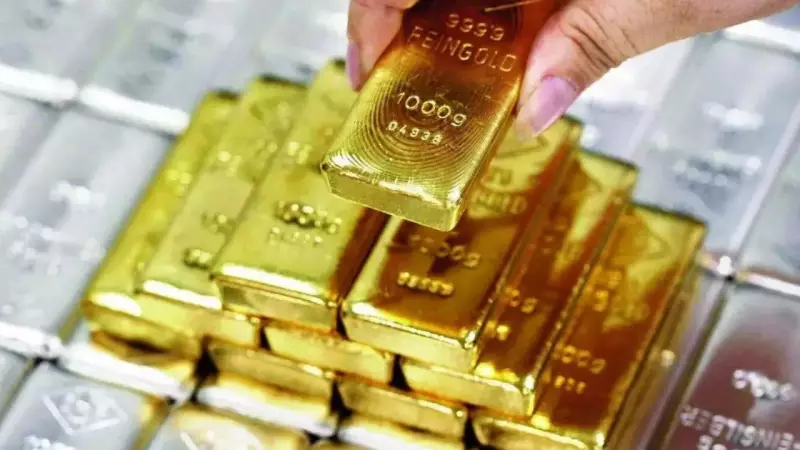
In a remarkable financial trend, gold has cemented its position as the top-performing major asset class in India since the turn of the millennium. Silver follows closely as a strong contender, with both precious metals leaving traditional equity market returns behind by a significant margin. This pattern of outperformance is mirrored in global markets as well.
Staggering Returns: Metals vs. The Market
The numbers tell a compelling story. From the end of 1999 to the present, the price of gold in India has soared from approximately Rs 4,400 per 10 grams to over Rs 1.4 lakh. This translates to a compounded annual growth rate (CAGR) of 14.3%. Not far behind, silver has surged from Rs 8,100 per kilogram to more than Rs 2.5 lakh, achieving a CAGR of 14.1%.
In stark contrast, the leading equity benchmarks have delivered lower returns over the same period. The NSE Nifty provided a CAGR of 11.7%, while the Sensex offered 11.5%. To put this performance gap into perspective, the Sensex would need to be trading near the 1.6 lakh points mark—almost double its current level around 85,000—to match silver's returns. Similarly, Nifty would need to be at about 48,000 points, nearly double its current 26,000 level, to achieve parity with the white metal's growth.

Drivers of Demand: Tradition Meets Modernity
The sustained demand for gold stems primarily from its cultural significance in jewellery and its timeless role as a store of value. Industry estimates suggest that total household gold holdings in India are nearly equivalent to or even exceed the country's GDP, cementing India's status as one of the world's top two gold buyers.
Silver's demand dynamics, however, are evolving. Traditionally driven by coins, bars, and utensils, its use in jewellery is now gaining traction, especially with the recent price surge. Jewellers report an increasing trend of mixing gold and silver to create affordable yet attractive jewellery pieces.
"The yellow metal remains a strategic component of diversified portfolios," notes Vikram Dhawan of Nippon India Mutual Fund. He highlights that Gold ETFs offer a regulated and efficient investment route. "While gold prices may experience short-term volatility, its role as a portfolio diversifier continues to be relevant within a disciplined asset-allocation approach," Dhawan added.
Future Outlook: New Catalysts for Growth
Several interconnected factors are fueling the rise of precious metals. A cycle of interest rate cuts in the US has been a major booster, as a weaker dollar makes dollar-priced gold and silver cheaper in other currencies, stimulating international demand.
Geopolitical turbulence and policy uncertainty have further enhanced their appeal as safe-haven assets. A report by The Silver Institute pointed out that these conditions have particularly supported silver prices.
Exchange-Traded Fund (ETF) investments are adding consistent buying pressure for both metals. For silver, a powerful new demand driver has emerged from industrial applications. The booming solar power, electric vehicle, and semiconductor industries are consuming increasing amounts of silver, creating a supply-demand imbalance that pushes prices upward. Analysts indicate that supply is struggling to keep pace with this accelerating industrial consumption.
Given this confluence of traditional value storage, financial investment, and burgeoning industrial use, the stage is set for gold and silver to potentially continue their impressive run, challenging conventional equity-centric portfolio strategies in India.