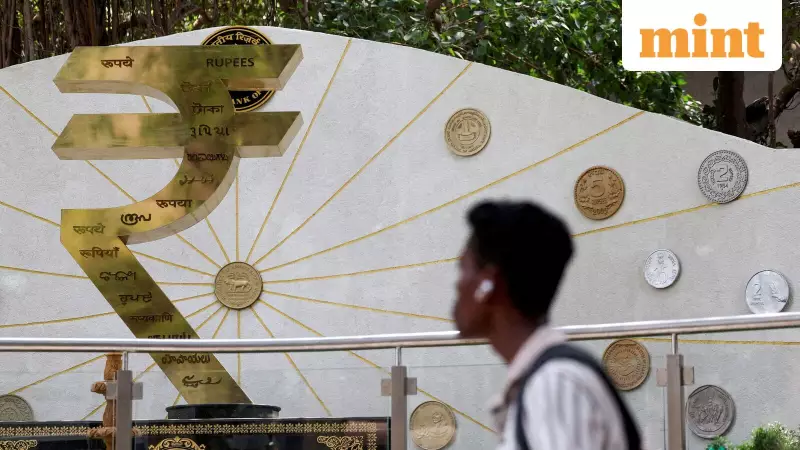
The Indian rupee has become the weakest-performing currency in Asia this year, plummeting to a historic low of 90 against the US dollar. This sharp depreciation has reignited concerns among investors about protecting their wealth from the eroding value of the domestic currency. For Indian families, the impact is direct, with rising costs for foreign education, overseas travel, and other international expenses.
Why Global Diversification is Now a Necessity
Financial experts have long noted that the rupee tends to depreciate at an average annual rate of 2.5% to 3% against the dollar. While the current 5% drop is steeper, it underscores a persistent trend. This depreciation, however, can work in favour of investments held in stronger currencies. When the rupee weakens, the value of foreign-earned returns increases when converted back, providing a natural hedge.
The traditional route for Indian investors—domestic mutual funds with international exposure—has hit a wall. Most have reached their regulatory caps for overseas investments. Furthermore, international ETFs listed on Indian exchanges are often trading at expensive premiums, limiting accessible options. This scenario makes exploring alternative pathways crucial for building a resilient, globally diversified portfolio.

Navigating the New Avenues for International Exposure
Investors are not without options. Several modern channels have emerged, each with distinct features, costs, and structures.
1. The Foreign Broker Platform Route
Platforms like Vested and INDMoney offer direct access to US stock markets. They operate by pooling client money into omnibus accounts held with global custodians. A key advantage is access to fractional shares. This allows an investor to own a piece of a high-value stock like Amazon by investing a small amount, say $27, instead of buying a full share costing $270.
The platform buys the whole share and allocates fractions to investors, who benefit from proportional price movements and dividends. It's important to note that the securities are held in the broker's name, with the investor as the beneficiary. These accounts are protected by the US Securities Investor Protection Corporation (SIPC) for up to $500,000.
2. Investing Through Gift City Funds
Gujarat International Finance Tec-City (GIFT City) offers a unique, tax-efficient structure for outbound investments. Currently, DSP Mutual Fund has a live retail fund with a minimum investment of $5,000 (approx. ₹4.5 lakh). More options are coming, as PPFAS Mutual Fund has received approval to launch passive funds tracking the S&P 500 and Nasdaq 100.
The taxation for these funds is handled at the fund level, not by the individual investor. For instance, long-term capital gains are taxed at 14.95% within the fund. To manage redemption pressures without triggering sales, such funds maintain a cash reserve. A significant benefit is that investments made through GIFT City do not need to be reported under Schedule FA (Foreign Assets) in your tax return, as it is considered Indian territory for tax purposes.
3. Accessing Global Mutual Funds
Beyond US stocks, investors can look at globally diversified mutual funds domiciled in regulated hubs like Ireland or Luxembourg. Platforms are now offering access to fund giants like BlackRock, Vanguard, and Fidelity. These funds provide professional management across global equities and fixed income, often with low minimum investments—sometimes as little as $10. This is a hands-off way to gain broad international exposure without picking individual stocks or countries.
4. Stock Trading via GIFT City Exchanges
The NSE IFSC platform allows trading in the top 50 US stocks through depository receipts (DRs). Each DR represents a fraction of a share, making them affordable. For example, if a stock trades at $210 with a DR ratio of 1:25, the minimum investment is just $8.40. Corporate actions are passed on proportionally. In contrast, the BSE Gift City INX uses a different, broker-mediated model for accessing global markets rather than listing DRs directly.

Tax Implications and Strategic Advice
For investments made outside GIFT City, standard Indian tax rules apply. Gains from assets held for less than two years are taxed as short-term capital gains at your income slab rate. Holdings beyond two years are considered long-term and taxed at 12.5%. All such foreign assets must be disclosed in the Schedule FA of your income tax return.
Financial advisors emphasise a measured approach. Vishal Dhawan, Founder of Plan Ahead Wealth Advisors, suggests that while global diversification is essential, chasing recent outperformance can be risky. An ideal allocation typically ranges between 10% and 30% of one's portfolio. Given current high valuations in some foreign markets, he recommends starting with a smaller allocation and building it gradually through systematic investments.
The weakening rupee is a clear signal for Indian investors to look beyond borders. By understanding and utilising these diverse channels—from fractional shares on foreign platforms to the tax-beneficial structures of GIFT City—investors can effectively shield their portfolios from currency volatility and participate in global growth stories.