Women in West Champaran Forge Path to Self-Reliance Through Traditional Crafts
In the tribal regions of West Champaran, Bihar, a quiet revolution is unfolding as women harness ancestral skills to build sustainable livelihoods, moving from daily wage labor to self-employment and financial independence.
Handloom Weaving: From Local Markets to Global Reach
At the heart of this transformation is the weaving center in Harnatand, often called the capital of the Tharuhat region in Bagaha II block. Here, over 150 women operate traditional handlooms to produce an array of goods including woollen shawls, bedsheets, gamchas, towels, and curtains. What began as modest local trade has expanded significantly, with products now reaching national and international buyers.
Harendra Mahto, who manages the center, highlights the shift: "Most women previously worked as farm laborers or domestic helpers. Today, they earn through self-employment and contribute substantially to their family incomes." The center generates an impressive annual income exceeding Rs 24 lakh, notably from multicolored hospital bedsheets supplied across Bihar.

Personal Stories of Transformation
Paradeshi Devi, who joined the weaving center in 2017, shares her journey: "I used to work as a farm laborer. Now, after completing household chores, I come here and earn between Rs 10,000 and Rs 12,000 monthly. This income helps us manage household expenses comfortably." Her story mirrors that of many women in the area who have transitioned from precarious daily wage work to stable, skill-based earnings.
Diversifying Income Through Multiple Enterprises
Beyond weaving, women in West Champaran are exploring various other ventures to diversify their income streams. These include:
- Soap-making units
- Honey production initiatives
- Mushroom cultivation projects
- Fish pickle preparation businesses
Kriti, who runs a small fish-pickle unit, reflects on the broader change: "International Women's Day reminds us of women's potential. Previously, most women here depended on daily wage labor with limited education access. Now, we are steadily moving toward self-reliance."
Preserving Heritage Through Basketry and Craftsmanship
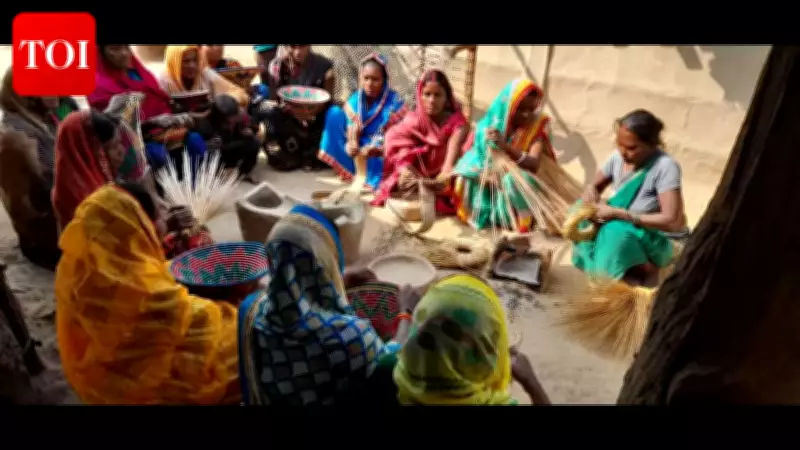
In villages such as Harnatand, Binwalia, Bodhsar, Santpur, and Semra, women utilize naturally growing grass from forests and riverbanks to create traditional baskets, mats, and storage containers. Rani Kumari, who has trained nearly 200 women from Chiutaha and surrounding villages in basketry, emphasizes the cultural roots: "These skills are deeply embedded in our community heritage. With proper training and opportunities, women are turning them into livelihoods that financially support their families."
Grassroots Empowerment Reshaping Social Dynamics
The increasing involvement of women in these initiatives is not only boosting household incomes but also transforming the social fabric of the tribal belt. This movement serves as a powerful example of grassroots empowerment through skill development and entrepreneurial spirit.
Nita Kumari, president of the women's wing of the Bharatiya Tharu Kalyan Mahasangh, notes the progress: "Our organization celebrated International Women's Day, marking the growing empowerment of women in this region." The collective efforts underscore a significant shift toward gender equality and economic resilience in West Champaran.