Financial Literacy Session in Noida Empowers Women with Investment Knowledge
In a powerful demonstration of grassroots change, two young women from diverse backgrounds shared their transformative journeys toward financial independence at a recent event in Noida. Khushboo Kumari, originally from Bihar, began her working life at age 20 with minimal understanding of money management. Working a modest job in her hometown, she diligently saved her earnings but routinely handed them over to her family, lacking any formal guidance on how to utilize or grow her funds. Financial planning was entirely absent from her early adult conversations, she recounted.
From Uncertainty to Empowerment: Personal Stories of Growth
Khushboo's perspective shifted dramatically when she relocated to Pune at 22. There, a mentor introduced her to fundamental investment concepts, including stocks and systematic investment plans (SIPs). "That's when I realized money could be managed and grown effectively," she explained to organizers, describing this moment as a pivotal reshaped her approach to financial autonomy. In contrast, 25-year-old Ashwini developed financial awareness much earlier. As a Class 10 student, she cultivated a habit of saving her pocket money and, once she accumulated a substantial amount, visited a bank with her father. Bank staff provided basic instructions on handling finances, igniting her long-term interest. "That's where my financial journey truly began," she said, noting that this early exposure built her confidence and curiosity about monetary systems.
National Initiative Addresses Critical Gender Gap in Finance
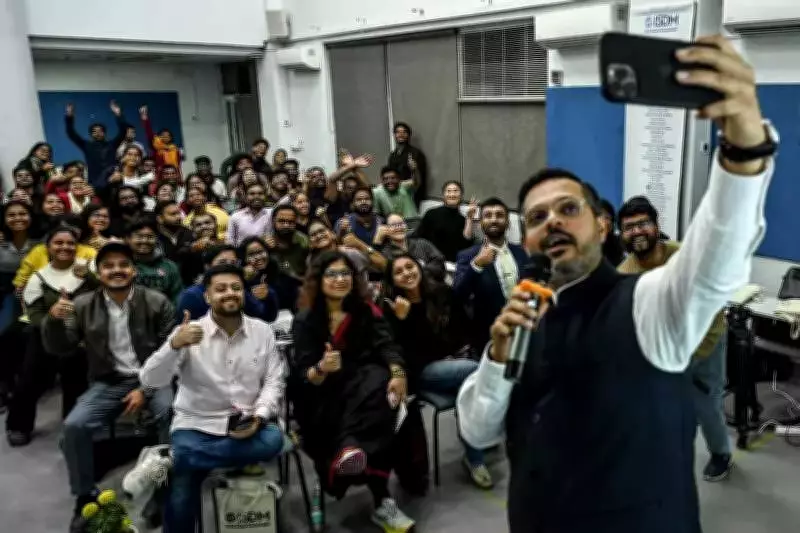
Though their paths diverged initially, Khushboo and Ashwini now share a common objective: to deepen their understanding of both personal and organizational finance, with aspirations to eventually launch their own ventures. Their experiences reflect a broader reality for many women who manage household responsibilities yet receive scant formal education on financial decision-making. To bridge this gap, the Indian School of Development Management in Sector 62, Noida, hosted a financial literacy session as part of the nationwide 'Change The Soch Drive'. This initiative, spearheaded by asset management company Franklin Templeton in collaboration with The Times of India, aims to travel over 4,000 kilometers across 21 cities from Kanyakumari to Kashmir, promoting the message that financial awareness is a universal necessity rather than a specialized skill.

Insights from Leaders on Women's Financial Inclusion
Police Commissioner Laxmi Singh, serving as chief guest at the event, addressed the social norms that frequently exclude women from financial discussions. Drawing on her extensive experience across Uttar Pradesh, she observed that women often shoulder domestic duties but are seldom encouraged to engage in formal financial planning. "In many regions, girls grow up with limited educational and economic opportunities, making financial literacy even more crucial," Singh emphasized. She highlighted that while women actively participate in savings through self-help groups and rural banking programs, many remain unaware of how to convert savings into secure, structured investments. Closing this knowledge gap, she asserted, can substantially enhance women's independence and decision-making authority.
Avinash Satwalekar, President of Franklin Templeton Asset Management (India) Pvt Ltd, reinforced that financial confidence stems directly from awareness. He noted that women are frequently marginalized in family financial conversations, a pattern this campaign seeks to alter. By grasping core principles, individuals find money-related decisions less daunting and more accessible. During the session, Satwalekar elucidated key topics such as:
- The distinction between saving and investing
- The erosive impact of inflation on savings
- The vital importance of long-term financial planning
This event underscores a growing movement to equip women with the tools for economic self-reliance, fostering a future where financial literacy is accessible to all.