

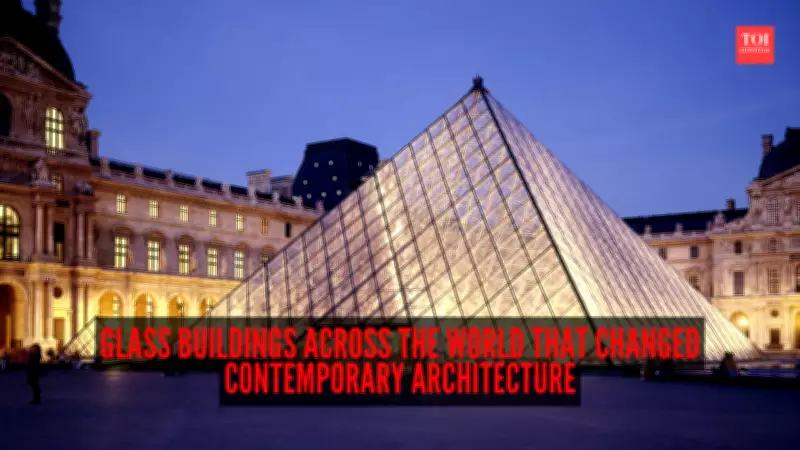
7 Glass Buildings That Transformed Contemporary Architecture
Glass architecture has fundamentally reshaped the visual landscape of modern cities worldwide. Once considered fragile or merely decorative, glass has evolved into a dominant material that embodies transparency, natural light, and open spatial concepts within urban environments. From early experimental facades to today's cultural landmarks, numerous buildings have redefined architectural possibilities through innovative glass applications.
Below are seven remarkable glass structures that have significantly influenced contemporary architecture through their engineering breakthroughs, artistic vision, and lasting impact on design principles.
1. Louvre Pyramid, Paris
Completed in 1989 under the design leadership of I. M. Pei, this striking glass-and-metal pyramid serves as the primary entrance to the historic Louvre Museum in Paris. The structure ingeniously channels natural light into an expansive underground foyer while maintaining unobstructed views of the classical palace above. Although initially met with controversy, the pyramid is now universally celebrated as a masterful contemporary intervention that harmonizes modern aesthetics with historic surroundings.

2. Reliance Building, Chicago
Constructed during the 1890s in Chicago, the Reliance Building pioneered the extensive use of large plate-glass windows across skyscraper facades. Its innovative lightweight steel-frame construction and luminous exterior anticipated the glass-dominated towers that would define twentieth-century architecture. This building marked a crucial transition toward modernist design principles and is currently recognized as a significant National Historic Landmark in architectural history.
3. UN Secretariat Building, New York
The United Nations Secretariat Building introduced one of the first large-scale glass curtain-wall skyscrapers to the world. Its reflective glass facade demonstrated how transparency and sleek materials could embody international modernism. This influential design directly inspired subsequent landmark towers, including the Seagram Building, and helped establish the glass curtain wall as a global architectural standard for corporate and institutional structures.
4. Glass Pavilion, Germany
Designed by Bruno Taut for the 1914 Cologne Deutscher Werkbund Exhibition, this colorful prismatic dome showcased the artistic and structural potential of glass architecture. Featuring reflective surfaces, colored prisms, and luminous interiors, the pavilion demonstrated how glass could shape emotional and visual experiences. This early experimental structure stands as one of the first symbolic monuments dedicated to glass as an architectural medium.
5. Burj Khalifa, Dubai
As the world's tallest building, the Burj Khalifa incorporates approximately 26,000 advanced reflective glass panels within its exterior cladding system. These specialized architectural glass elements provide essential thermal control, glare protection, and resilience against extreme desert conditions. Beyond its record-breaking height, the tower demonstrates how sophisticated glass engineering enables both sustainable performance and striking aesthetics in contemporary supertall structures.
6. Hearst Tower, New York
Opened in 2006 in New York City, the Hearst Tower represents a pioneering example of sustainable glass-and-steel skyscraper design. Architect Norman Foster's creation features a distinctive diagrid structural system that reduces steel consumption while supporting expansive glass curtain walls that maximize natural daylight penetration. As one of the first LEED-certified skyscrapers in the United States, it exemplifies how modern glass architecture can successfully integrate environmental responsibility, structural innovation, and compelling contemporary aesthetics.
7. Seagram Building, New York
Completed in 1958, the Seagram Building emerged as one of the most influential glass skyscrapers in modern architectural history. Its refined bronze-tinted facade and minimalist composition established new standards for corporate tower design worldwide. The building demonstrated that architectural elegance could be achieved through simplicity, precise proportion, and material clarity—principles that continue to influence design decades after its completion.

The Lasting Impact of Glass Architecture
Glass buildings have consistently propelled architecture toward greater openness, luminosity, and structural innovation. From early experimental pavilions to record-breaking skyscrapers, these structures reveal how a single material can transform aesthetic principles, engineering capabilities, and urban identity. Collectively, they demonstrate that transparency in architecture extends beyond visual qualities—it represents technological progress, creative expression, and the evolving relationship between human experience and the built environment.





