America's Abandoned Million-Dollar Mansions: The Forgotten Legacy of the Ultra-Rich
Across the United States, behind rusting iron gates and overgrown, winding driveways, lie silent and haunting testaments to immense wealth that has long since faded. These are not merely neglected houses; they are opulent mansions, some valued at millions of dollars, standing as eerie reminders of the extravagant lifestyles once enjoyed by America's elite. From the grand Gilded Age estates to the sleek modern luxury homes of the wealthy, a pressing question lingers: how can such valuable properties be left behind to rot? The answer unfolds through a complex interplay of economic decline, shifting fortunes, and personal decisions that have led to these architectural marvels falling into disrepair.
Whitemarsh Hall: The Epitome of Lost Luxury
Constructed in 1921, Whitemarsh Hall was once celebrated as the pinnacle of unparalleled luxury, boasting vast grounds and an imposing structure that symbolized American aristocracy. Over the decades, the property changed hands multiple times, gradually succumbing to vandalism and disuse. Its tragic fate was sealed in 1980 when it was finally demolished, marking the end of one of the most lavish homes in American history.
Spreckels Mansion: Coastal Neglect and Ownership Ambiguity
Associated with the prominent Spreckels family, this mansion has faced periods of severe neglect and legal ambiguity regarding ownership. Despite its prime coastal location and significant value, the property has experienced underutilization, demonstrating that even high-value real estate in desirable areas can be abandoned when owners fail to maintain or repurpose it.

Detroit Fisher Mansion: Industrial Decline and Abandoned Wealth
Built during Detroit's booming automotive industry era, this mansion is one of many that were abandoned following the city's industrial decline. These structures, once symbols of prosperity, now stand vacant in various parts of Detroit, illustrating a broader narrative about wealth that proves unsustainable in the face of dramatic economic changes.
The Pabst Mansion: A Tale of Restoration and Hope
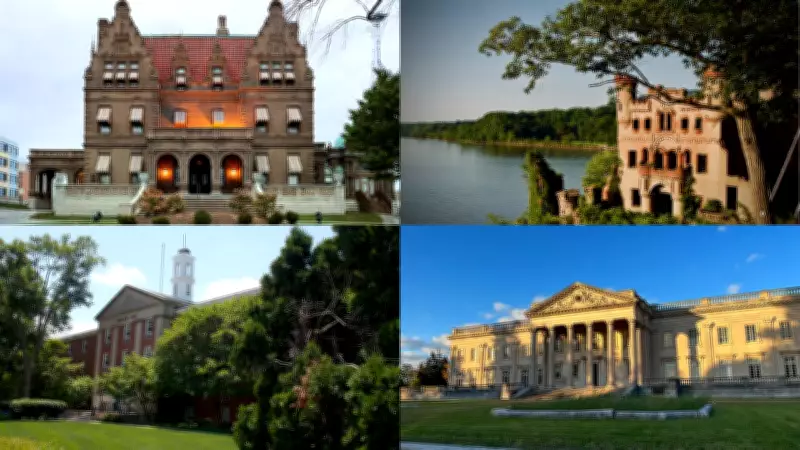
Originally built by brewing magnate Frederick Pabst in the late 19th century, this mansion fell into disuse and faced neglect before being preserved. Its eventual restoration serves as a beacon of hope, showing that while many mansions decay, some can be saved, offering a chance to preserve valuable architectural heritage for future generations.
Lynnewood Hall: Gilded Age Grandeur in Disrepair
Constructed in 1899 by industrialist Peter A. B. Widener, Lynnewood Hall is one of the largest existing Gilded Age mansions in the United States, featuring over 100 rooms that once reflected immense wealth. Today, the mansion lies unused and in a state of disrepair, highlighting the immense challenges of maintaining such vast estates in modern times.
Halcyon Hall: From Luxury to Academic Obscurity
Originally intended as a luxury hotel and later converted for academic use, Halcyon Hall is a quintessential example of architectural grandeur. What once buzzed with the activity of students and tourists is now a vacant, silent structure slowly succumbing to time and nature, showcasing what happens when a building falls into obscurity.
Bannerman Castle: A Haunting Ruin on the Hudson
Perched on an island in the Hudson River, Bannerman Castle was built in the early 1900s as a military surplus warehouse. Over time, explosions, abandonment, and weather damage transformed it into a haunting ruin. Though not a traditional mansion, its castle-like structure and isolated location give it a mysterious, almost cinematic presence.
Villa de Vecchi: A Global Fascination with Abandonment
Although located outside the United States, Villa de Vecchi is often included in discussions about abandoned mansions due to its eerie reputation and stories. Built in the 19th century, its inclusion in global listings underscores the widespread fascination with abandoned mansions and the tales of decay that captivate people worldwide.

These abandoned mansions serve as poignant reminders of the fleeting nature of wealth and the impact of economic and social changes. They stand as silent witnesses to history, urging us to reflect on preservation, legacy, and the stories hidden behind their crumbling walls.