

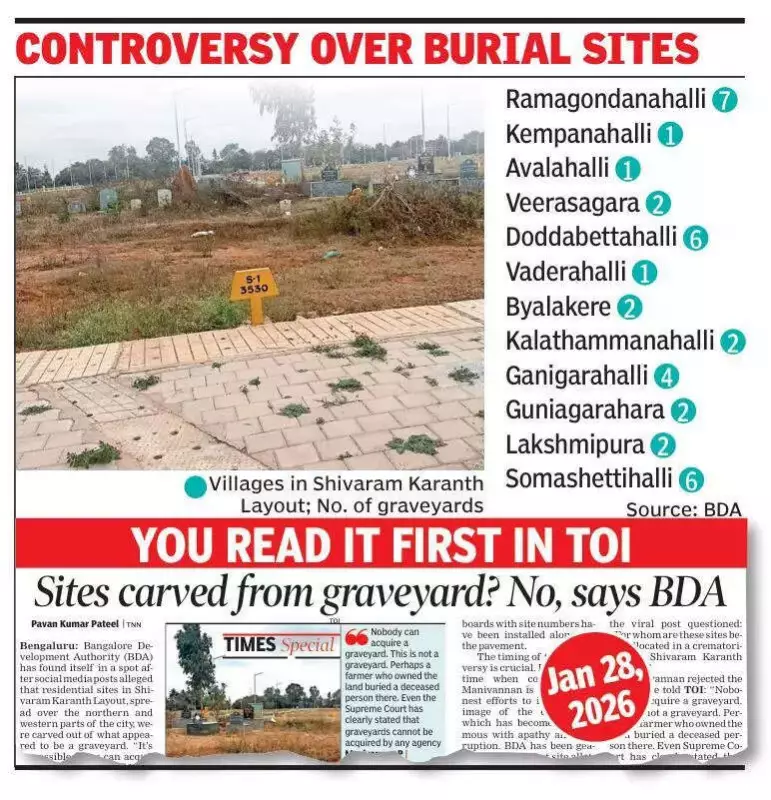
BDA Makes Startling Admission: 36 Illegal Graveyards Found in Bengaluru Layout
In a dramatic reversal, the Bangalore Development Authority (BDA) has acknowledged the existence of 36 illegal graveyards within the Shivaram Karanth Layout, contradicting its earlier dismissal of social media claims. The urban planning authority made this admission on Wednesday following a high-level review of land documents, marking a significant shift in its official position.
From Denial to Discovery: How Social Media Forced Accountability
The controversy erupted when netizen Sunil Reddy posted photographs on X showing tombs scattered across Sector 1 of Shivaram Karanth Layout. His pointed question—"For whom are these sites being allocated in a crematorium?"—quickly went viral, with many users speculating whether the plots were pre-booked by spirits. Initially, BDA officials had firmly denied any graveyard presence, asserting that "nobody can acquire a graveyard."
However, after TOI published a report highlighting the discrepancy, BDA Commissioner P Manivannan ordered a ground check. The subsequent investigation revealed that these burial sites were spread across multiple villages within the layout area, located on privately owned farmland where families had maintained burial grounds for generations.

Compensation Paid, But Questions Remain Unanswered
According to BDA records, compensation was indeed paid during the land acquisition process. However, officials now face uncomfortable questions about how land containing burial sites was ever converted into residential plots. During internal discussions, some officials suggested proceeding with residential development after clearing the areas, while others warned this approach would be problematic.
"A few family members have approached us seeking return of the land or adjustment in compensation. We are willing to return it," Commissioner Manivannan revealed, though he noted only a limited number of claimants have come forward so far.
Park Conversion: A Strategic Shift to Avoid Backlash
In a move aimed at preventing further public outcry, BDA is now considering converting the identified graveyard parcels into public parks rather than residential plots. The commissioner has instructed officials to formally notify these lands and explore their redesignation, marking a significant policy shift.
The decision has found support among prospective buyers. "Samadhi land is not meant for living purposes," said Sandesh Shasthri, who had intended to purchase a site in the layout. "Selling such plots would have caused long-term distress for residents." Many observers have credited Sunil Reddy's viral social media post for bringing the issue to light.
Distribution of Graveyards Across Villages
The investigation revealed the following distribution of illegal graveyards across villages within Shivaram Karanth Layout:
- Ramagondanahalli: 7 graveyards
- Kempanahalli: 1 graveyard
- Avalahalli: 1 graveyard
- Veerasagara: 2 graveyards
- Doddabettahalli: 6 graveyards
- Vaderahalli: 1 graveyard
- Byalakere: 2 graveyards
- Kalathammanahalli: 2 graveyards
- Ganigarahalli: 4 graveyards
- Guniagarahara: 2 graveyards
- Lakshmipura: 2 graveyards
- Somashettihalli: 6 graveyards
Missed Opportunities and Lessons Learned
Officials acknowledged that BDA engineers could have potentially averted the entire controversy by fencing off the graveyards within the layout, clearly demarcating them from residential areas. This oversight has now led to a major public relations challenge for the authority, forcing a complete reevaluation of how sensitive land parcels are handled during urban development projects.
The episode highlights the growing power of social media in holding public authorities accountable and raises important questions about urban planning ethics in rapidly developing cities like Bengaluru.






