

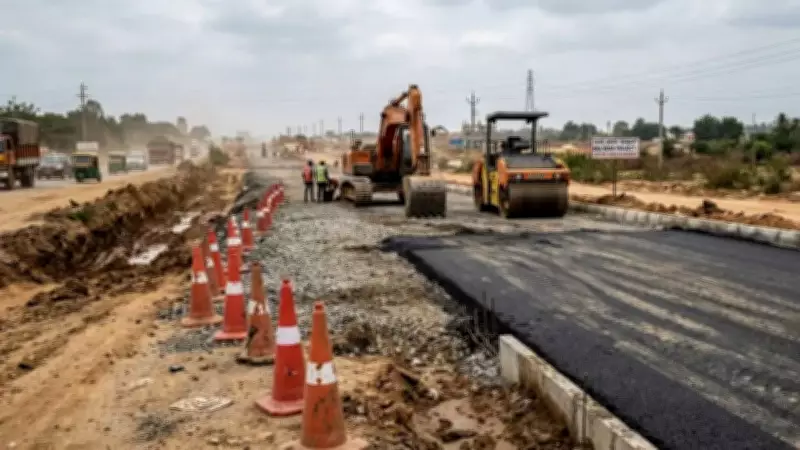
Bengaluru's 210km Intermediate Ring Road Project Revived After Nearly Two Decades
The Karnataka government has breathed new life into the long-stalled Intermediate Ring Road (IRR) project, a 210-kilometer corridor originally proposed in 2007. This revival aims to spur economic growth around Bengaluru's satellite towns while addressing previous land acquisition challenges that hindered progress.
BMRDA to Execute Critical Mobility Ring
The Bengaluru Metropolitan Regional Development Authority (BMRDA) will oversee the execution of the IRR project. This corridor is designed to form a vital mobility ring, connecting emerging growth centers across the city's outskirts. By strengthening linkages between satellite towns and Bengaluru's expanding urban spread, the IRR is expected to significantly improve regional mobility and support development in peripheral areas.
Connecting 12 Satellite Towns for Enhanced Regional Growth
The revived plan focuses on reconnecting 12 satellite towns, including Thattekere, Harohalli, Bidadi, Tavarekere, Nelamangala, Devanahalli, Hoskote, Dommasandra, and Anekal. Improved connectivity between these hubs is anticipated to foster economic activity, reduce travel times, and support the overall growth of the Bengaluru metropolitan region.

Alignment Revisions and Legal Hurdles Overcome
Earlier alignment issues and litigation led the Karnataka High Court in August 2022 to direct a change in the plan. Following this, BMRDA revised the alignment in March 2023, but the new version faced setbacks due to inconsistent road widths and a lack of detailed surveys. After multiple revisions, officials have decided to revert to the original 2007 alignment with limited modifications. This earlier alignment had already been incorporated into the master plans of several planning authorities, which helps reduce potential conflicts and eases integration with existing regional road networks.
Revised Land Acquisition Strategy to Minimize Disruption
The updated plan introduces a revised land acquisition strategy aimed at minimizing disruption to existing layouts. Developers are expected to transfer land free of cost through relinquishment deeds during the approval process. This approach is projected to significantly reduce the government's land acquisition burden, making the project more cost-efficient and less contentious.
Integrating with Bengaluru's Larger Road Network
The IRR will connect stretches between the Satellite Town Ring Road (STRR) and Peripheral Ring Road (PRR), supporting the development of 12 satellite townships. It is set to complement other major infrastructure projects, such as the 228km STRR, the Bengaluru Business Corridor, and 11 infrastructure corridors spanning 75km across the region. This integration is crucial for creating a cohesive and efficient transportation network around Bengaluru.
In summary, the revival of the 210km Intermediate Ring Road marks a significant step forward in Bengaluru's infrastructure development. By leveraging a cost-efficient approach and overcoming past legal and acquisition hurdles, this project promises to enhance connectivity, boost regional growth, and improve the quality of life for residents in and around the city.






