

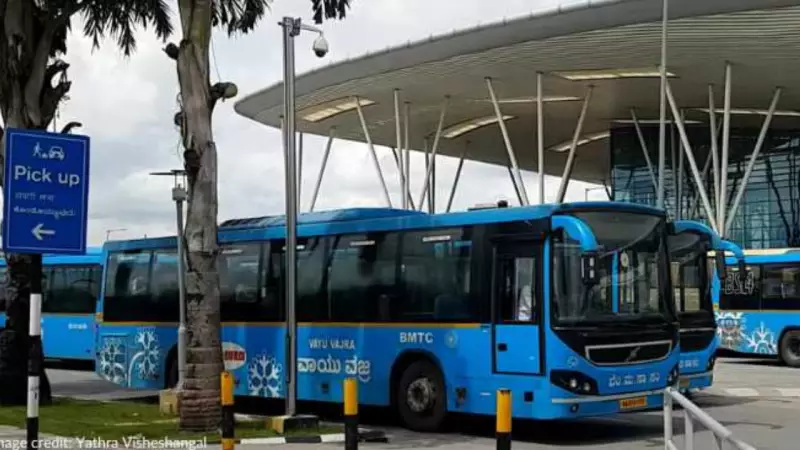
Bangalore International Airport Limited (BIAL) is facing a fresh wave of passenger anger, this time over a significant reduction in space for public transport. The operator has slashed the area allocated to BMTC's crucial Vayu Vajra airport buses at Terminal 1, a move that is disrupting services and pushing travellers towards more expensive private taxis.
Public Transport Takes a Back Seat at Terminal 1
For close to 17 years, BMTC's air-conditioned Vayu Vajra buses have operated from dedicated bays at Terminal 1. Recently, however, BIAL removed one entire row of bus bays. This has substantially reduced the operational space for the buses that serve thousands of passengers daily on the 35-kilometre route between Bengaluru city and Kempegowda International Airport.
The earlier layout featured two rows of eight bus bays each, which allowed for the smooth flow of buses and passengers. This was critical for managing demand, especially since nearly 80% of airport bus users are domestic travellers. Officials confirmed that the space previously reserved for BMTC has now been reassigned to private taxi aggregators under commercial agreements, raising questions about the prioritization of private services over essential public infrastructure.

Operational Chaos and Financial Loss for BMTC
The space crunch has created immediate operational difficulties for BMTC. With limited room to park and manoeuvre, buses are often forced to depart quickly to avoid congestion. This has led to longer waiting times for passengers arriving at the terminal seeking an affordable ride into the city.
The impact is quantifiable: BMTC officials estimate that daily ridership has fallen by more than 1,000 passengers following the change. This drop has triggered a significant daily revenue loss of Rs 3–4 lakh for the public transport utility. The reduction in convenient, reliable bus services is directly affecting the travel choices and budgets of countless commuters.
Passengers Bear the Brunt with Costlier Commutes
The most direct consequence of fewer readily available buses is that passengers are opting for taxis out of necessity. This represents a steep jump in travel costs. A Vayu Vajra bus ticket ranges from a modest Rs 210 to Rs 410, providing a round-the-clock, reliable service. In contrast, a taxi ride from the airport typically costs Rs 1,000 or more, significantly increasing travel expenses for individuals and families.
This shift from public to private transport also has broader implications for the city's traffic. Airport buses play a vital role in reducing vehicle congestion on the already busy Ballari Road. By diminishing the capacity and convenience of the bus service, BIAL's decision could lead to more private vehicles and taxis on the road, worsening traffic conditions on a key airport corridor.
This controversy follows closely on the heels of another passenger grievance regarding revised pick-up points for pre-booked taxis, now located nearly a kilometre from the arrival area. Travellers, especially those with luggage, children, or elderly companions, have reported considerable inconvenience, despite the provision of shuttle services. Combined, these changes paint a picture of an airport experience increasingly skewed towards private, costlier options at the expense of affordable public transit.






