

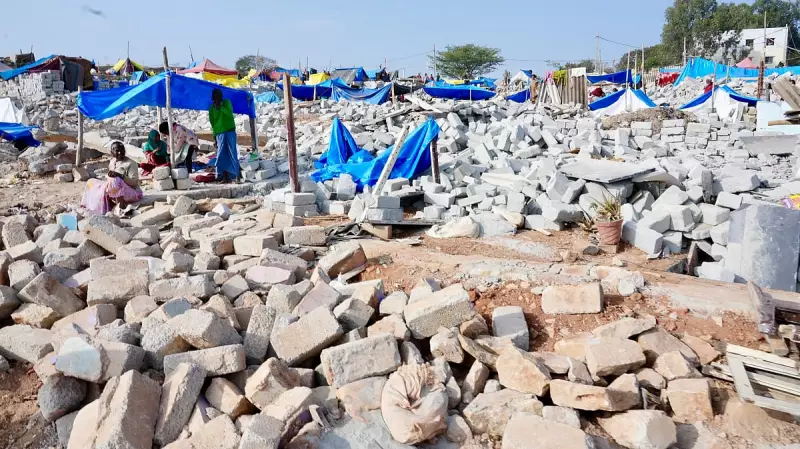
The recent demolition drive conducted by the Bruhat Bengaluru Mahanagara Palike (BBMP) in the Kogilu area has left affected residents confronting a daunting and expensive path to rehabilitation. While the civic body has offered a scheme for those who lost their homes, the associated rules and high costs are creating significant complications and anxiety within the community.
The Demolition and the Proposed Scheme
Authorities carried out the demolition exercise targeting structures built on land originally designated for a primary health centre and other public amenities in Kogilu, near Yelahanka. Following the action, the BBMP presented a rehabilitation scheme intended to provide alternative housing. However, the scheme's framework is proving to be a major hurdle rather than a straightforward solution.
The core of the problem lies in the financial burden placed on residents. Under the proposed plan, eligible individuals must purchase flats in a new apartment building that the BBMP plans to construct. The estimated cost for these flats is reported to be between Rs 22 lakh and Rs 25 lakh. For many of the displaced families, this sum is prohibitively high and far beyond their means, effectively putting formal rehabilitation out of reach.

Stringent Eligibility Criteria Add to the Woes
Beyond the steep price tag, the scheme comes with a set of strict eligibility conditions that further narrows the window for assistance. To qualify, applicants must provide specific documentary proof that their demolished home was their primary residence. The list of required documents is extensive and includes:
- Registered sale deed or gift deed for the property.
- Latest property tax payment receipts.
- Valid Aadhaar card linked to the address.
- Electoral photo identity card (Voter ID) for the location.
- Gas connection book registered at the address.
- Bank passbook showing the same address.
For a large number of residents, especially those from lower-income backgrounds or those who have lived in the area for decades without formalising every document, meeting this comprehensive checklist is a nearly impossible task. The lack of even one document could disqualify them from the scheme entirely.
Community Reaction and Official Stance
The situation has sparked distress and frustration among the displaced population. Residents argue that the scheme's design ignores their socioeconomic reality. Many feel they are being penalised twice—first by losing their homes and second by being offered a solution they cannot afford or qualify for. Community representatives have expressed these concerns to local officials, seeking more pragmatic and accessible alternatives.
On the other side, BBMP officials maintain that the scheme and its rules are necessary to ensure that the benefits reach only the genuine, original residents and to prevent any potential misuse. They emphasise that the flats' cost is based on construction expenses and that the document requirements are standard procedure for establishing legal residency.
The standoff highlights a recurring challenge in urban development: balancing lawful enforcement against encroachments with humane and feasible rehabilitation for those affected. The Kogilu case underscores how well-intentioned schemes can falter if they are not aligned with the ground realities of the people they aim to help.
As it stands, the future for the families of Kogilu remains uncertain. They are caught between the remnants of their demolished houses and a rehabilitation package that seems designed for a different demographic. The resolution of this issue will depend on whether a middle ground can be found—one that upholds the law while offering a truly viable path to resettlement for the displaced residents.






