

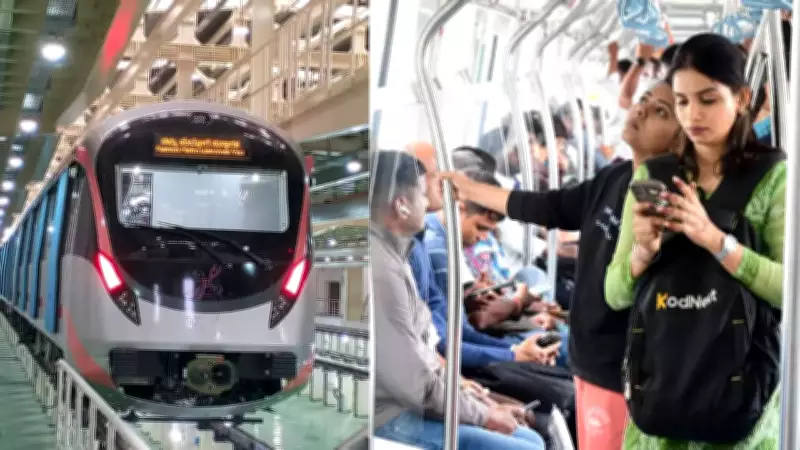
Bengaluru Metro Fare Hike: Commuters Face 5% Increase Starting February 9
In a move that will impact thousands of daily riders, the Bangalore Metro Rail Corporation Limited (BMRCL) has announced a 5% fare hike across all routes, effective from February 9, 2026. This revision marks another increase for what is already considered one of India's most expensive metro systems, following last year's substantial 71% jump in fares.
Revised Fare Structure Details
Under the new pricing framework, metro fares will increase by a minimum of Rs 1 and a maximum of Rs 5 across the system's ten fare slabs. The base fare for the shortest journeys will rise from Rs 10 to Rs 11, while the highest ticket price for extended trips will climb from Rs 90 to Rs 95.
This adjustment affects every ticket category, including:

- Regular single journey tickets
- Tourist cards for visitors
- Group tickets for bulk travelers
- All distance-based fare slabs
Implementation of Annual Automatic Revision Policy
BMRCL officials have clarified that this increase follows recommendations from the Fare Fixation Committee and represents the first application of a newly introduced annual automatic fare revision system. Rather than implementing sudden, substantial price jumps, the corporation plans to adjust fares gradually each year in alignment with inflation rates and rising operational expenses.
Despite operating costs increasing by over 10%, the fare hike was deliberately capped at 5% to minimize the financial burden on regular commuters who depend on the metro for daily transportation needs.
Impact on Bengaluru's Expanding Metro Network
The fare revision applies across Bengaluru Metro's entire 96-kilometer operational network, which continues to expand with new routes and stations. BMRCL management emphasizes that consistent revenue generation is essential for maintaining service reliability, frequency, and quality across the growing system.
With higher maintenance requirements and infrastructure demands accompanying network expansion, officials argue that marginal annual increases represent a more sustainable approach than infrequent but dramatic fare shocks that could disrupt commuter budgets.
Financial Sustainability and Commuter Considerations
BMRCL's primary stated objective with this fare adjustment is to ensure long-term financial stability while preserving service quality. The corporation maintains that small, predictable yearly revisions allow for better planning and resource allocation than sudden large increases.
This latest hike places additional pressure on Bengaluru's diverse ridership, including:
- Office-goers commuting daily to work
- Students traveling to educational institutions
- Regular riders using the metro for daily errands
- Tourists and visitors exploring the city
As Bengaluru's metro system continues to evolve, balancing affordability with operational sustainability remains a critical challenge for transportation authorities and city planners alike.






