

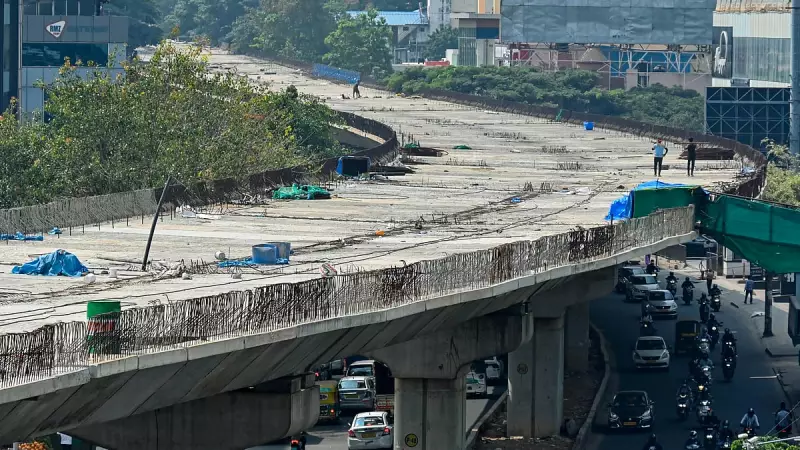
In a significant move aimed at tackling its notorious traffic gridlock, Bengaluru is charting an ambitious infrastructure course. The city's civic body, the Bruhat Bengaluru Mahanagara Palike (BBMP), has set in motion a critical phase for a massive network of elevated corridors.
A Network to Redefine City Commutes
The cornerstone of this plan is the construction of 13 distinct elevated corridors, which together will span an impressive 126 kilometers across the city's landscape. To ensure the projects are grounded in rigorous technical and financial planning, the BBMP has now invited tenders for a crucial preliminary step: the scrutiny and examination of the Detailed Project Reports (DPRs).
This tender process, officially launched recently, seeks to appoint a qualified consultant. The consultant's primary responsibility will be to conduct a thorough, independent check of the DPRs prepared for each of the proposed corridors. This review is not a mere formality; it is a vital exercise to validate the technical feasibility, design robustness, accuracy of cost estimations, and overall planning soundness before the projects are sent for administrative approval and eventual tendering for construction.

The Path Forward and Strategic Importance
The initiative underscores a strategic shift towards large-scale, grade-separated infrastructure to decongest Bengaluru's arterial roads. By creating an elevated network, the plan aims to segregate through-traffic from local traffic, potentially reducing travel time, lowering vehicular pollution at ground level, and improving road safety. The scale of the project—126 km—highlights the administration's recognition of the deep-rooted connectivity issues plaguing India's tech capital.
While the specific alignments and detailed cost projections for all 13 corridors will be clearer after the DPR scrutiny, the move signals a firm intent to push forward with mega-infrastructure solutions. The success of this ambitious plan will hinge on several factors, including seamless inter-agency coordination, efficient land acquisition where required, meticulous execution to minimize public disruption during construction, and sustainable long-term traffic management.
For Bengaluru's millions of daily commuters, this development represents a ray of hope. The planned elevated corridor network, once realized, has the potential to dramatically alter the city's mobility experience, offering a faster and more reliable alternative to the current congested roads. The focus now shifts to the DPR review process, the findings of which will shape the next, more concrete steps of this transformative urban infrastructure project.






