

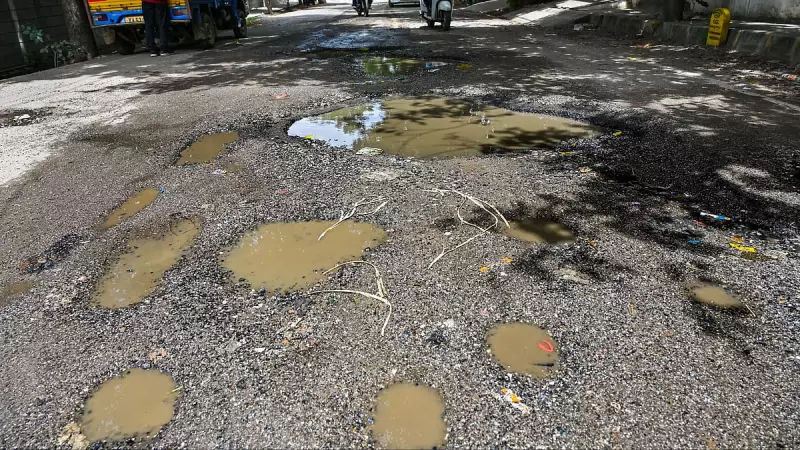
Bengaluru's civic body, the Bruhat Bengaluru Mahanagara Palike (BBMP), is preparing to launch one of its most ambitious and expensive infrastructure campaigns ever. With a staggering budget allocation of Rs 5,500 crore, the corporation aims to comprehensively repair and rebuild the city's notorious road network. The critical question echoing among citizens and experts alike is whether this colossal investment will finally translate into roads that can withstand the test of time and monsoon rains.
The Scale of the Challenge and the Proposed Solution
The plan, as detailed by BBMP Chief Commissioner Tushar Giri Nath, involves a two-pronged attack on the pervasive problem of potholes and crumbling asphalt. A significant portion of the funds, Rs 2,700 crore, is earmarked specifically for the relaying of damaged roads across the city's 225 wards. This work is slated to begin after the conclusion of the ongoing monsoon season, targeting a completion window before the next rains arrive.
Furthermore, the BBMP is pushing for a major shift in construction methodology to ensure longevity. The corporation has submitted a proposal to the state government advocating for the use of concrete roads on all major thoroughfares that are 40 feet and wider. This move is driven by the understanding that asphalt roads, while cheaper initially, deteriorate rapidly under Bengaluru's heavy traffic and weather conditions. Concrete, though more expensive to lay, promises far greater durability and lower maintenance costs over decades.

Accountability and Quality Control Measures
Recognizing past failures where newly laid roads developed potholes within months, the BBMP is introducing stricter accountability protocols. A central feature of the new policy is an extended defect liability period (DLP) of eight years for contractors. This means contractors will be legally bound to repair any defects or damages that appear on the roads they build for nearly a decade after completion.
To enforce this, the BBMP will hold back a portion of the contractor's payment as a security deposit. Commissioner Nath emphasized that the corporation will only release these held funds after the eight-year period concludes satisfactorily. This financial lever is designed to compel contractors to adhere to the highest quality standards during construction, using specified materials and proper techniques.
Past Pitfalls and the Path Forward
The massive spending plan comes against a backdrop of public frustration over perennial road issues. Every monsoon, the city's roads transform into a dangerous obstacle course, causing vehicle damage, severe traffic snarls, and accidents. Previous repair works have often been criticized as temporary "patchwork" rather than permanent solutions.
The BBMP's current strategy appears to be a direct response to this criticism. By combining massive investment, a proposed shift to more durable concrete, and a long-term accountability mechanism for contractors, the civic body hopes to break the cycle of decay and repair. The success of this Rs 5,500 crore venture hinges on flawless execution, rigorous oversight, and the political will to prioritize quality over quick fixes. Bengaluru's millions of commuters will be watching closely, hoping this time the promise of smooth, lasting roads becomes a reality.






