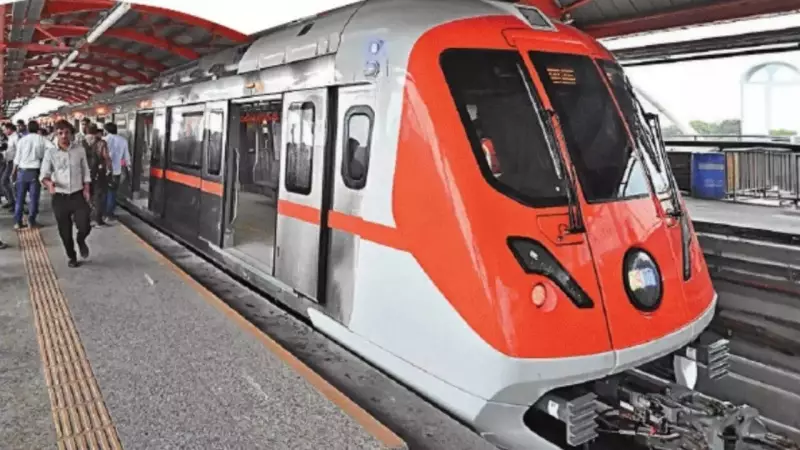
Bhopal is on the cusp of a major urban transformation as its long-awaited metro service prepares to roll out this Sunday, December 21. The inaugural phase will see the Orange Line Priority Corridor become operational, marking a significant milestone for the state capital's public transport infrastructure.
Launch Details and Fare Structure: No Concessions Offered
In a clear departure from the model followed in Indore, the Madhya Pradesh Metro Rail Corporation Limited (MPMRCL) has confirmed that commuters in Bhopal will have to pay the full fare from day one. This ends weeks of speculation about potential free introductory rides. The first phase covers a 7 km stretch with 8 elevated stations: AIIMS, Ankapuri, DRM Office, Rani Kamlapati, MP Nagar, Board Office Square, Kendriya Vidyalaya, and Subhash Nagar.
MPMRCL Managing Director S Krishna Chaitanya explained the decision, stating that Indore's metro network was smaller and did not cover densely populated areas initially. He firmly denied that starting Indore's service with free rides was a mistake, but clarified Bhopal's approach is different based on feasibility.

The fare system is zone-based:
- Zone 1 (1–2 stations): Rs 20
- Zone 2 (3–5 stations): Rs 30
- Zone 3 (6–8 stations): Rs 40
Passengers should note that initial frequency will be low, with a train arriving every 1 hour and 15 minutes. Strict passenger guidelines are in place, including a limit of 500 people inside a station at any time and the use of only Platform No.1 initially.
Citizen Visions: What Bhopal Wants from Its Metro
As the city gears up for the launch, residents from various walks of life are voicing their expectations and hopes for the system's future expansion.
Rajesh Jain, a Rubber Technologist, emphasized that a metro's core function is to connect directly to the airport, passing through key commercial hubs like New Market and MP Nagar.
Ashi Singh, an IT Consultant with experience of London's Tube, highlighted the need for the metro to be within walking distance of residential areas to avoid dependency on costly feeder services. She pointed out the potential for it to become the safest transport for women and children if it connects to areas like Sankhedi.
Dr. (PT) Shruti Jasuja, a Spine Rehabilitation Expert, stressed the metro's importance for differently-abled individuals, offering smoother rides than bumpy roads. She advocated for future connectivity to Mandideep, the Secretariat, and Ayodhya Bypass for better patient access.
Surendra Tiwari, Convener of the Bhopal Citizens Forum, raised a critical point about population density and feeder networks. He noted that many service-class residents in areas like Kolar would have to travel far to reach Phase I stations and called for express connectivity options until a dedicated line is extended.
Building an Inclusive and Inspiring System
The conversation around the metro extends beyond mere connectivity to encompass inclusivity and civic pride.
Rohit Trivedi, a Professor and Volunteer Consultant for persons with disability, revealed that sensitization programs with the metro corporation are already underway. He pointed to the Delhi Metro's escort system for visually impaired passengers as a model and stated that Bhopal's implementation will be evaluated once operations begin.
Perhaps the most visionary perspective comes from school student Hardik Roshan Sukheja. He envisions the metro as a space that celebrates the city's heroes—martyrs, organ donors, and change-makers—through station decor. His dream includes solar-powered trains, digital ticketing, soundproof corridors, and a system that feels like a celebration of Bhopal's spirit.
The launch of the Orange Line is just the beginning. The true success of the Bhopal Metro will be measured by how it evolves to meet these diverse aspirations, connecting not just stations, but the hearts and daily lives of the city's residents.