

Bhubaneswar Municipal Corporation Revives Modern Abattoir Project After Decade-Long Stagnation
In a significant move to transform meat processing standards in the capital city, the Bhubaneswar Municipal Corporation (BMC) has initiated a fresh bidding process to finally make the modern abattoir at Gadakana operational. This development comes nearly over a decade after the project was first conceptualized to eliminate open slaughterhouses across Bhubaneswar.
Historical Context and Supreme Court Mandate
The abattoir project traces its origins back to 2011, when it was planned in direct response to Supreme Court directives. The apex court had instructed municipal bodies nationwide to take concrete steps toward curbing animal cruelty and putting an end to unregulated, open slaughtering practices. Construction activities for this ambitious facility commenced in 2017, with the primary objective of introducing mechanized and hygienic meat processing to the city.
Challenges and Previous Setbacks
Despite substantial infrastructure development, including the completion of essential structures, the Gadakana abattoir remained non-functional for years. The primary obstacle was the reluctance of numerous local meat vendors to transition from their traditional slaughtering methods. Many continued operating in open, unregulated environments, creating a significant implementation gap.

Renewed Efforts and Operational Framework
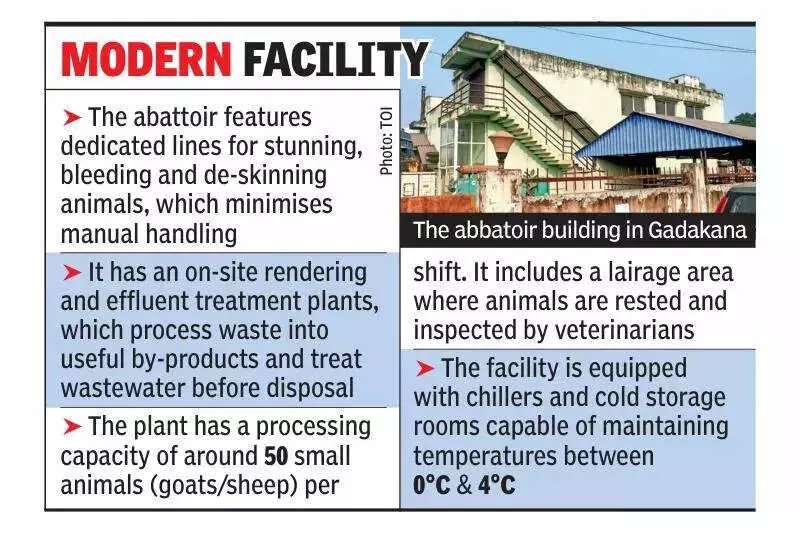
In a determined effort to breathe new life into this crucial project, BMC has now floated a comprehensive Request for Proposal (RFP). This document invites experienced agencies to undertake the operation and maintenance of the Gadakana abattoir. The facility, constructed on approximately 0.4 acres of land, boasts several modern features:
- A fully mechanized slaughter line
- A rendering plant dedicated to waste processing
- Cold storage units for meat preservation
- An effluent treatment plant to manage wastewater
- A lairage shed for holding animals before processing
According to the RFP terms, the selected agency will manage the abattoir for an initial contract period of three years, with provisions for extension based on performance. BMC has proposed an innovative shift-based operational model:
- Two shifts will be exclusively reserved for local butchers and meat vendors
- One shift can be utilized by the operator for commercial meat processing activities
Official Perspectives and Public Health Objectives
BMC officials emphasized that this renewed initiative specifically targets the elimination of open slaughtering in wards 9, 11, and 12, where such practices have been particularly prevalent. The broader goal is to ensure strict compliance with established food safety and hygiene regulations.
City Mayor Sulochana Das articulated the corporation's vision, stating, "The facility was created to bring order and hygiene to meat supply in Bhubaneswar. With renewed efforts, we hope to make it functional and sustainable. BMC wants this facility to become a viable alternative for vendors and a crucial public health safeguard for all residents."
Stakeholder Reactions and Community Response
Local meat vendors have expressed cautious support for the initiative while highlighting practical concerns. Ramesh Sahu, a meat seller at Unit IV market, commented, "If the charges are reasonable and the process is quick, we can shift operations. However, we cannot afford to lose customers due to procedural delays."
Another vendor, Salim Khan from VSS Nagar, added, "We need clear guidelines regarding operational timings, cleaning protocols, and transportation arrangements. If BMC ensures smooth and efficient operations, it will ultimately benefit everyone involved in the meat supply chain."
Residents have largely welcomed the move, citing persistent sanitation issues associated with open slaughtering. Ananya Mohanty, a resident of Soubhagya Nagar, shared, "Unpleasant odors and waste accumulation near certain residential lanes have become daily problems. A properly regulated abattoir will undoubtedly make our neighborhoods cleaner and more hygienic."

This revitalized project represents a critical step toward modernizing Bhubaneswar's meat processing infrastructure while addressing long-standing public health and environmental concerns. The success of this initiative could serve as a model for other Indian cities grappling with similar challenges in urban meat management.





