

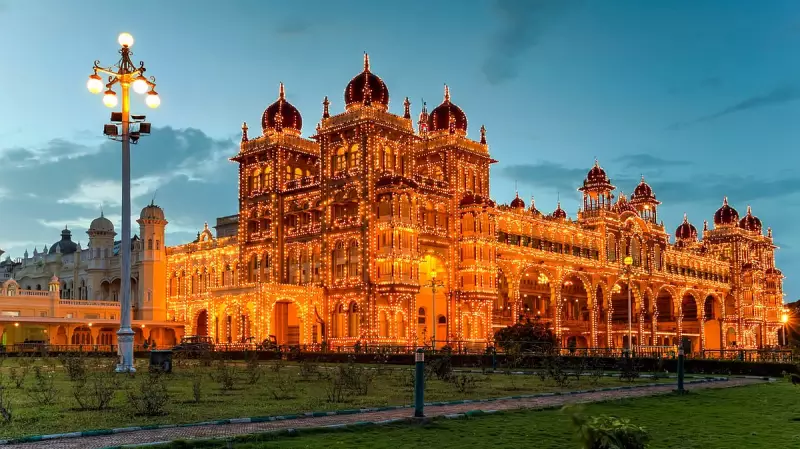
The historic city of Mysuru is poised for a transformative leap towards becoming a world-class urban centre, driven by the ambitious Mysuru Master Plan 2031, also known as the BMMP (Bengaluru Mysuru Mangaluru Planning Area). Stakeholders and citizens are expressing cautious optimism, believing the comprehensive blueprint holds the key to resolving the city's growing pains while preserving its unique cultural identity.
Blueprint for a Modern Yet Heritage-Conscious Mysuru
The master plan, formulated by the Bengaluru Mysuru Mangaluru Planning Area (BMMP) authority, outlines a detailed vision for the city's development up to 2031. It addresses critical areas such as traffic decongestion, infrastructure enhancement, and the protection of Mysuru's heritage character. A significant focus is on improving connectivity and mobility, with proposals for new ring roads, signal-free corridors, and the expansion of the Outer Ring Road (ORR) to ease the chronic traffic bottlenecks that have emerged in recent years.
Beyond roads, the plan envisions systematic development of water supply networks, sewage treatment plants, and solid waste management systems. It also emphasizes the creation of green spaces, pedestrian-friendly zones, and dedicated cycling tracks, aligning with global standards for livable cities. The BMMP authority has actively sought public feedback, incorporating suggestions from residents, urban planners, and civic activists to create a more inclusive document.

Stakeholders Voice Hope and Caution
Reactions from Mysuru's civic society and business community have been largely positive, though tempered with calls for effective implementation. M. Lakshmana, the Commissioner of the Mysuru City Corporation (MCC), has highlighted that the plan provides a crucial legal framework for organized development, helping to curb haphazard construction. He stressed the importance of integrating the master plan with the city's local planning regulations for seamless execution.
Urban experts and representatives from citizen groups have welcomed the plan's intent. They note that a long-term, legally-binding vision is essential to manage the pressures of urbanization that Mysuru faces. The focus on decongesting the city core by developing peripheral areas and improving public transport is seen as a vital step. However, stakeholders unanimously emphasize that the real challenge lies in execution, requiring sustained political will, adequate funding, and inter-departmental coordination.
The Path Forward: Implementation and Heritage Balance
The success of the BMMP master plan hinges on its transition from paper to reality. Key to this will be adhering to the plan's provisions strictly to prevent deviations and unauthorized developments. Authorities will need to ensure that infrastructure projects are prioritized and completed in a time-bound manner.
A central concern for many Mysureans is maintaining the city's famed heritage and aesthetic charm amidst modernization. The plan's provisions for regulating building heights, preserving heritage zones, and promoting traditional architecture are therefore critical. The goal is to ensure that Mysuru's development does not come at the cost of the very qualities that make it a premier cultural destination in India.
If implemented with diligence, the Mysuru Master Plan 2031 has the potential to systematically address infrastructure deficits, manage growth, and elevate the 'Heritage City' to a benchmark of world-class urban living in Karnataka. The coming years will be a test of governance and commitment to shaping a future-ready Mysuru that honors its past.






