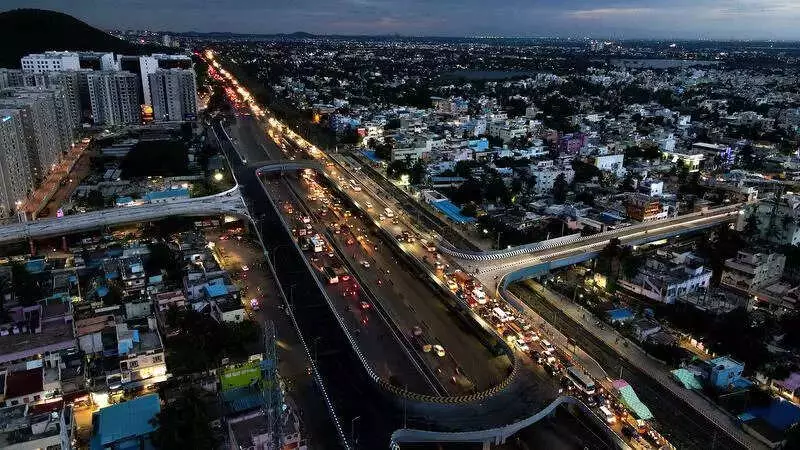
In a surprising turn of events for India's real estate sector, Chennai has stood out as a beacon of resilience during 2025, a year marked by a nationwide slowdown in residential property sales. While the overall market across the country's top seven cities contracted, Chennai bucked the trend by recording significant growth, according to a detailed study by ANAROCK Group.
Chennai's Market Defies National Downturn
The data reveals a stark contrast. Housing sales across India's top seven urban centers fell by 14% in 2025, with total volumes dropping to approximately 3.96 lakh units from 4.6 lakh units in the previous year. This decline was driven by a combination of rising home prices, uncertainty from IT-sector layoffs, and broader global economic headwinds. However, Chennai's market charted a different course. The city witnessed a 15% annual increase in home sales, with transactions rising to about 22,180 units from 19,220 units in 2024.
This performance made Chennai the only major Indian city to post positive growth in residential sales during this period. In sharp contrast, other metropolitan hubs struggled. The Mumbai Metropolitan Region (MMR), despite having the highest absolute sales volume at around 1.28 lakh units, saw an 18% drop. Pune and Hyderabad faced steeper declines of 20% and 23% respectively, while Bengaluru and the National Capital Region (NCR) recorded smaller single-digit falls.

The Pillars of Chennai's Resilience
Industry analysts point to several key factors that insulated Chennai from the broader market chill. Sanjay Chugh, City Head and Director of ANAROCK Property Consultants Pvt Ltd, highlighted the city's unique characteristics. "Chennai's performance reflects its end-user-driven market, relative price stability, and a steady pipeline of mid-income housing," he explained. Unlike markets in western India where significant price increases have deterred buyers, Chennai has continued to offer a substantial new supply of homes largely within the ₹2.5 crore range, keeping them accessible for salaried families.
Furthermore, the city experienced a sharp 30% rise in new project launches, with about 27,190 units introduced in 2025. "More than 70% of this supply was priced below ₹2.5 crore, strengthening the city's reputation as a relatively affordable metro," added Chugh. This focus on affordability, coupled with measured price appreciation compared to spikes seen in markets like Delhi-NCR (where prices jumped 23%), helped sustain genuine demand.
Economic Backing and Micro-Market Growth
Viswajith Kumar, Treasurer of CREDAI Chennai, attributed the city's strong showing to the robust economic performance of Tamil Nadu. He noted that the movement of the Greater Chennai Corporation and healthy office space absorption have created positive momentum. Additionally, the favorable ratio of apartment costs to local salaries has made homeownership a more attainable goal for many residents.
Developers report that while established corridors like Old Mahabalipuram Road (OMR) remain top performers, several micro-markets have also seen robust activity. Areas including Valsaravakkam, Porur, Mount Road, Poonamalee, Pallavaram, Thirumudivakkam, and Manapakkam have witnessed good demand and sales, indicating a broad-based growth across the city.
Interestingly, even as sales volumes dipped nationally, the total value of homes sold across top cities rose by 6% to over ₹6 lakh crore. This signals a market shift towards premium and luxury housing. Chennai is participating in this trend as well, with a new market segment opening for luxury and ultra-luxury properties, including villas and apartments in the ₹5 crore to ₹15 crore range. However, this premium segment growth is balanced by the dominant, affordable mid-income supply, creating a stable and diverse market landscape that continues to attract buyers.