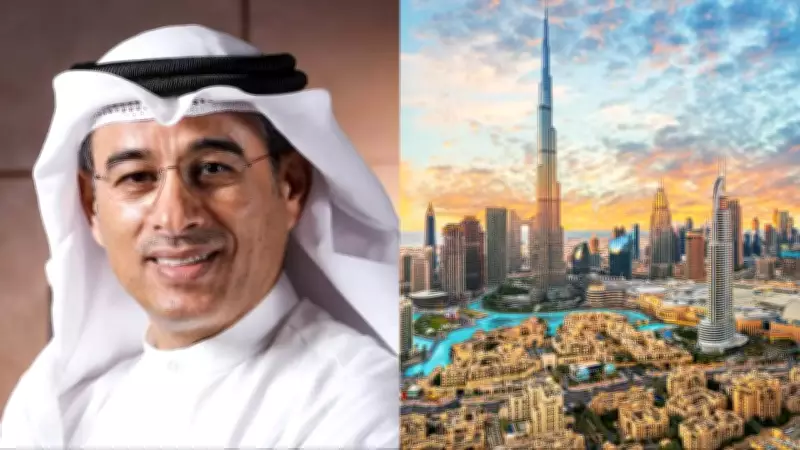
Dubai Real Estate Market Demonstrates Remarkable Resilience Amid Regional Geopolitical Tensions
In the face of escalating geopolitical tensions across the Middle East, particularly involving Iran, the United States, and Israel, Dubai's real estate sector continues to display extraordinary resilience and stability. Leading industry figures have emphasized that the emirate's property market remains fundamentally strong, with investor confidence largely intact despite regional uncertainties.
Industry Leader Expresses Confidence in Market Fundamentals
Mohamed Alabbar, the prominent founder of Emaar Properties, recently made a bold declaration regarding Dubai's property landscape. He asserted that the market has "nothing to fear" even as the region navigates complex geopolitical challenges and prepares for significant new housing supply in the coming years. His comments come at a critical juncture when regional tensions have prompted questions about investor sentiment across Gulf markets.
Financial markets in the United Arab Emirates have experienced noticeable volatility following security concerns in the region. Several analysts have cautioned that ongoing geopolitical risks could potentially test Dubai's hard-earned reputation as a secure investment destination. However, Alabbar maintains an optimistic long-term perspective, pointing to several key factors that continue to support market stability.

Foundational Strengths Supporting Market Stability
The UAE's stable leadership structure, comprehensive long-term planning initiatives, and robust economic fundamentals have historically enabled the nation to weather various global and regional economic shocks. According to Alabbar, these foundational elements continue to position Dubai as a safe haven for international capital and property investors seeking reliable returns in uncertain times.
Recent financial performance data from major developers reinforces this positive outlook. Emaar Properties reported record-breaking property sales and substantial revenue growth, driven by sustained demand for both residential projects and luxury developments throughout Dubai. The city's luxury property segment has particularly demonstrated strength, continuing to attract affluent international buyers even during periods of regional tension.
Upcoming Supply Wave Viewed as Market Stabilizer
Dubai is preparing for a substantial wave of new property supply expected to enter the market in 2026 and 2027. While some analysts have expressed concerns that this increased inventory might soften prices, Alabbar presents a different perspective. He believes the additional supply will actually benefit the market by stabilizing price growth and ensuring more sustainable expansion over the long term.
Rather than perceiving the upcoming supply as a threat, industry leaders view it as a natural and healthy component of the property cycle. According to this perspective, the market's long-term strength depends more on maintaining balanced, measured growth than on achieving short-term price spikes that might prove unsustainable.
Continued Global Appeal Despite Regional Challenges
Dubai's enduring appeal to international investors stems from its compelling combination of tax advantages, modern infrastructure development, and investor-friendly regulatory policies. These factors continue to attract global capital seeking stable returns, even as geopolitical tensions persist in the broader region. Market analysts note that Dubai has successfully transformed itself over the past two decades into one of the world's most dynamic and attractive real estate hubs.
The city's luxury property transactions have reached remarkable levels, with ultra-luxury apartment sales frequently exceeding hundreds of millions of dirhams. This sustained high-end activity demonstrates continued confidence among wealthy international buyers in Dubai's property market fundamentals.

Balanced Perspective on Potential Risks
While the overall outlook remains positive, industry experts acknowledge that the sector is not completely immune to external risks. Some analysts warn that prolonged geopolitical instability or a significant decline in foreign investment could potentially slow market momentum in the coming years. However, for industry leaders like Alabbar, the central message remains clear: Dubai's real estate market is fundamentally designed for long-term resilience rather than short-term speculation.
With strong underlying demand, ongoing large-scale infrastructure projects, and a steady inflow of international investors, Dubai's property sector appears well-positioned to remain a cornerstone of the UAE's economic growth strategy. As the city continues expanding its iconic skyline with ambitious developments ranging from luxury waterfront communities to landmark architectural projects, the property market is once again demonstrating its capacity to withstand global uncertainty and emerge stronger.
The combination of strategic planning, economic diversification, and investor confidence suggests that Dubai's real estate sector will continue to navigate regional challenges while maintaining its position as a premier global property destination.