

Kochi Metro Phase III: Airport Connectivity Takes Center Stage in Alignment Decision
The proposed Phase III extension of Kochi Metro from Aluva to Angamaly is entering its final planning stages, with seamless connectivity to Kochi International Airport emerging as the defining priority. As the detailed project report (DPR) approaches completion, transportation authorities are evaluating multiple alignment options based on technical feasibility, cost considerations, and projected ridership patterns.
Four Alignment Options Under Scrutiny
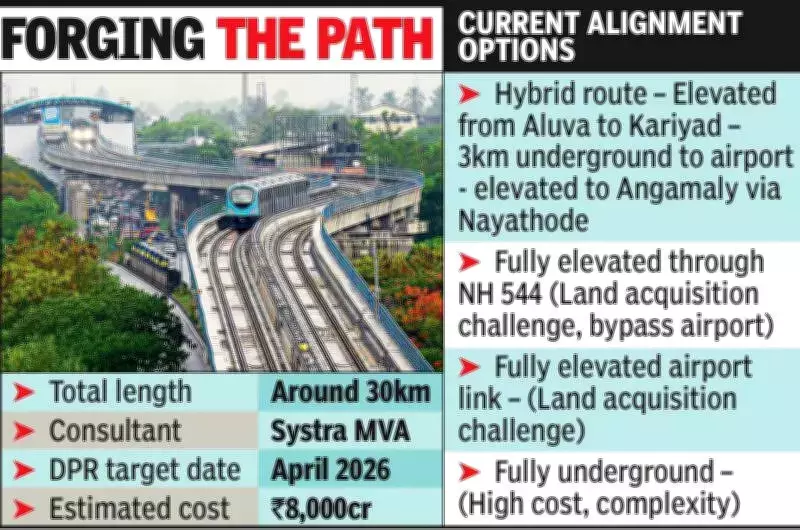
Consultant Systra MVA has prepared a comprehensive report outlining four distinct alignment possibilities for the approximately 30-kilometer stretch. The evaluation process now incorporates technical assessments, financial projections, and anticipated passenger numbers. Simultaneously, metro authorities have initiated public feedback collection before finalizing the corridor configuration.
Sources indicate that a hybrid corridor combining both elevated and underground sections has gained significant preference among planners. This approach is believed to maximize both connectivity efficiency and potential passenger footfall throughout the extended route.

Hybrid Corridor: The Preferred Configuration
Under the hybrid option currently favored by transportation experts, the metro line would commence as an elevated structure from Aluva, following the NH 544 corridor up to Kariyad. The most critical segment involves a proposed three-kilometer underground section that would directly link the metro network to the airport terminal, featuring a dedicated underground station at the airport facility.
Following the airport connection, the corridor would transition back to elevated construction, passing strategically through Nayathode and Areekkal before reaching its terminal point at Karayamparambu in Angamaly town. The final alignment decision, expected upon DPR completion, will determine how effectively the metro system integrates both the airport and northern suburban communities into Kochi's expanding transit network.
Strategic Station Planning and Alternative Routes
The proposed alignment envisions fifteen strategically positioned stations designed to serve as major commuter hubs: Thottakkattukara, Kunnumpuram, Parambayam, Nedumbassery, Athani, Kariyad, Airport Railway Station, Airport, Nayathode, Kavarapparambu, Areekkal Junction, LF Hospital, Angamaly Town, Kothakulangara, and Karayamparambu.
The DPR also examines three alternative configurations: a completely elevated route along NH 544 that would bypass the airport entirely, a fully elevated airport link, and a completely underground corridor to the airport terminal. Each option presents distinct advantages and challenges regarding construction complexity, implementation timeline, and long-term operational efficiency.
Stakeholder Perspectives and Community Engagement
Despite the apparent preference for the Nayathode-Areekkal route, a substantial segment of stakeholders continues advocating for the metro alignment to maintain closer proximity to the national highway after the airport connection. Proponents argue this alternative would better serve major industrial zones and transportation nodes, including Telk (Transformers and Electricals Kerala Ltd), Angamaly railway station, and the municipal bus stand, thereby creating a genuinely integrated multi-modal transportation ecosystem.
A recent community discussion regarding possible routes in the Airport-Angamaly section was conducted in Angamaly, with participation from Angamaly MLA Roji M. John and municipality chairperson Reetha Paul. During this engagement, metro authorities presented multiple route alternatives from the airport to Angamaly, emphasizing that airport connectivity remains mandatory according to National Metro Rail policy requirements, particularly since the project doesn't meet standard population density criteria.

"Metro authorities presented multiple route options from airport to Angamaly," John explained. "As per National Metro Rail policy, any alignment should ensure connectivity to airport since the project couldn't meet the population criteria. They are yet to finalize an alignment, but airport connectivity is a must. They said they will study all options and take a final decision based on technical and economic factors."
The ongoing evaluation process represents a critical juncture for Kochi's urban development, balancing infrastructure efficiency, economic viability, and community needs as the city prepares for its next phase of metro expansion.





