An ambitious Rs 675-crore electric bus project, designed to enhance intracity connectivity and link the upcoming Noida International Airport in Jewar with key hubs across Noida, Greater Noida, and the Yamuna Expressway, has encountered significant hurdles just weeks before the airport's scheduled inauguration later this year.
Authorities Push for Phased Rollout Amid Concerns
The project, which proposed deploying 500 e-buses in a single phase, has met with reluctance from the three development authorities involved. Officials from the Noida Authority, Greater Noida Authority, and the Yamuna Expressway Industrial Development Authority (YEIDA) have raised red flags over the high financial burden, inadequate supporting infrastructure, and delays in forming a crucial management body.
Instead of the massive initial fleet, a fresh assessment is now underway. The current proposal suggests a drastically scaled-down beginning: YEIDA may start with about 50 buses, Greater Noida with 15, and Noida with a reduced number. The authorities plan to increase the fleet size later based on actual passenger demand and the readiness of necessary facilities.

Infrastructure and Financial Hurdles
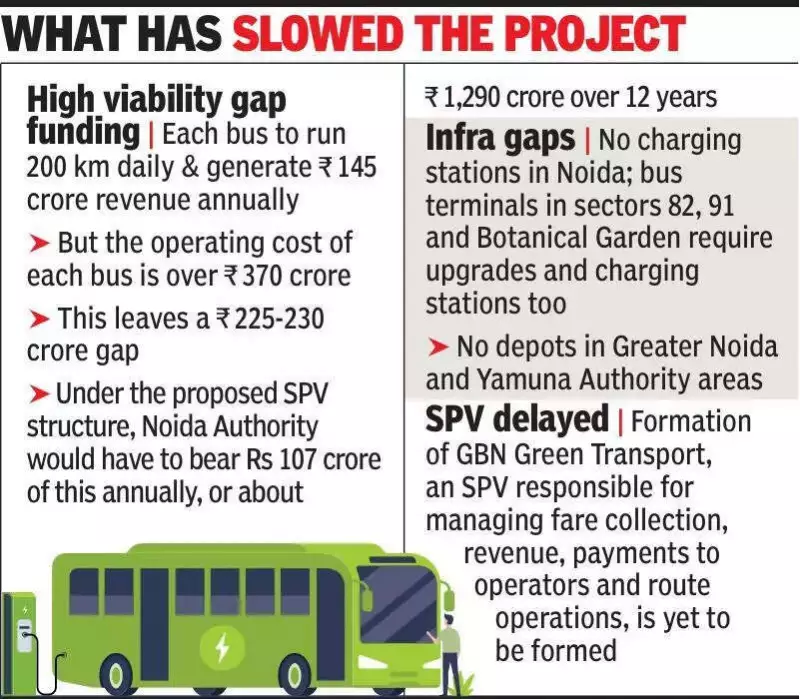
A major stumbling block is the lack of basic infrastructure required to operate an electric bus fleet. Officials highlighted that Noida currently lacks functional charging stations, while Greater Noida and YEIDA do not have dedicated bus depots. Existing bus terminals in Noida's Sectors 82 and 91 need to be equipped with charging points, and the Botanical Garden terminal also requires upgrades before e-bus operations can commence.
Financially, the project's viability is under scrutiny. The Request for Proposal (RFP) assumed each bus would run 200 km daily, generating an estimated Rs 145 crore in annual revenue. However, the projected operating costs exceed Rs 370 crore, leaving a substantial annual shortfall of Rs 225-230 crore. Under the proposed Special Purpose Vehicle (SPV) structure, Noida Authority alone would have to bear an annual burden of approximately Rs 107 crore, or about Rs 1,290 crore over a 12-year contract, a commitment officials deem unsustainable without proven demand.
Project Delays and Operational Setbacks
The project, first proposed in 2024, envisioned buses running on 25 routes—15 in Noida, seven in Greater Noida, and the rest in YEIDA areas. In June, the Directorate of Urban Transport selected two operators, Travel Time Mobility India and Delbus Mobility, to run the service under a gross cost contract model. The Noida Authority was appointed as the nodal agency to establish an SPV named GBN Green Transport Limited to manage the service jointly.
This SPV was tasked with fare collection, revenue management, payments to operators, and route operations, while the companies would be paid per kilometer. However, critical steps remain incomplete. The three authorities have not yet signed formal contracts with the shortlisted operators, and the validity period of the operator selection has expired, adding another layer of complication.
The final decision on whether to proceed with a halved fleet or a completely redesigned rollout plan now rests with the Uttar Pradesh state government. The delay casts a shadow over seamless transport connectivity plans for the much-anticipated Noida International Airport, underscoring the challenges in executing large-scale green mobility projects.