

Pune Cantonment Board Seeks Financial Relief Through Heritage Property Redevelopment
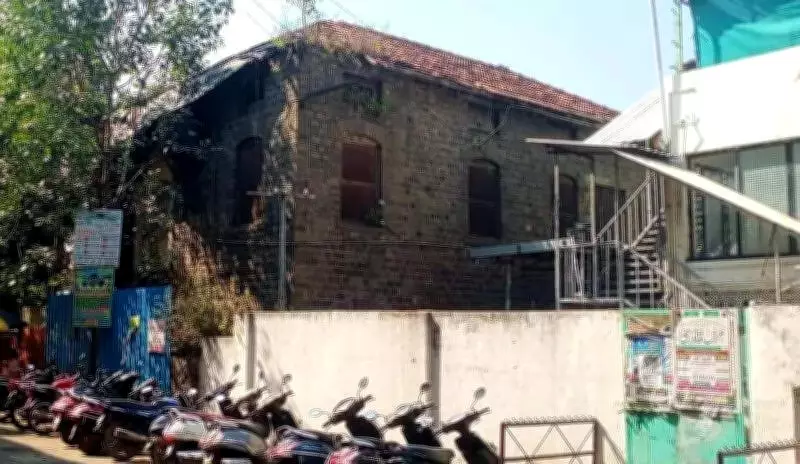
The Pune Cantonment Board (PCB) has embarked on a strategic initiative to mitigate its ongoing financial challenges by converting its historic headquarters on Mahatma Gandhi (MG) Road into a commercial enterprise. This colonial-era structure, with a legacy spanning over 120 years, functioned as the administrative nucleus of the PCB until 1988, after which it was repurposed as a cantonment court.
Vacant Heritage Building Presents Revenue Opportunity
Following the court's relocation to a new facility in June 2024, the two-storey heritage building has remained unoccupied and closed off to the public. By redeveloping this property into a commercial asset, the board intends to capitalize on its prime location to establish a consistent revenue stream.
"We have initiated the process for change of purpose of the property. The proposal has been sent to the principal directorate, Southern Command, which will forward it to the Directorate General of Defence Estates in New Delhi for final approval," stated Vidyadhar Pawar, Chief Executive Officer of the PCB, in an interview with The Times of India.

Officials clarified that once the necessary approvals are secured, the board will be authorized to redevelop the site into a commercial complex. Given MG Road's high pedestrian traffic and premium real estate valuation, this project is anticipated to substantially enhance the PCB's financial inflows.
National Trend and Structural Concerns
This move aligns with a nationwide trend among cantonment boards to unlock the commercial potential of legacy properties, driven by diminishing revenues and escalating expenditures on civic services. PCB officials emphasized that the existing structure is no longer viable for its original purposes.
According to a 2017 inspection conducted by the board's engineering department, the building was deemed unsafe. "The wall near the traffic signal at the junction is not that weak. So there is no immediate threat of it falling on the road. Once we get the necessary permission, we will explore possible revenue generative models for the board," explained a senior PCB official.
Strategic Location and Financial Pressures
Situated in the Pune Cantonment area, one of the city's most strategically governed zones under defense administration, the property holds significant commercial promise due to its proximity to major retail establishments and transportation hubs.
Financially, the PCB has faced mounting pressure in recent years due to limited revenue sources and rising maintenance costs for civic infrastructure. Unlike municipal corporations, cantonment boards depend heavily on property tax and grants from the Ministry of Defence.
Support for Redevelopment and Fiscal Realities
Activists and former board members have expressed support for the redevelopment, noting it could provide a crucial fiscal boost, while urging authorities to balance commercial interests with heritage preservation.
"We had proposed this model to the board in the past. Unless the board creates its own revenue sources, it will not be able to initiate any work and provide basic civic services," remarked Priyanka Shirigiri, former Vice-President of the PCB. "The board should follow up with the authorities concerned within the department and explore the possible projects at the site."
Another board member highlighted the dire financial situation: "The board is struggling to meet even monthly mandatory expenses. It only generates a revenue of around Rs 3 to Rs 3.5 crore per month as against its Rs 12 crore monthly expenses. How can the board survive in the future if it does not create its own sources of revenue generation?"
This redevelopment initiative represents a critical step for the PCB in addressing its fiscal deficits and ensuring sustainable operations, while repurposing a historic landmark for contemporary economic utility.






