

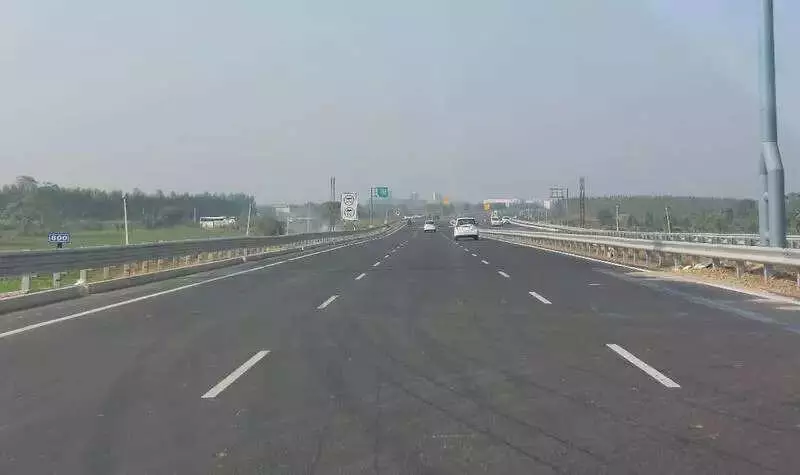
Punjab Farmer's Monumental Effort to Save His Home from Expressway Demolition
In an extraordinary display of determination and ingenuity, a farmer in Punjab's Barnala district is undertaking a massive project to physically relocate his entire two-storey house to save it from being demolished for a national expressway. Sukhpreet Singh, 30, has embarked on this remarkable journey to move his 2,800 square foot home approximately 300 feet to a different location on his landholding.
The Backstory: A Dream Home Threatened by Development
Sukhpreet Singh invested Rs 60 lakh to purchase land and construct his spacious house in Sandhu Kalan village, located about 25 kilometers from Barnala district headquarters, back in 2017. The property represented years of hard work and savings, a tangible symbol of his agricultural success and family aspirations.
Four years after completing his dream home, the National Highway Authority of India (NHAI) initiated surveys for an expressway project under the Bharatmala Pariyojna. By 2023, the land acquisition process was complete, and Sukhpreet was offered compensation matching his original investment—Rs 60 lakh for the property that held far more than monetary value to him.

Resistance and Relocation: A Farmer's Fight to Preserve His Home
Sukhpreet initially resisted the acquisition, urging NHAI officials to reconsider the expressway alignment to spare his house. He organized protests and even climbed a mobile tower to amplify his plea, hoping authorities would recognize the emotional and practical value of preserving his family home.
When these efforts proved unsuccessful and demolition seemed inevitable, Sukhpreet made a bold decision. He accepted the Rs 60 lakh compensation but refused to let his home be reduced to rubble. Instead, he devised an unconventional solution: moving the entire structure to safety.
The Engineering Marvel: How a House Travels 300 Feet
Approximately three months ago, Sukhpreet contracted a specialized house-shifting company based in Moga, paying Rs 15 lakh for their expertise. The complex operation involves carefully moving the complete building—from foundation to terrace—using iron channels and precision engineering.
"We move the building on iron channels with complete precision," explained Gurmail Singh, partner at the house-shifting firm. "All safety precautions are taken care of to ensure the structural integrity remains intact throughout the relocation process."
The Slow March: Progress and Challenges
The relocation has been progressing at a painstakingly slow pace. After two months of continuous work, the house has moved just 120 feet, leaving approximately 180 feet remaining. The daily progress varies significantly based on weather conditions and technical challenges.
"It takes 10 workers to shift the house 3-4 feet a day under normal conditions," Sukhpreet explained. "During the recent cold wave, the progress dropped to just 2 feet per day due to operational difficulties and worker safety concerns."
At this rate, the farmer estimates it will take approximately three more months to complete the 300-foot journey to the house's new permanent location on his property.
Emotional Investment Beyond Monetary Value
For Sukhpreet, this monumental effort represents more than just preserving a physical structure. "I do not want my house to be razed for a road project," he stated emphatically. The house embodies years of labor, family memories, and personal achievement that cannot be quantified by compensation alone.
His decision to invest an additional Rs 15 lakh—beyond the compensation received—demonstrates the profound emotional attachment people develop to their homes, especially in agricultural communities where property often represents generational continuity and personal identity.
Broader Implications: Development Versus Preservation
This unusual case highlights the complex tensions between national infrastructure development and individual property rights in rapidly developing regions. While expressways and transportation networks represent progress and economic growth, they sometimes come at significant personal cost to affected landowners.

Sukhpreet's creative solution offers a potential middle ground—accepting the necessity of development while preserving what matters most to him personally. His story has captured attention as a symbol of both the challenges of large-scale infrastructure projects and the remarkable lengths to which individuals will go to protect their homes and heritage.
The house continues its slow journey across the Barnala landscape, a moving testament to one farmer's refusal to surrender his dream home to the march of progress without a fight.





