In Hyderabad, the rhythm of daily life is dictated by geography. As dawn breaks over the historic Old City, its narrow lanes slowly awaken, with centuries-old architecture watching over a bustling scene of two-wheelers and street vendors. Meanwhile, in the western IT corridors, the day begins with the swipe of access cards and long commutes. These two worlds, though part of the same metropolis, have long been connected by maps yet separated by access. It is against this backdrop of a divided city that the Telangana government has taken a decisive step, assuming control of the Hyderabad Metro Rail's first phase.
A Strategic Takeover: From Private Hands to Public Utility
The state government has officially approved the acquisition of infrastructure giant Larsen & Toubro's equity in the operational metro network for Rs 2,000 crore. Crucially, the government will also take over the company's outstanding debt of Rs 13,000 crore. L&T, which held nearly a 90% stake, had expressed its desire to exit the project, pointing to sustained operational losses. The transfer is being executed through a government-owned Special Purpose Vehicle (SPV).
"We expect the divestment to get completed by the end of the current fiscal FY26," L&T stated in a regulatory filing. Chief Secretary K Ramakrishna Rao assured that "the takeover process will be carried forward in a carefully calibrated and mutually agreeable manner", ensuring all legal requirements are met. This move marks a pivotal shift for Hyderabad's urban transport, transforming the metro from a commuter service into a wider public utility aimed at improving access to jobs and services across the city's socioeconomic spectrum.

Phase-I Legacy and Phase-II Ambitions
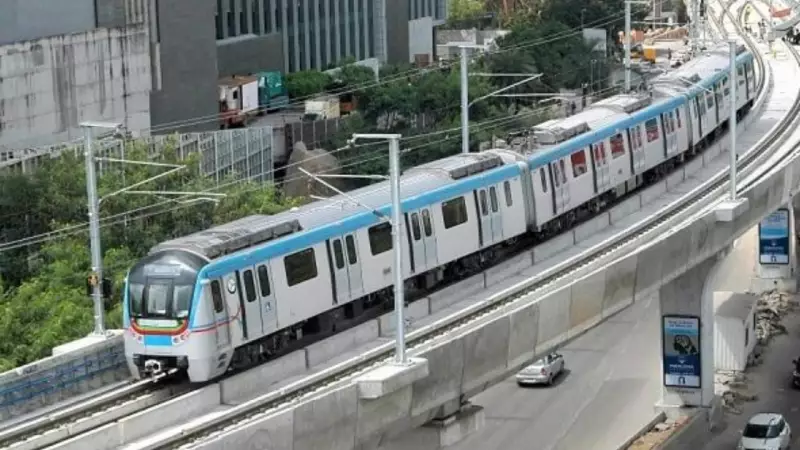
Phase 1 of the Hyderabad Metro Rail, executed under a public-private partnership (PPP), spans 72 km across three corridors. Operations began in November 2017, with the final stretch opening in February 2020. Officials have long emphasized its critical role. DVS Raju, Chief Electrical Inspector to the Government of India for the project, highlighted its efficiency: "Operating one kilometre of Metro is equivalent to replacing seven bus lanes or 24 car lanes." He also noted the project's environmental efforts, including transplanting trees and planting multiple saplings for each one removed.
While Phase-I established the network, the focus now shifts to a significant expansion. The proposed Phase-II covers 76.4 km across five corridors at an estimated cost of Rs 24,269 crore. Chief Minister A Revanth Reddy has submitted proposals to the Centre, seeking approval and funding support for a joint venture. The expansion is strategically designed to connect underserved parts of the Old City with major employment hubs in the west and north, directly addressing the city's connectivity divide.
Funding, Friction, and a Future of Inclusivity
The Metro expansion is a key component of the broader Telangana Rising framework, which outlines the state's goal to become a $3 trillion economy by 2047. The state has begun discussions with institutions like HUDCO to mobilize funds. However, the process has encountered political friction. Congress MLC Vijayashanti has alleged politically motivated delays in central approvals for Phase-II, urging BJP leaders from Telangana to facilitate clearances for the benefit of city residents.
Alongside expansion, the Hyderabad Metro Rail Limited (HMRL) is focusing on inclusivity and safety. In a landmark move, 20 transgender persons were recently inducted into HMRL's security workforce. This initiative, following the induction of 39 transgender traffic assistants with city police in January, aims to empower the community and enhance safety for all commuters, particularly women who constitute about 30% of Metro passengers.
The stakes for Hyderabad are profound. The Metro is now tasked with a mission beyond transportation: to reconnect a fragmented city, reduce hours lost in traffic, and bridge the gap between its historic heart and its modern frontiers. As the project transitions to public control, it carries the weight of everyday struggles and the promise of a more integrated urban future.