

In a significant move aimed at tackling housing affordability, the Trump administration has unveiled a direct intervention in the mortgage market. The core of the plan involves the government buying mortgage bonds, a strategy designed to push down borrowing costs for prospective homebuyers across the United States.
The Mechanics of the Mortgage Market Move
Announced recently, the initiative seeks to make homeownership more accessible by injecting demand into the market for mortgage-backed securities (MBS). This action effectively puts a major buyer in the market, which typically exerts downward pressure on mortgage rates. The financial markets reacted swiftly to the news. On Friday, the fixed 30-year mortgage rate dipped below 6% for the first time since 2023, with Mortgage News Daily reporting an average rate of 5.99% midday.
Matthew Graham, Chief Operating Officer at Mortgage News Daily, noted the market's volatility, indicating that while some lenders adjusted rates upward slightly by afternoon, the day was still likely to end with the lowest average rate in over a year. For millions of buyers who have been waiting on the sidelines due to high financing costs, and for existing homeowners with much higher rates, a stabilization below 6% could be a game-changer.

The Double-Edged Sword: Demand vs. Supply
While lower rates are unequivocally good news for demand, analysts are sounding the alarm about a potential, familiar pitfall: a surge in home prices. Bill Banfield, Chief Business Officer at Rocket Mortgage, observed that mortgage rates beginning with a '5' historically trigger increased demand for both home purchases and refinances.
The critical question is whether housing supply can ramp up in tandem with this expected demand surge. Ryan Gilbert, a BTIG analyst covering real estate services, warns, "If there's a drop in mortgage rates, it could lead to a reacceleration in home prices. We could kind of end up back in the same situation that we were in before rates dropped." This scenario would essentially nullify the benefit of lower monthly payments for buyers.
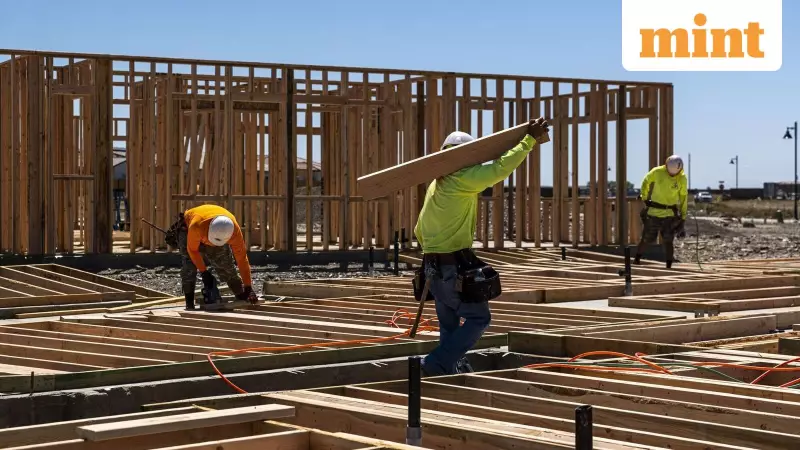
Economist Peter Boockvar of Bleakley Financial Group echoed this concern, stating, "If there is not a coincident increase in the supply of homes with this new demand push, all we'll see is another rise in home prices that offsets the benefit of lower mortgage rates." He highlighted the structural challenge: federal policy stimulates demand, while the supply of new homes is constrained by slow local-level permitting and construction.
A Delicate Balancing Act for the Market
The policy walk is a tightrope. An oversupply of homes without matching demand could erode property values and household equity. Conversely, insufficient listings to meet the new wave of demand could reignite price growth, which had recently slowed to a pace more manageable than wage growth. The recent memory of the COVID-19 pandemic's double-digit home price appreciation, fueled by sub-3% mortgage rates, serves as a cautionary tale.
Investors and homebuilders are now keenly awaiting further details, which President Trump is expected to provide at the World Economic Forum in Davos later this month. Any proposals encouraging home construction will be scrutinized. Builders, who have recently relied on incentives and discounts to maintain sales at the expense of margins, are cautiously optimistic but aware of potential regulatory trade-offs. As BTIG's Gilbert noted, proposals positive for builders could come with negative stipulations.
In essence, the Trump administration's bold play to revive the housing market carries inherent risks. The success of the plan in genuinely improving affordability hinges not just on lowering the cost of borrowing, but on a complex, synchronized increase in the supply of available homes—a factor largely outside direct federal control.






