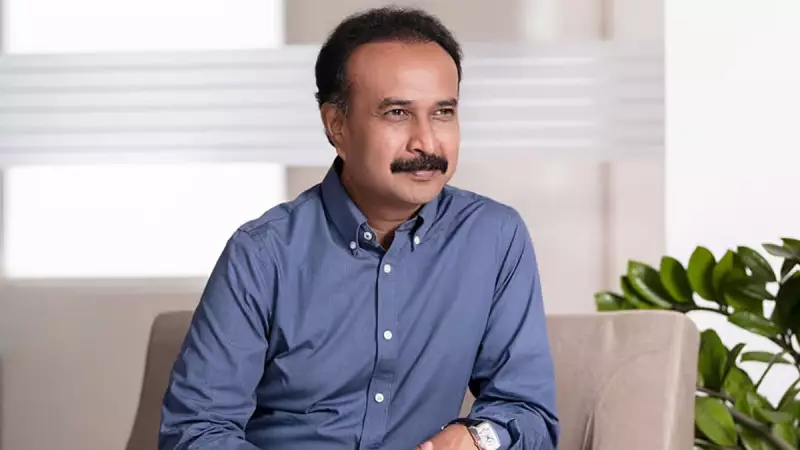
In a significant assessment of India's venture capital landscape, Prashanth Prakash, Founding Partner of Accel India, has reframed the narrative around startup investment, stating that the current phase is a strategic "shift towards profitability" rather than a "funding winter." His comments, made on 10 January 2026, provide a crucial perspective for entrepreneurs and investors navigating the evolving market.
A Correction, Not a Deep Freeze: Reassessing the Funding Climate
Prakash directly addressed the prevalent notion of a severe funding downturn. He clarified that while the exuberant funding levels of previous years have moderated, the environment is not in a deep freeze. "We are unlikely to see that level of funding this year too," he stated, referring to the peak investment periods. He projected that the funding scenario in 2026 will be largely similar to that of 2025, indicating a period of stabilization and recalibration.
"In my opinion, one should not position this as a funding winter," Prakash emphasized. This distinction is vital, as it suggests a move towards a more mature and sustainable ecosystem where capital efficiency and clear paths to profitability become paramount, replacing the earlier growth-at-all-costs mindset.

The New Mantra: Sustainable Growth and Unit Economics
The core of Prakash's argument centers on a fundamental change in investor priorities. The shift he describes moves the focus away from mere user acquisition and top-line growth metrics. Instead, the emphasis is now firmly on:
- Robust Unit Economics: Startups are being scrutinized for their ability to generate profit from each transaction or customer.
- Path to Profitability: Clear and realistic timelines for becoming self-sustaining are now critical for securing funding.
- Capital Efficiency: Doing more with less capital and demonstrating prudent financial management.
This evolution signals a healthier, more disciplined phase for the Indian startup ecosystem. It encourages founders to build resilient business models that can withstand market cycles, rather than relying on continuous infusions of easy capital.
Implications for the Indian Startup Ecosystem
This recalibration, as outlined by a seasoned investor like Prakash, has broad implications. For early-stage startups, it means that sound fundamentals and a viable business plan are more important than ever. For later-stage companies, the pressure to demonstrate efficient scaling and a reduction in cash burn will intensify.
The market is likely to see increased consolidation, with stronger companies acquiring assets or merging with others to achieve scale efficiently. Furthermore, sectors that inherently promise better unit economics and faster profitability may attract a disproportionate share of the available capital in 2026.
In essence, Prashanth Prakash's analysis offers a roadmap. The message to India's entrepreneurial community is clear: adapt to this new normal of measured growth. The era of undisciplined spending is over, making way for an era where building a fundamentally strong, profitable business is the ultimate key to success and investor confidence.