

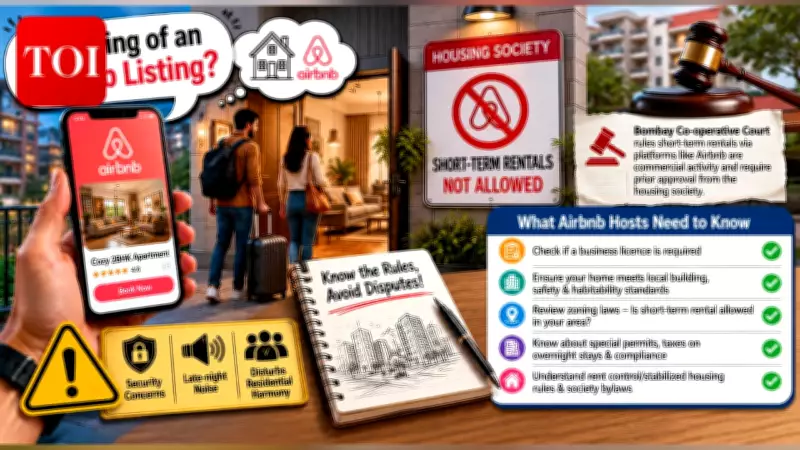
Owning an apartment in a housing society and dreaming of turning it into an Airbnb listing may seem like an easy side hustle, but it is far from straightforward. From security concerns to late-night noise disputes, short-term rentals often face resistance. Many society bylaws explicitly restrict using homes for commercial lodging or hospitality, turning a simple idea into a recurring point of contention in numerous complexes.
Bombay Cooperative Court Ruling
According to a Bombay cooperative court, short-term rentals facilitated through platforms like Airbnb constitute commercial activity. Therefore, apartment owners must obtain prior approval from their respective housing societies before hosting paying guests. The ruling came in a dispute filed against the Bharatiya Friend’s Co-operative Housing Society Ltd. by Mahesh Khetshibai Mehta, a 65-year-old resident of Churchgate. Mehta challenged resolutions passed between 2008 and 2015 that prohibited short-term paying guests and commercial use of flats. He also sought a refund of over Rs 1.5 lakh collected as transfer charges. The court dismissed his plea and upheld the society’s bylaws, noting that such activities raise safety issues and disturb the residential character of the building. However, the court clarified that members can still rent out their properties for longer durations, such as 11 months or more, as long as they adhere to social norms.
Airbnb Guidelines for Hosts
Airbnb provides comprehensive guidelines for residential building owners planning to list their apartments on its platform. These include understanding local laws—city, county, state, province, territory, or country—that dictate terms and conditions for short-term rentals. Below is a list of standard considerations, which is comprehensive but not exhaustive, that hosts must review before preparing a home for Airbnb.

Key Considerations Before Listing
- Business License: Contact your local jurisdiction to determine if a business license is required before listing an apartment for homestay.
- Building Standards: Some local governments specify minimum construction, design, and maintenance standards, including regulations on habitability, health, and safety. Check if these rules apply to your listing.
- Zoning Laws: Zoning laws dictate how you can use your home. Consult these regulations to ensure your listing aligns with current zoning requirements.
- Special Permits and Taxes: If your apartment needs a special permit to be rented out or if hosts must collect and pay a tax for each overnight stay, contact your local government to learn about these obligations.
- Rent-Controlled Housing: You may be subject to particular regulations if you live in rent-controlled or stabilized housing. Inquire with your local government and consult the housing society’s official authorities.
Due Diligence Is Essential
Rules and local enforcement vary heavily depending on your specific location and local authorities. Conducting due diligence is necessary to avoid penalties, warnings, or being shut down. Apart from state laws, it is crucial to check society bylaws and local housing regulations, as some societies are reluctant to allow paying guests or short-term rentals due to safety concerns, frequent tenant turnover, and potential rule violations.
Ready to make a smarter property decision? Build your legacy with insights from trusted sources.
About the Author
The TOI Real Estate Desk is a focused team of seasoned journalists and market watchers dedicated to decoding the evolving property landscape for The Times of India readers. With a sharp eye on trends, policy shifts, and market movements, the team brings clarity to one of the most significant investment decisions in people’s lives. From expert insights on buying, selling, and investing to deep dives into infrastructure developments, home design, and sustainable living, the news offers a comprehensive view of the real estate ecosystem. Whether you are a first-time homebuyer, a seasoned investor, or simply exploring the market, the TOI Real Estate Desk is your trusted guide to making informed property decisions.

