

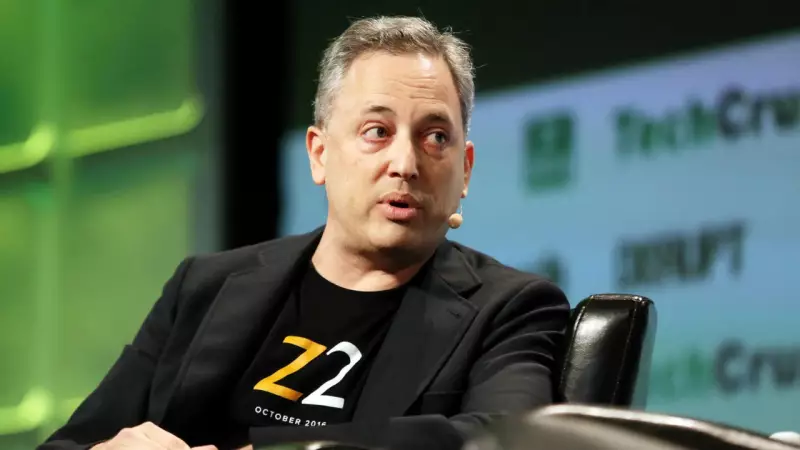
David Sacks, the White House's special advisor on artificial intelligence and cryptocurrency, has ignited a fresh debate with a bold forecast about a seismic shift in America's economic geography. He predicts that Miami is poised to replace New York as the nation's financial capital, while Austin could dethrone San Francisco as the premier technology hub.
The Prediction That's Shaking Up Tech and Finance Circles
In a post on the social media platform X, formerly Twitter, Sacks framed this potential shift as a direct response to political ideologies. "As a response to socialism, Miami will replace NYC as the finance capital and Austin will replace SF as the tech capital," he argued. This statement has quickly gained traction, resonating with venture capitalists and tech entrepreneurs who have grown skeptical of the traditional dominance of coastal cities.
The concept of a power move from the coasts to states like Texas and Florida gained significant momentum during the COVID-19 pandemic. The widespread adoption of remote work triggered a migration wave, with professionals and companies seeking the benefits of lower taxes, reduced living costs, and more spacious environments. Austin's profile was notably boosted by the high-profile relocations of Tesla and Oracle, with tech behemoths like Google and Facebook also expanding their presence in the city.

Taxes, Talent, and the Billionaire Exodus
Sacks, a prominent venture capitalist himself, has consistently pointed to high taxes, stringent regulations, and left-leaning politics as the primary forces driving talent and investment away from legacy centres like New York and California. His latest comments were timed pointedly with the inauguration of Zohran Mamdani as New York City's first socialist mayor, adding a symbolic layer to his argument.
The prediction is backed by concrete action from Sacks and his peers. His firm, Craft Ventures, has already established an office in Austin, and Sacks has personally relocated there. He now joins an elite group of tech leaders who have made Texas their base, including Tesla CEO Elon Musk, Dell founder Michael Dell, and Palantir co-founder Joe Lonsdale.
On the opposite coast, a specific policy threat is accelerating the trend. A proposed wealth tax in California, championed by the SEIU-United Healthcare Workers West union, has sent shockwaves through the billionaire community. The proposal, which needs signatures for the November 2026 ballot, is particularly alarming because it would apply retroactively to anyone residing in California on January 1, 2026.
This has created a ticking clock for the ultra-wealthy. For someone like Google co-founder Larry Page, with an estimated net worth of $258 billion, the tax liability could surpass a staggering $12 billion. Investor Peter Thiel, worth around $27.5 billion, could face a bill exceeding $1.2 billion. In a clear sign of Miami's rising appeal, Thiel's Thiel Capital has announced an expansion in the Florida city.
A Growing Consensus on the Ground
The anxiety over the potential wealth tax is not confined to a few individuals. Tech investor Chamath Palihapitiya has publicly warned that such a measure would trigger "an exodus of the state's most talented entrepreneurs," revealing that he is giving "serious consideration" to a move to Texas. This sentiment underscores a broader fear that punitive tax policies could permanently alter California's innovation ecosystem.
The convergence of these factors—political rhetoric, personal relocation by industry titans, and concrete policy threats—suggests that the debate over America's next great economic capitals is more than just theoretical. While New York and San Francisco are unlikely to fade into obscurity overnight, the sustained movement of capital, companies, and key individuals to Miami and Austin presents a compelling challenge to their long-held supremacy.






